

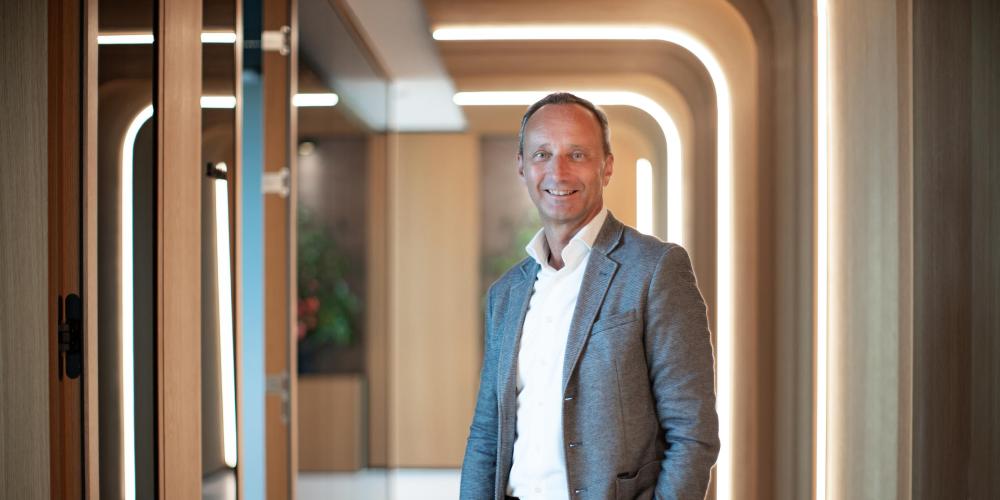


Strengthening ties and creating cross-pollination between the university and the rest of the world: that is the philosophy behind the VUB fellows. Every month we put one of these fellows in the spotlight. Xavier Verhaeghe kicks off the series. As a partner at professional services firm PwC, one of the so-called Big Four, he has a privileged view of the impact of geopolitics, AI and other existential challenges on the business world. And also on how to prepare students for the new world. “Young people should above all be given a broad frame of reference and a critical attitude.”
The world is changing extremely rapidly. What keeps a consultant awake at night today?
Xavier Verhaeghe: “To begin with, the new geopolitical reality, or rather volatility. The trend used to be one of globalisation, open borders and opportunities for worldwide trade and cooperation. Today we are evolving towards a more fragmented world order. Borders are closing again and global strategies are coming under pressure. For companies, building partnerships worldwide with customers and suppliers is becoming crucial, but also more difficult.”
In this turbulent period, AI is adding fuel to the fire.
“We do not yet fully realise what artificial intelligence will mean. What is certain, however, is that AI will bring major opportunities, but also major risks. The changes will be enormous.”
About the climate crisis, ecological challenges and corporate social responsibility, you hardly hear anyone talk anymore, it seems.
“Yet those remain pertinent, vitally important topics. Long-term growth is only possible with a healthy foundation, with attention to sound social relations and a sustainable ecological footprint. But in the short term, the challenges for many companies are so great that these topics are currently being overshadowed. They need to focus on them now in order to continue growing or simply to survive.”
“In this context, only the fastest will survive”
Are we in a perfect storm?
“In any case, things are moving faster than ever. The internet, social media and cloud computing have each brought about major, gradual changes in their own way. With AI, that change and acceleration are so great that it is overwhelming many organisations. As a company, you can no longer say: we will look at our AI strategy in a few years. In this context, only the fastest will survive.”
Is the impact of AI equally large everywhere?
“That will largely depend on the sector. In five years I see hospitals working fundamentally differently from today, but the impact on, say, banks or call centres will be even broader and deeper. The question is whether call centres will still exist by then. Nobody can yet fully grasp the extent of it. We are already seeing clear early signals. With AI drones, war is starting to look more and more like a video game. And cybercriminals are gaining powerful tools through AI to harm companies and individuals. They do not even need to leave their armchairs to do it.”
What is the impact on your sector? Is AI really taking over the work of junior consultants?
“You hear that a lot these days, but I see it differently. At PwC we continue to recruit strong, talented graduates. This generation naturally engages with AI. They think AI-first, understand its power and deliver high-quality work more quickly. As a result, they start at a level that the previous generation needed three years to reach. One condition: they must be coached by senior colleagues with experience and domain expertise, who are also well-versed in AI. That collaboration between junior and senior will become a real asset.”
Have your studies prepared you for this future?
“Today I realise more than ever the value of my education as a Solvay business engineer. We had subjects such as economics, law, chemistry, physics, technology and statistics. Our frame of reference was very broad. In addition, we also learned to think critically and to question things. That broad knowledge and critical mindset help to quickly understand how the world is changing, and how to apply those changes in sectors such as banking or the pharmaceutical industry. I am glad that these two core strengths have been preserved in today’s curriculum. Solvay alumni still have a strong reputation.”
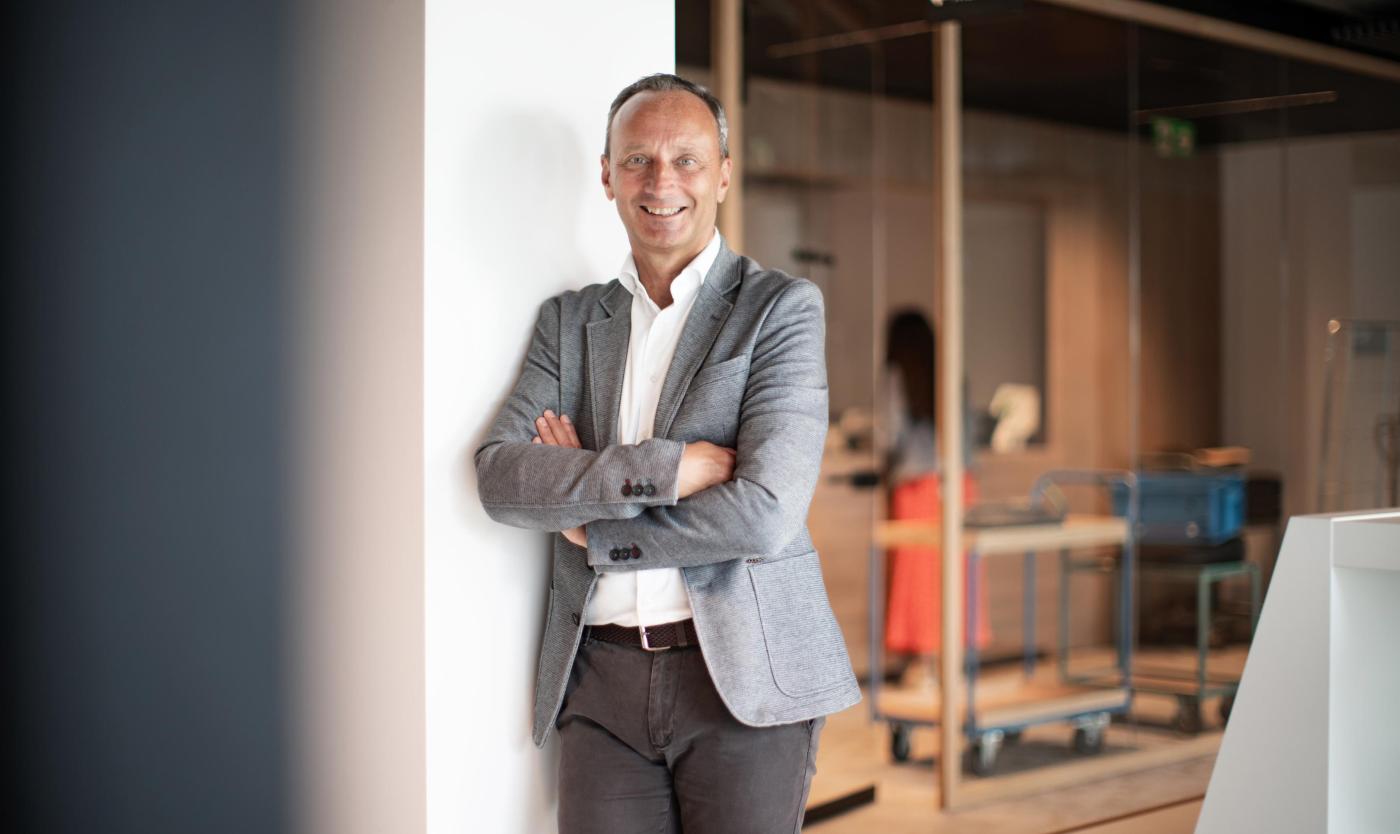
“Solvay alumni have a broad frame of reference and a critical attitude”
You have always stayed in touch with your alma mater.
“I was chair of the Solvay Schools Alumni VUB for four years. During that period we strengthened the ties between the VUB and ULB alumni and professionalised alumni activities, which helped the Solvay Business Schools rise in international rankings.”
How do you see your role as a VUB fellow?
“It is very enriching. For example, I have given guest lectures with various professors and thought along about changes in study programmes. I try to maintain these connections, also in the context of internships and our search for young talent. The bond is also informal. Since the start of my studies in 1987, I have only missed two Solvay gala balls.” (laughs)
Do you cherish your memories as a student?
“The VUB has changed a lot, but I still feel a touch of nostalgia when I come to campus and see the Willy Van Der Meeren student residences. I lived in one of those buildings for two years. The VUB tradition also runs in the family: my daughter also studied here at the Solvay Business School.”
Bio Xavier Verhaeghe
Xavier Verhaeghe is Managing Partner for Advisory Services at PwC Belgium, a member of the PwC Belgium Leadership Team, and PwC Europe AI Co-Leader. He holds a Master’s degree in Management Sciences and an MBA from the Solvay Business School. In 2012, he was nominated for a Fellowship by Professor Wouter Verbeke of the Faculty of Economic and Social Sciences. In 2015, he was made an Honorary Fellow.