

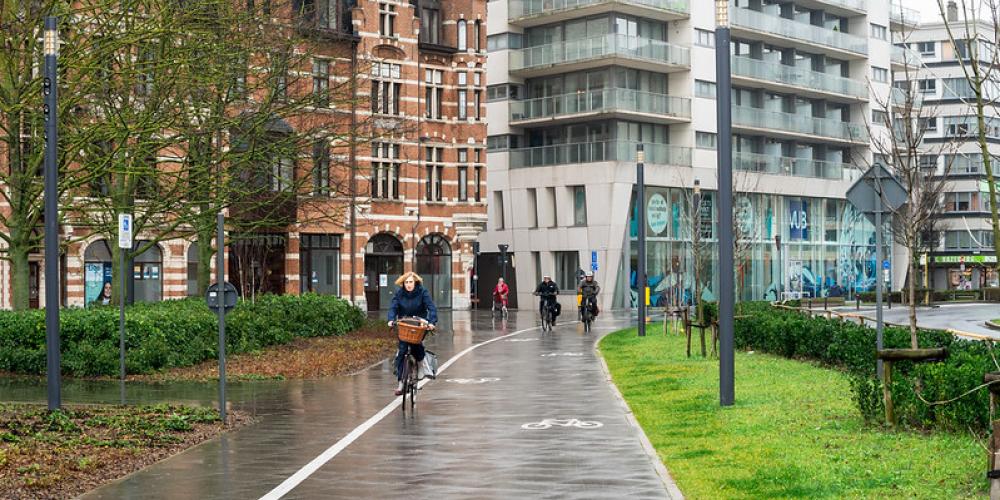


On Friday 6 February, the official opening took place of VUB by the Sea, a partnership between the City of Ostend, Port of Ostend and the VUB. The hub, a stone’s throw from the station, wants to warm up young people from Ostend for STEM fields and grow into an interdisciplinary research and training centre, unique on our coast.
VUB by the Sea sounds fresh. Why is the word campus missing?
Anthony Antoine: “For the time being, VUB by the Sea is not a campus in the sense we know it in Brussels, with a large student population. No lectures are given here. Yet students are welcome here, for example during exam preparation. We also want to warm young people to pursue further studies, and especially STEM fields at the VUB. That is also at the request of the City of Ostend, which wants to get more people with a scientific education into work in the near future. Ostend focuses mainly on innovative employment in and around the port. But because hardly any college or university is still active in Ostend as an educational institution, a deficit has arisen in that area. Partly because of that, Ostend became the central city with the least number of studying young people. Another explanation is that Ostend was in the recent past more of a dormitory town, more populated by retirees than by young people. That is now changing. We want to do something about the decline in studying young people together with the City of Ostend. At the same time, we want to increase the visibility of the VUB with VUB by the Sea. According to the higher education decree, we are not allowed to offer bachelor’s or master’s programmes there, but we can offer both executive masters and postgraduate programmes. And we are going to do that: we already started one two years ago around leadership.”
“We are initially focusing on STEM fields, but we are also targeting the entire VUB community of researchers and lecturers.”
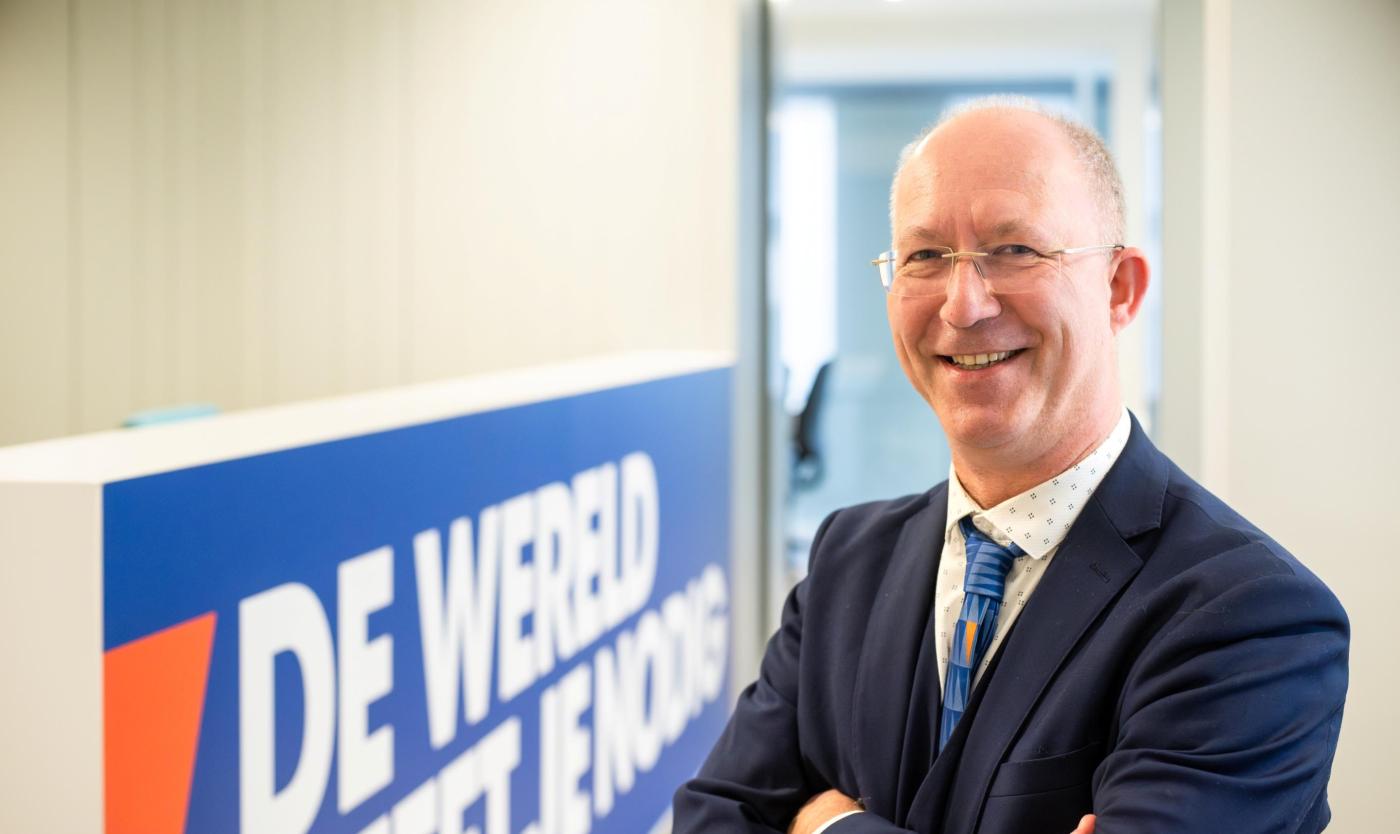
Anthony Antoine
The new hub is a collaboration between three partners. Who proposed to whom?
“We seduced each other. The masterclass on leadership by colleagues Maus and Haezendonck in collaboration with the Port was very successful, and the question was raised not to leave it at that. The word pied-à-terre came up, but at first we were not very eager to buy or rent a property. Fortunately, the arrival of a new city council accelerated the process. One of the points in their coalition agreement was that there should again be a closer link with a higher education institution. We then drew up a business plan based on three equal partnerships: the City, the Port and the VUB. The City of Ostend agreed and proposed a space of 500 m² on Graaf De Smet de Naeyerlaan under good conditions. A major asset is that it is less than a 5‑minute walk from the station.”
VUB by the Sea also wants to grow into a research centre. How do you want to attract researchers to Ostend?
“A lot of research by the VUB is already being done here. At the wind farm in the North Sea, for example, quite a few VUB engineers are involved. They will in any case already man the hub. Ostend is also working on a digital copy of the city on which, with the help of AI, all kinds of possible problems, such as large‑scale evacuations, can be tested. FARI (the AI for the Common Good Institute of the VUB and ULB) is the ideal partner for this. In the field of marine biology, there is the connection with the Flanders Marine Institute, the VLIZ. Through grants awarded by them, they employ several university researchers, including some VUB members. Oceans and Lakes is also involved in research and education. That is an interuniversity master’s programme, coordinated by the VUB in collaboration with the VLIZ. We are initially focusing on STEM fields, and so it will mainly be our engineers who will populate the rooms at first, but we are targeting the entire VUB community of researchers and lecturers. Very interesting in that context is the research of Soetkin Vervust on Testerep, the vanished island off the coast of present‑day Ostend.”
What lies ahead?
“Literally ahead is the Horizon project GENeCITY that we submitted for Ostend to the European Commission. The goal of the project is to see how a city can participate in a scientific project. We mainly want to improve and make measurable the innovation connections between the VUB and the companies in Ostend. We are also going to collaborate with the Blue Cluster, which is a network of innovative organisations in the sustainable, water‑linked blue economy. And near our hub is the Naval Academy, the training centre of the Belgian navy. We are going to see what we can do for each other within the limits of our ethical framework. We are also talking with the Caroline Pauwels Academy of Critical Thinking to organise activities in Ostend. And with Mu.Zee we want to collaborate more, among other things by exhibiting work in our hub. During the opening, for example, a large monumental work from their collection will be on display.”
BIO
Anthony Antoine is coordinator of VUB by the Sea. He lives in Bruges and is executive director of the Brussels School of Governance, affiliated with the VUB.
What’s in it for Oostende
“The academic permanence with VUB by the Sea will give a boost to the city”
According to Charlotte Verkeyn, Ostend Alderman for Economy and Enterprise, Port and Sports, the city wants to reconnect with higher education. “Universities and colleges focused in the past on larger campuses by grouping their offer. That is why Ostend saw quite a few programmes disappear. Only healthcare and construction programmes remained. Because at present the higher education decree does not allow the VUB to offer programmes here, we are taking our time. Because in the future we absolutely want to be able to offer higher education here again. The academic permanence with VUB by the Sea will give a boost to the city and may also attract university programmes in the future.
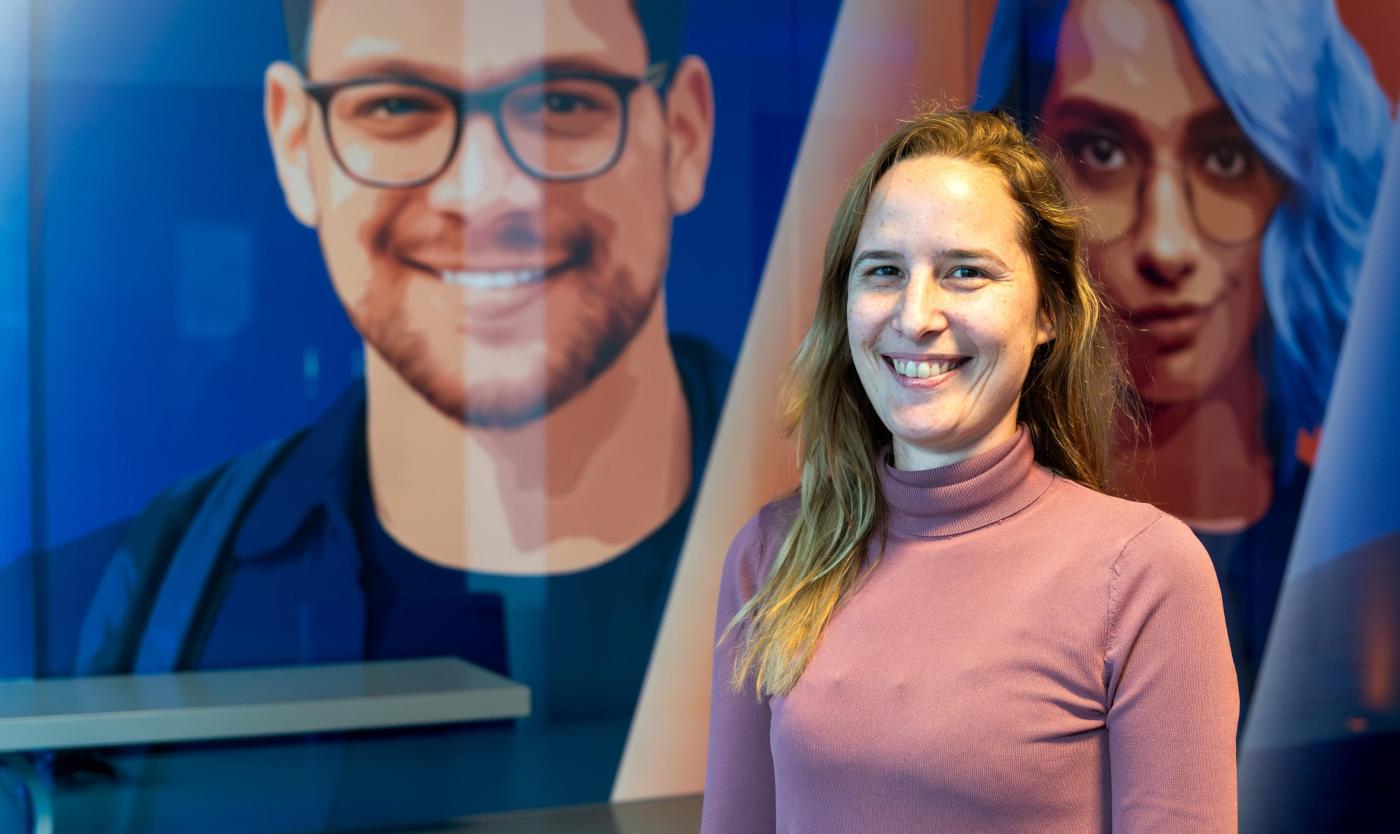
Charlotte Verkeyn
Our ambition is far‑reaching: we do not believe in boundaries, but in starting a new dynamic. As far as I am concerned, a campus or university should come here. That will not be for tomorrow, but we want to fight for it. I often hear that Ostend is a half circle. That because of the coastal location we only have half a hinterland and thus insufficient potential to grow. But what about New York, that is also a half circle (laughs)..
The port has already taken steps towards further growth in certain sectors. In particular in the circular economy and in sustainable innovative companies in the field of drones. An epicentre of the emerging drone industry is forming here: we are already among the world leaders in underwater robotics. And together with the airport we form a drone hub within which pilot projects have been launched. Our ambition aligns very well with where the VUB wants to go.”
Brussels and Ostend: historically linked
In a little more than an hour you can now travel from Brussels‑South to Ostend station. Since 1838, a train has run between Brussels and Ostend, which greatly increased the popularity of the seaside town among the people of Brussels. Artists like James Ensor and later Arno regularly commuted between their hometown and the capital. In the past, Ostend was a centre of freethought, and many people from Ostend therefore sent their children to the VUB. That is less and less the case now. But conversely, in recent years the love for ‘Bruxelles‑Plage’ seems stronger than ever. More and more people from Brussels are going to live there half‑ or full‑time. The last two council terms have also invested more in the image of the city. More than 60 events are organised each year, Ostend is becoming attractive and lively again.
The VUB strengthened the link with Ostend again with the curatorship of Caroline Pauwels for Theater aan Zee in 2021. TAZ would like to keep the philosophy of Caroline alive in the form of a development grant for an annual project of artists and scientists. Anyone interested can still register until 1 June.
At academic level, a lecture for business leaders and stakeholders in the port started in 2024: the VUB Masterclass Series in Ostend on Future‑proof Leadership & Strategy by Prof. Dr. Elvira Haezendonck and Prof. Dr. Michel Maus. This annual initiative is now being followed up: the new administration led by mayor John Crombez wants to further deepen the collaboration between city, port and the VUB with VUB by the Sea.