

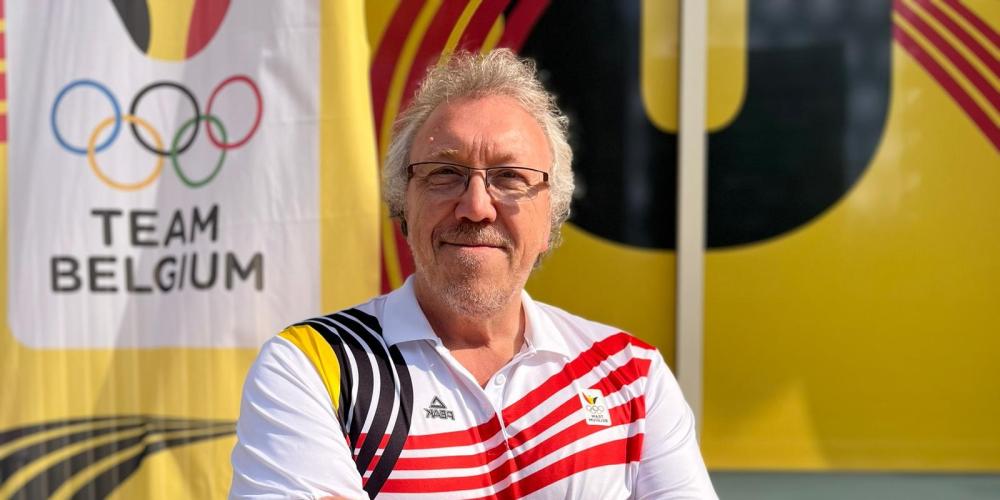


Prof Paul Wylleman, professor of clinical and sport psychology at Vrije Universiteit Brussel (VUB), has been awarded the ISSP Distinguished International Sport Psychologist Award by the International Society of Sport Psychology (ISSP), the global organisation for sport psychology. This top distinction in the field recognises Wylleman for his exceptional, influential and long-standing contribution to advancing sport psychology. He will receive the award at the 16th World Congress of Sport Psychology, taking place from 8 to 12 December 2025 in Hong Kong, China.
This is far from Wylleman’s first moment in the international spotlight. Back in 2017 he received the Distinguished International Scholar Award from the Association of Applied Sport Psychology (USA) for his significant scientific and applied contributions to sport and performance psychology. With the ISSP Award, the international community once again underlines his leading role in shaping sport psychology worldwide.
Mental health during and after a sporting career
Prof Wylleman’s research lies at the crossroads of psychology, sport and society. “At the heart of our work is the question of how athletes can improve their performance while safeguarding their mental health, both during and after their athletic career,” he explains. “We distinguish three levels of support. First, performance enhancement: how can an athlete or team perform more confidently under pressure or stay focused at crucial moments? Second, the subclinical zone: support for issues such as stress, sleep challenges or eating habits that may not be clinical, yet still affect performance and wellbeing. And third, clinical challenges: support for burnout, depression or eating disorders, which require specialised interventions.”
A key innovation in Wylleman’s work is the attention given to the mental health of the athlete’s entourage. Parents, partners, coaches and even referees and judges are all part of the psychological ecosystem surrounding an athlete. Their support, expectations and pressure directly influence both performance and wellbeing.
Mental support for Olympic athletes
The application of sport-psychological insights spans many years, multiple goals and several countries. Since 1988, Wylleman has used sport psychology within the Elite Sport and Study service to support VUB’s elite student athletes. He also developed a national system of mental support for Dutch Olympic and Paralympic athletes and served as team psychologist for them during the Rio 2016 and Tokyo 2020 Olympic Games. Since 2022 he has taken up that role at Team Belgium. During the Paris 2024 Olympic Games, he served as Welfare Officer and team psychologist for the Belgian Olympic team. He now leads an international group of experts who oversee the mental health and (sport) psychological support of Olympic and Paralympic athletes and teams across different countries.
Bringing insights into education
Recent collaborations with international sport federations also look at the psychological challenges faced by referees and judges. Meanwhile, insights from sport are being translated into education and professional settings, for example in talent development, leadership, psychological skills, cognitive readiness, and resilience. “Sport psychology reaches far beyond elite sport,” says Wylleman. “What we learn about handling pressure, staying motivated or recovering from setbacks applies just as well in schools, workplaces or healthcare. The aim is always the same: helping people become mentally stronger and supporting their wellbeing.”
Within the VUB, Wylleman also aims to anchor sport psychology more firmly in the curriculum. Together with colleagues from the Faculty of Psychology and Educational Sciences, he is working to integrate themes such as coaching, talent development, performance behaviour and mental health into the master’s programmes in clinical psychology and occupational and organisational psychology. “This ensures that future psychologists become familiar with insights and methods that have proven their worth in sport and in society more widely,” he adds.
A unique and lasting contribution
By awarding the ISSP Distinguished International Sport Psychologist Award, the international community acknowledges the unique and lasting impact of Prof Wylleman’s work. His contributions have not only shaped the field globally but have helped countless athletes, coaches, students and professionals grow stronger in both their performance and their lives. “This recognition is not just a personal honour,” Wylleman concludes. “I see it mainly as an encouragement to keep building the bridge between fundamental research and real-world impact, together with my colleagues and students.”