
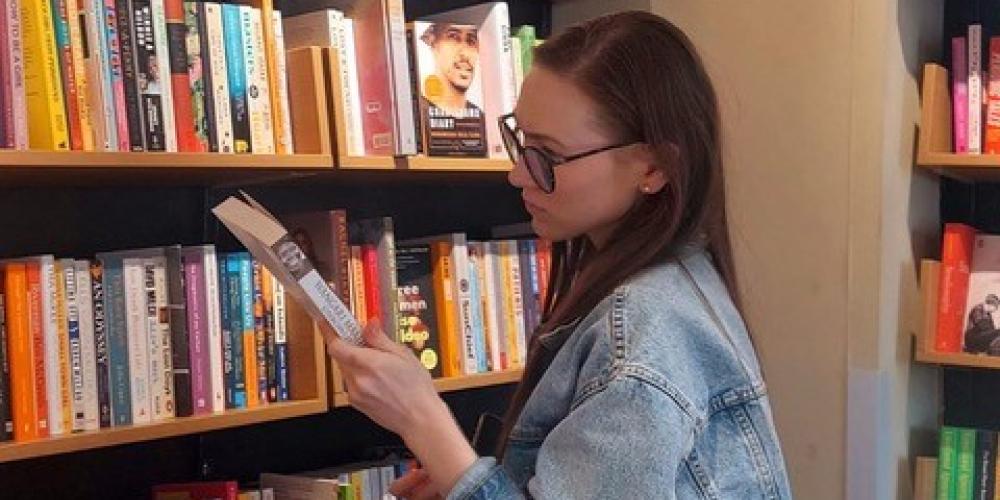


The VUB is one of Belgium’s most international universities. More than a third of our students come from abroad. But who are they, what drives them, and how do they experience life in Brussels? In this new series, we introduce you to our international students. Today: Dorothea from Germany, master’s student in Multilingualism and Foreign Language Acquisition.
Growing up among languages
Dorothea was born in Bielefeld, in the west of Germany. “There’s a running joke that Bielefeld doesn’t really exist,” she laughs. “But I can confirm: it definitely does.” Later, her family moved to eastern Germany, near Leipzig and Dresden, where they still live today.
Her interest in languages didn’t come out of nowhere. Before starting at the VUB, Dorothea already obtained a qualification as a Business Assistant for Foreign Languages. “It was a very practical programme, with lots of administration, accounting and internships.” Those internships took her to Barcelona, where she lived and worked for a year. “I first worked for a start-up in marketing and administration, and later at a language school. That’s where I really came into intensive contact with Spanish.”
That stay became a turning point. “I saw students from all over the world coming to Barcelona to learn Spanish. That’s when I thought: this is what I want. Not just to use languages, but to truly understand how they work and how people learn them.”
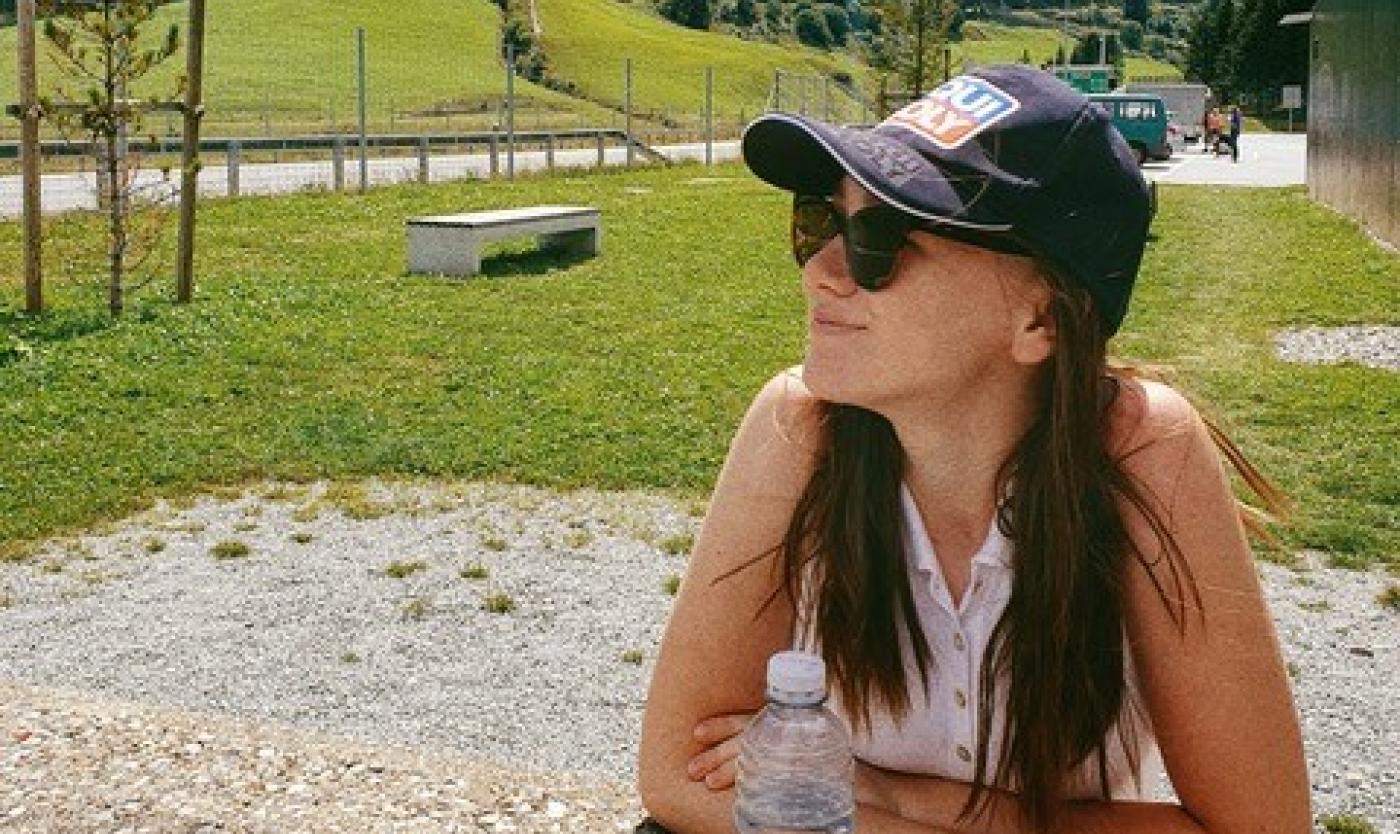
“I didn’t just want to use languages, but to understand how they work and how people learn them”
Even so, an academic path was not an obvious choice. “In Germany, I wasn’t allowed to start university studies with my diploma,” Dorothea explains. “That had to do with subjects like chemistry and physics that I hadn’t taken during my training, even though they had nothing to do with languages. Those are simply the German rules.”
A friend advised her to look beyond the border. “I looked at many programmes, but Brussels was actually the only place where I thought: this is worth starting three years of study again.” The decision was quickly made. “The programme appealed to me, it was affordable, and it’s not too far from my family. In Belgium, my diploma (an ‘Abitur’) was also sufficient.”
First impressions
Her first encounter with Brussels was mixed. “I had just come from Barcelona, so that was quite a switch,” she admits. “Barcelona is sun, architecture, life in the streets. Brussels felt a bit greyer at first.” That feeling soon changed. “The longer I’ve been here, the more I’ve come to appreciate the city.” The VUB campus also made a strong impression. “I’m still a big fan. Everything is well connected, everything is in one place, and there are so many green areas. When friends come to visit, I always take them to the campus.”
Belgian weather doesn’t bother her much. “I’m not really a typical summer person,” she laughs. “So it’s fine for me.”
In daily life, Dorothea mainly speaks English. “My master’s programme is entirely in English and Spanish, and so is my social circle.” She did study Dutch during her bachelor’s. “According to my certificate, I’m at A2 level.” As a German speaker, she didn’t find the grammar too difficult, but the pronunciation was. “And what’s funny is that I often transfer English structures into Dutch, rather than German ones. That really surprised my lecturer.” She also studied French in the past, but that knowledge has faded somewhat. “Since I learned Spanish, my French has honestly gone downhill,” she says openly. “But if I stay in Brussels, I definitely want to pick it up again. I think it’s important and respectful to speak the languages of the country.”
Feeling at home far from home
What Dorothea particularly values about the VUB is the international atmosphere within her programme. “Our master’s is called MUMA (Multilingual Master), and it really feels like a community. We have students from at least twenty different nationalities.” Because of the flexible curriculum, everyone takes different courses, but she sees that as a strength. “You’re constantly meeting new people.”
“VUB feels like a community. You really don’t have to be on your own here”
She also feels supported outside the classroom. “During my bachelor’s, we had the MUBA (Multilingual Bachelor) community, with activities like quizzes, film nights and social events. You really don’t have to be on your own here.”
To feel at home in Belgium, Dorothea often turns to small rituals. “I call my mum to ask for recipes,” she says. Her family has Russian-German roots, which shows in a very distinctive cuisine. “Pelmeni, soups with potatoes and dough dumplings… or even just the way my mum makes lasagne. I miss that sometimes.”
In Brussels, she likes to seek out nature. “I love the Bois de la Cambre. I also really like the area around Rue de Bailli, with its second-hand shops and nice little spots. Other favourites are the Waterstones bookshop and a tearoom called Roselyne, which unfortunately closed its doors recently.”
Future plans
After her master’s, Dorothea wants to enter the job market. “My ideal job is somewhere between education and languages.” She’s thinking about multilingual or international schools, but also about administrative or organisational roles within education. Alongside that, she has a creative dream. “I already translate children’s books from English into German. I’d love to work in the world of children’s books: translating, publishing, designing.”
Whether she’ll stay in Belgium remains uncertain. “Here I have a social network and lots of opportunities, especially in the field of languages. But my family lives in Germany, and that matters too.” She’ll let future job opportunities guide her decision. “We’ll see where life takes me.”
