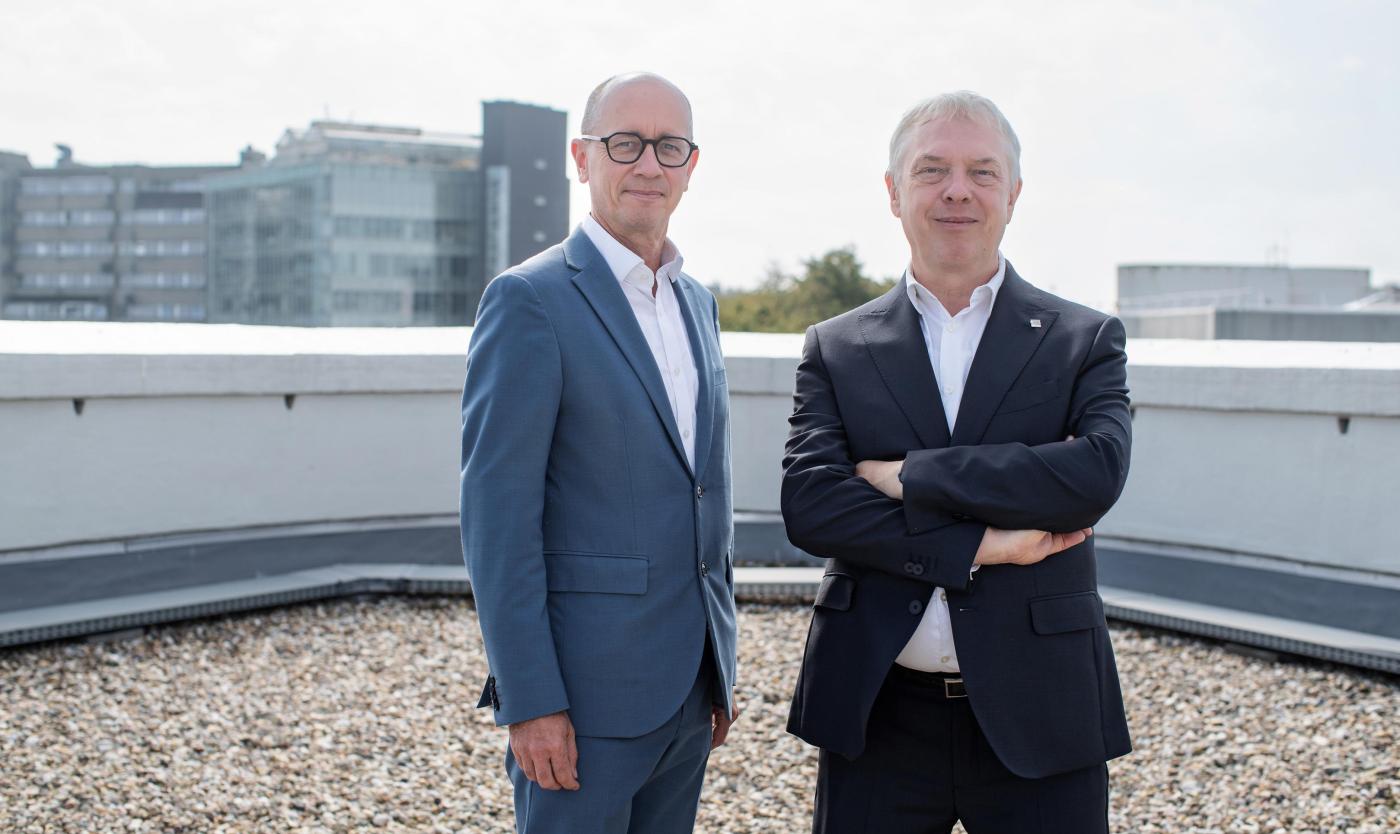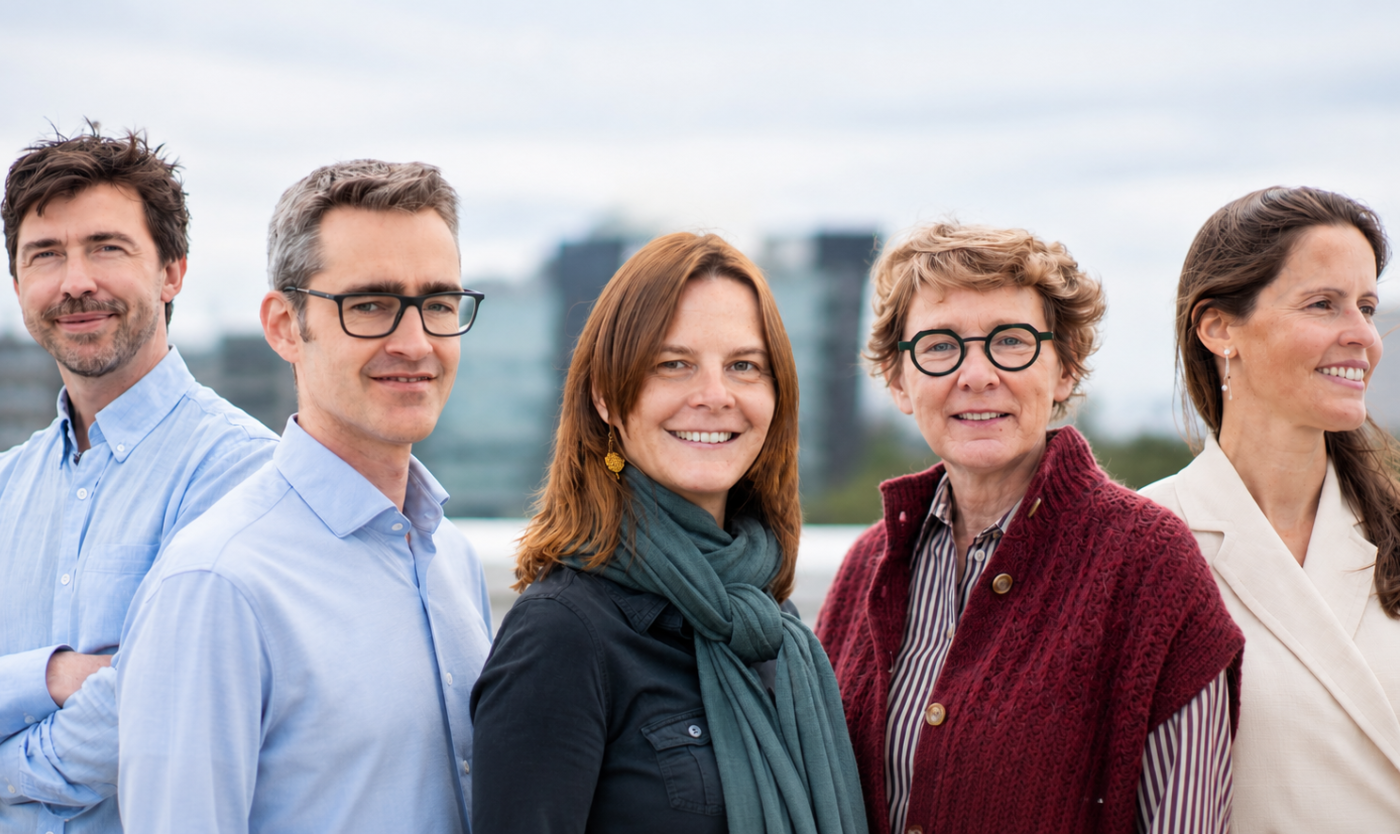


Rector Jan Danckaert is beginning his second term of office. Together with four Vice-Rectors and five policy officers, he will continue to shape VUB’s strategic direction over the next four years. At the same time, this policy team, together with the university’s policymakers, is working on a long-term vision for the period 2027–2034: the General Strategic Plan GSP6. The Vice-Rectors are responsible for the day-to-day leadership within their respective policy areas. Which challenges do they want to tackle first? What do they see the university looking like in eight years’ time? Here, they offer a first glimpse into their plans.
GSP6: VUB on course for 2034

Sofie De Kimpe - Vice-rector Education and Student Affairs
“On our campuses, students should be able to meet and connect with one another across disciplines.”
What drives your commitment?
“I studied criminology and political science. So I have always been fascinated by whether and how we can change society. I have also lost my heart to this university. #weareVUB is not a slogan; it is a sense of belonging in its purest form. I feel deeply committed to VUB, which has a special role to play in Flanders as a secular humanist university. Personally, I was ready for a new challenge in university governance. The question came unexpectedly, but I am grateful to the Rector and the previous Vice-Rector for their trust, and reassured that, for the time being, I can rely on the expertise of my colleague Nadine Engels.”
What do you bring from your previous experience?
“I know that I enjoy developing policy plans. When doing so, I think carefully about a narrative for the future. It is important to build such a narrative on evidence and to clearly define the impact you want to achieve. Data help with this. They strengthen both your arguments and the expected impact. Ultimately, policy is mainly ‘made’ in its implementation. Policy therefore needs to be effective: decisions should deliver results. Monitoring is essential, because otherwise you do not know whether you are achieving what you set out to achieve.”
Which challenge do you want to tackle first?
“The institutional review has mapped out our strengths and areas for improvement. We will take these into ASP6, together with the Rector’s priorities. So the priorities are clear. The real challenge is to systematically examine what impact our policies actually have, rather than constantly adding new measures. Take study success, for example. We have been working on this for years and will continue to do so, but first we will look at what has already worked and where adjustments are needed. AI is also a priority in our education policy. VUB has built up an enormous amount of expertise through experiments and pilot projects. The next step is to embed that knowledge more broadly in our curricula. We want to provide our teaching staff with clear frameworks, time and support to do this. We also want greater stability and continuity in educational support. Assistants and researchers often leave after four years. When they do, knowledge and skills that are difficult to replace disappear with them. The same applies to programme council chairs and programme teams. We will work on this.”
What should VUB look like in eight years’ time?
“VUB should remain a strong university, committed to high-quality, research-based and excellent education. Connection is more important than ever: between people, technology and science. At its core, our students need to learn how to be capable of acting in the face of uncertainty and complexity. The problems they will encounter do not respect disciplinary boundaries. They are questions of healthcare, security, technology and sustainability, in which science, technology and people are inextricably linked. Our campuses should therefore be places where students can meet one another across disciplines and do things together that they cannot do at home or in their student rooms: eat and exercise together, debate, party and study in peace and quiet, but also listen to an inspiring lecturer. Of course, all of this costs money. We will have to make choices, and the road ahead will be long and difficult. But I am already very excited about it.”
Prof. Dr Sofie De Kimpe is beginning her first term as Vice-Rector Education and Student Affairs. She will focus on high-quality and inclusive education, student wellbeing and forward-looking student policy. Her expertise in diversity, polarisation and societal challenges is closely aligned with VUB’s diverse context.
Wim Vandenbussche - Vice-rector Internationalisation
“VUB will be more Brussels-based and more international than ever.”

What drives your commitment?
“I am a child of VUB. I owe an enormous amount to this institution and to the people who have shaped the university into what it is over the past decades. When you are given the opportunity to give something back and help build VUB’s future, there is no hesitation.”
What do you bring from your previous experience?
“A number of convictions. Build on the identity, expertise and openness that connect us as members of VUB. Listen to people who disagree with you. Value everyone as a full member of our VUB community, from the cleaning staff and restaurant team to administrative staff, students and professors. And be a compassionate but persistent ambassador for the values and commitment that make VUB unique.”
Which challenge do you want to tackle first?
“I want to develop a clear strategic direction that embeds targeted internationalisation in every aspect of VUB policy. Internationalisation is now integrated transversally across all policy areas. Successfully streamlining this reform requires consultation and clear choices in three areas: networks and strategic partnerships; academic diplomacy and international representation; and international positioning and regional development.”
What should VUB look like in eight years’ time?
“Financially healthy, partly thanks to our international profile. Once again pioneering in internationalisation, making us more Brussels-based and more international than ever, while being firmly embedded in renewed European and international networks. And a beacon of free enquiry, providing opportunities in education, research and innovation for young VUB colleagues. They will shape the institution’s future across all fields of science, including the humanities.”
Prof. Dr Wim Vandenbussche is beginning his first term as Vice-Rector Internationalisation. He will continue to focus on academic diplomacy, international networks and strategic partnerships, and on the interplay between VUB’s global positioning and regional development.

Pieter Ballon - Vice-rector Research
“Our research success continues to grow, even in times of budget cuts and AI-driven disruption.”
Which challenge do you want to tackle first?
“My priority is to maintain the upward trajectory of our research success in times of budget cuts and AI-driven disruption. I would also like to expand our research collaborations within and beyond Europe, and make a special effort to support researchers at the start of their careers.”
What should VUB look like in eight years’ time?
“By then, VUB should be even more than it is today an international centre of excellence in a number of key research areas. We are entering a period of high societal expectations of research. We must rise to that challenge. I believe research will become more exciting than ever in the years ahead.”
Prof. Dr Pieter Ballon is beginning his second term as Vice-Rector for Research. During his first term, support for European research funding was strengthened, new initiatives around artificial intelligence and open science were developed, and additional opportunities were created for emerging research talent. In 2024, VUB was among the twenty strongest European universities in terms of EU research funding.
Peter Schelkens - Vice-rector Innovation & Valorisation
“Our ambitions are taking concrete shape at the Zellik Research Park.”

What do you bring from your previous experience?
“The past policy period unfolded in a turbulent geopolitical context, characterised by technological disruption and financial challenges. Yet, or perhaps precisely because of this, our researchers, research groups and TechTransfer colleagues have succeeded in further strengthening VUB’s capacity for innovation. Thanks to their efforts, we are now among the top 20 European universities in terms of European funding. The number of invention disclosures is growing, and so is the number of VUB spin-offs. This is a direct result of the strategic, personal guidance that TechTransfer provides to researchers and research groups, as well as the structural support from the Flemish Industrial Research Fund.”
Which challenge do you want to tackle first?
“Above all, we need to build on this momentum. The dynamic I mentioned earlier is becoming increasingly visible in physical terms. Our ambitions are taking concrete shape at the Zellik Research Park, for example. The new data centre is the flagship of the site. It will house not only the Flemish supercomputer, but also the server infrastructure of VUB and UZ Brussel. There is also breaking news: Siemens is moving its headquarters into the new Origin building. This will bring an international industrial anchor company to the park. It will create new opportunities for our research community for collaboration and valorisation.”
What should VUB look like in eight years’ time?
“We want more. We will therefore align our innovation efforts more efficiently, while also ensuring more consistently that efforts in research, innovation, internationalisation and education reinforce one another. From a policy perspective, this means using our resources more efficiently. This should lead, on the one hand, to a higher return on investment and, on the other, to a sharper profile for VUB in a highly competitive landscape. That is the task we want to accomplish together, with the entire university community.”
Prof. Dr Peter Schelkens’ current term as Vice-Rector for Innovation and Valorisation runs until the end of the 2027–2028 academic year.
“Today’s societal challenges call for academic leaders with vision, expertise and the ability to connect people. With this team, we bring together a broad combination of expertise, talent, experience and commitment to further develop VUB as a pioneering, socially relevant and internationally oriented university at the heart of Europe.”
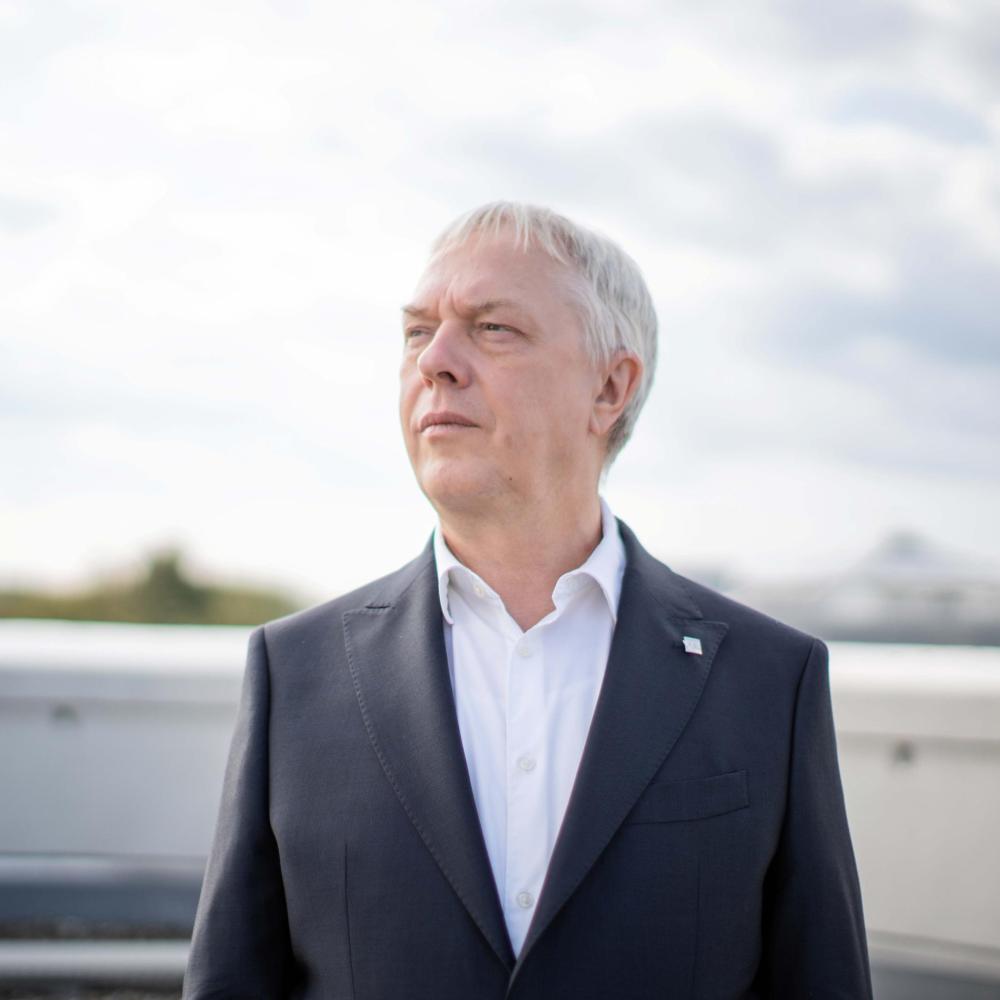
From left to right: Peter Schelkens, Pieter Ballon, Jan Danckaert, Sofie De Kimpe and Wim Vandenbussche.
Vice-Rectors and thematic leads: who are they and what role do they play?
Vice-Rectors and thematic leads form VUB’s policy team together with the Rector. Their roles, however, are different.
The four Vice-Rectors are part of the university’s highest level of academic leadership and are responsible for the day-to-day management of the university within their respective policy areas: Education, Research, Innovation & Valorisation, and Internationalisation. Their term of office generally runs in parallel with the Rector’s term.
The five thematic leads take on a specific remit within key strategic themes: Sustainability, Artificial Intelligence, Entrepreneurship, Health Valley and Student Affairs. They support the Rectorate in developing and implementing university policy, working closely with Vice-Rectors, university services and faculties. Their term of office is two years and can be extended.
About GSP6 – VUB’s new General Strategic Plan
From autumn 2026 onwards, the Rectorate will work step by step with policymakers from all levels of consultation and decision-making – including Vice-Rectorates, faculties, central services and councils – to develop a shared vision for VUB’s future: GSP6.
GSP6 is the new General Strategic Plan. It sets out a long-term vision and strategic objectives for the university for the period 2027–2034, and translates these into policy priorities for Rector Jan Danckaert’s second term of office (2027–2031). In this way, GSP6 sets the strategic direction for our university and provides a shared framework for future policy decisions.
The first draft of GSP6 will be submitted to the relevant councils in early 2027. Following approval, the plan will come into effect in March 2027, with its strategic priorities then translated into policy across all areas of the university.
Want to stay fully up to date with GSP6? You can do so via SharePoint