




With an investment of around €3.2 million, the VUB will have the opportunity over the next five years to investigate one of today’s major societal challenges: mental wellbeing in the workplace. The Helios Chair brings together VUB researchers from different disciplines who will collaborate with Belgian organisations on evidence-based prevention strategies. According to co-chairs Professors Christophe Vanroelen and Joeri Hofmans, the key lies not only in supporting employees who are already struggling, but above all in organising work in a healthier way.
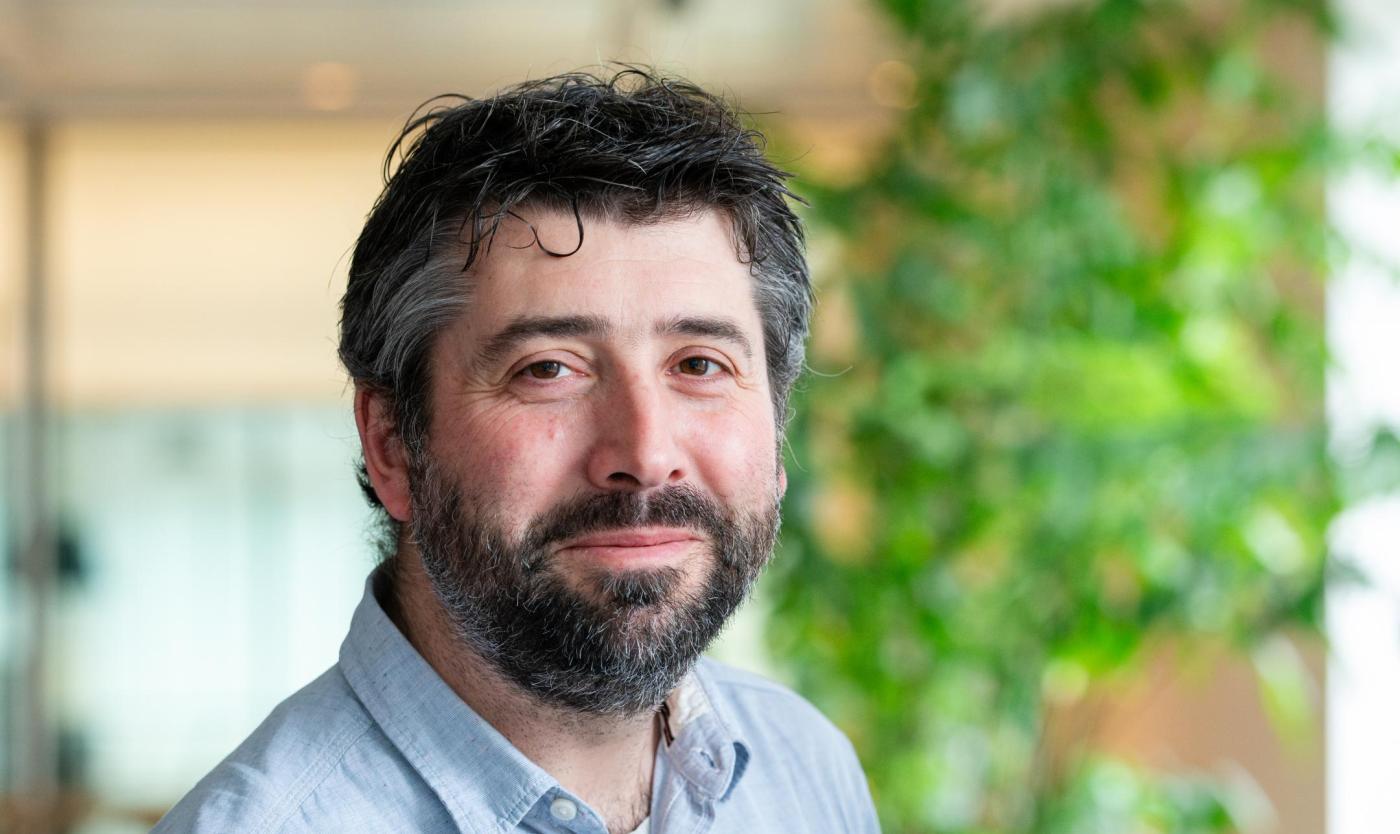
Professor Christophe Vanroelen
The number of people on long-term sick leave due to burnout and depression continues to rise. Have we focused too much on recovery and too little on prevention?
Prof. Vanroelen, Professor of Sociology at the VUB: “As a sociologist of work, I find the discussion about long-term illness deeply frustrating. The focus is mainly on the outcome: how many people are dropping out, and how can we get them back to work more quickly? This often leads to a search for someone to blame: health insurance funds that are too lenient, employers who do not provide sufficient adapted work, employees who do not make enough effort to return to work. Yes, all of these factors play a role. But the real problem starts much earlier: with the way jobs are organised and how work and private life are balanced. Employees are not blank slates. They are people with abilities and limitations, with families, relationships, concerns and interests. The idea that work organisation interacts with these realities remains something many organisations struggle to acknowledge. As an expert, you can say that we need to intervene before problems arise. But what should we do? Offer a gym membership? Introduce mindfulness sessions? Change the organisation of work? Prevention is complex. There are dozens of interventions designed to make jobs healthier, but their impact is often difficult to measure. Business leaders are right to ask for scientific evidence.”
Prof. Hofmans, Professor of Work and Organisational Psychology at the VUB: “The way fundamental research is traditionally conducted also hinders progress. Scientists usually work within a single discipline and examine mental health problems and potential solutions through that particular lens. Psychology, for example, focuses strongly on the individual and has therefore mainly developed interventions aimed at increasing personal resilience. We recognise that such a focused approach has its strengths, but it does not always allow us to tackle mental health problems sufficiently, precisely because they are much more complex. This chair allows us to bring different disciplines together and use this richness of perspectives to address issues that genuinely keep organisations and society awake at night.”
“Toxic leadership is a complex phenomenon; the working environment also plays a role”
What are currently the main causes of mental health problems in the workplace?
Prof. Vanroelen: “The causes are very diverse. The work itself plays a role: do employees have enough autonomy and room to manage job demands? Job insecurity is also an important factor. This is not only about the fear of losing a job, but also about change and uncertainty about what lies ahead. Think of restructuring or a lack of resources and personnel, which is a major issue in healthcare and the public sector. We see that women are more vulnerable to dropping out of work. Besides the work-life balance, this also relates to the sectors in which they are employed. The major growth sectors in our economy are contact-based professions, ranging from domestic services to healthcare. These are sectors where women predominantly work. It is precisely there that we see a sharp rise in work-related incapacity. And if there is one stress factor that national and international research has shown to be consistently increasing since the 2000s, it is workload and growing complexity requirements, often linked to technology. People struggle to keep pace. Of course, we should not ban technology, but we can organise work in a way that makes technological innovation supportive rather than an additional source of pressure.”
Prof. Hofmans: “Toxic leadership is often pointed to today as a major cause of mental health problems. To be clear, toxic leadership poses a serious threat to employees’ mental wellbeing, but the way this problem is often viewed is too simplistic. The cause of such behaviour is frequently attributed solely to the leader — the bad apple — while we know that the working environment also plays a role and can encourage toxic leadership. Think of workplaces where competition is strongly stimulated or where performance-based pay is central. If you only look at the individual as the cause, the solutions remain limited. You can try not to hire such people — which is difficult, as research shows that individuals with these traits often progress into senior positions — or dismiss them, but by then the damage has already been done. By recognising that the work environment can both trigger and limit toxic behaviour, you gain more tools to intervene. No matter how many leadership training sessions you offer managers, without the space to apply what they learn or the right working context, they remain a dead letter.”
“Initiatives to combat burnout are often implemented top-down, without asking employees about their main sources of stress”
The chair aims to rethink burnout. Why?
Prof. Hofmans: “We often have an overly simplistic view of mental health problems. We now know that one-size-fits-all solutions for burnout do not work. Burnout results from a complex interaction between individual differences, professional history, personal life history and many other factors. It also manifests itself in different ways. For some, cognitive dysregulation is most prominent; for others, emotional dysregulation or a complete lack of energy. Simply understanding this complexity helps us develop better solutions, both at the individual level and within the working environment.”

Professor Joeri Hofmans
Prof. Vanroelen: “Prevention of mental wellbeing problems at work is still too often driven by intuition. Nobody can oppose an employer who takes care of their people with a gym membership, a fruit basket or a pool table. Such initiatives make people feel valued. But if the workload remains extremely high, employees feel they are simply being fobbed off. Initiatives are also often imposed from the top down without asking employees what their main sources of stress are. That too is a missed opportunity. A good wellbeing policy requires a thoughtful and structural approach.”
“We want to deliver an open-source handbook and toolbox, including for smaller organisations”
What do you hope to have achieved in five years’ time?
Prof. Hofmans: “We do not want to develop interventions solely from an academic perspective. We want to work together with organisations, starting from concrete needs and questions. There is still too often a gap between science and practice. This must be a co-creative process. One of the main goals of this chair is to produce a practical handbook that organisations can actively use: a guide containing good practices and interventions that have proven value in real-world settings. I also hope we can move away from the blame game about who is responsible and evolve towards a more constructive debate about mental wellbeing.”
Prof. Vanroelen: “If we succeed in developing a free, open-source handbook and toolbox, that will be incredibly valuable. Today, many private partners develop methodologies and build commercial models around them. Large companies can make use of these services, but many smaller businesses and social-profit organisations often lack the resources to hire expensive consultants. The more employers we can convince that prevention genuinely has a business case, the greater the benefits. We strongly believe — and there is evidence supporting this — that prevention is one of the most important solutions to long-term work incapacity. Once people drop out, they often enter a lengthy process that does not always end in reintegration. Over the next 20 to 30 years, we are heading towards a period of significant labour shortages. Organisations must realise they will have to work with the people they have, with all their strengths and vulnerabilities, and that investing in their wellbeing is therefore worthwhile.”
Which prevention guidelines should be on every CEO’s desk today?
Prof. Vanroelen: “We have developed a strong definition for this. It reads: ‘The ideal approach to primary prevention is holistic, context-sensitive and bottom-up. It stimulates internal ownership and combines short-term improvements with sustainable long-term efforts to improve the psychosocial working environment.’ That is, of course, easier said than done, and that is exactly where the challenge for our chair lies. Culture, openness and awareness are crucial. We should also remember that work is not only a place where stress arises, but also a source of many positive things. By consciously reducing stressors while paying attention to sources of energy, support and motivation, we can build sustainable workplaces.”
Prof. Hofmans: “It is essential that people feel heard within their organisation. That is often where things go wrong. Think of wellbeing surveys carried out simply because they are required, after which nothing is done with the results. Genuinely listening is important. Pretending to listen can sometimes be more harmful than not listening at all.”
Bio
Prof. Dr Christophe Vanroelen is Professor of Sociology of Work within the Department of Sociology and a member of the BRISPO research group. He has contributed to several scientific projects on socioeconomic inequalities in health, access to healthcare and work-related health risks. His current research focuses on the impact of work and working conditions on health inequalities.
Prof. Dr Joeri Hofmans is Full Professor of Work and Organisational Psychology at the VUB and a member of the PSYR research group. His research focuses on the role of personality, leadership and motivation at work, with particular attention to individual differences and dynamic processes. He also teaches work and organisational psychology, research methods and evidence-based human resources management.