

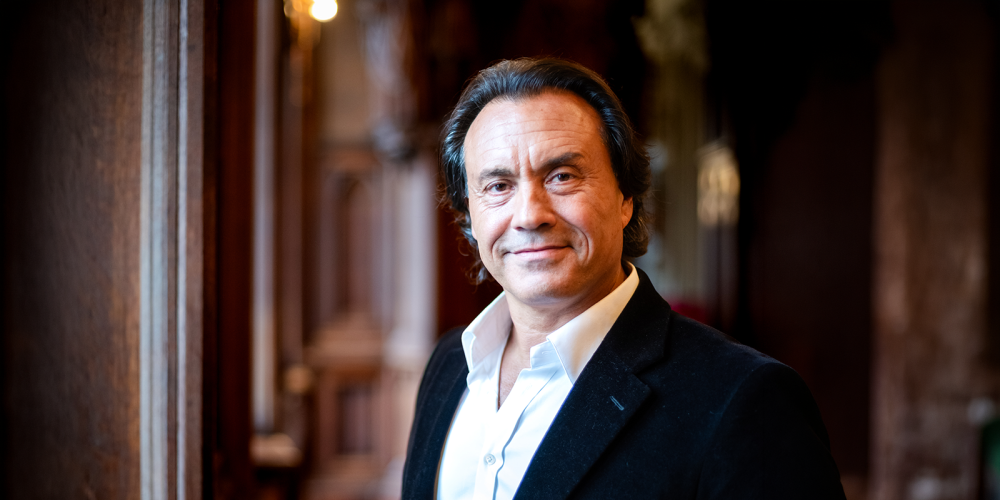


Physical education alumnus Fernando Oliva prepares elite athletes for the Olympic Games. In Paris, he coached Noor Vidts to a bronze medal in the heptathlon. “When I left the VUB, I knew every technique. I was a trainer. But to become a mentor, you have to grow as a person.”
You’re from Argentina. Why did you choose the VUB?
“I first studied physical education in Granada. That’s where I met my wife. She’s Belgian, and that’s how I ended up here in 1999. Because I had completed my degree in Spain just before the Bologna agreements, it wasn’t recognised here. They said I lacked sufficient scientific research training. That’s how the VUB came into my life.”
What do you remember most from your student days?
“I never really joined in with the typical student life. I was already thirty, had children, and ran a restaurant in the evenings. What stays with me most from that time is gratitude. From day one, the VUB opened its doors wide for me. I never felt like just a number. I was welcomed straight away, and the contact with staff and professors was always very human. I’m still friends with Friso Hagman, who supervised my thesis. That gratitude for being able to study is something I try to pass on to my children. Continuing your education is not a given everywhere in the world. I remind them of that regularly.”
“As a coach, you must never forget you’re working with people”
How did you find your direction afterwards?
“I knew I didn’t want to work in a restaurant for the rest of my life. I had studied for so long and wanted to aim high. Coaching had always suited me: motivating people, guiding them to become better at something. I wanted to work with elite athletes, but I didn’t know which door to knock on. The VUB helped me there too. Many people in the sports federations have links with the university, which made those first steps easier. I still had to take a few detours, including coaching at sports camps run by Bloso and the VGC. And I had to improve my Dutch. You can coach in English, but I’ve noticed athletes open up more when they can speak their own language.”
What advice would you give students graduating today?
“First of all, think carefully about what the world needs today from someone with a degree in physical education. Children and adults move less than they used to. They spend more time behind screens, eat less well and are, overall, less healthy. You can play a huge role there. By contributing to people’s health, you can make a real impact. And don’t be too passive. In every job I’ve had, I took the first step myself. I never waited to be asked.”
What challenges do recent graduates face in today’s elite sports world?
“Empathy has become more important. There’s an enormous amount of information out there. We’re flooded with it. But information alone isn’t enough; you have to know how to apply it. As a coach, knowledge about health and training techniques isn’t sufficient. You also have to understand the athlete. Who is in front of you? Why does someone react with anger or nerves? What are they really trying to say?
We live in a world where we’ve made ourselves the norm. Everything revolves around ‘me’. But if you want to take someone with you, you have to be willing to see the other person as the norm and adapt yourself. That’s what the job market needs: people who can connect and who want to make others better. Those are values I also took from the VUB. Even now, when I visit the campus, I feel that energy straight away.”
“If you want someone to follow you, you must be willing to see the other person as the norm and adapt yourself”
There’s growing attention for athletes’ mental health in international elite sport. You also coach coaches. What do you tell them?
“As a coach, you must never forget you’re working with people. The mistake many make is to focus only on the medal. They forget that medals aren’t won by athletes, but by people. You have to see the person. Only then can you respond to what they need.
Times have changed. Every generation grows up with different priorities and values. It’s no longer acceptable to tell an athlete to do something simply because you say so. As a coach, you must adapt, even if you’re wired differently. A true professional can separate their personality from their role. A twenty-year-old athlete processes information very differently from me at fifty. My first task is to explain how I function, and then to understand how they function. Coaching is about collaboration. You don’t own an athlete.”
What technological challenges do you face today?
“As a coach, you now have access to a huge amount of data. Athletes wear smartwatches all the time, not just during training but also at rest. I can see when they eat, how they sleep, even when they menstruate. That makes trust even more important. You have to explain why that information matters and how it helps improve recovery and performance.”
How has your role as a coach evolved over the years?
“When I left the VUB, I knew every technique. I was a trainer. But coaching is different. As a coach, you teach an athlete to perform when conditions are tough: in front of a large crowd, under pressure. And for some, you then become a mentor. At that point, it’s no longer just about performance or technique, but about life as a whole. I don’t need to tell Noor Vidts how to run anymore. What matters is knowing what’s on her mind. My connection with her is very different from the one I have with someone trembling before their first World Championships. But to play a meaningful role at that level, you have to grow yourself — broadly, and deeply — as a human being.”