

Vrije Universiteit Brussel has published its latest Facts & Figures 2024-2025. The overview compiles all key figures on students, research, infrastructure and social impact. The report shows a university that is not only growing, but also fully committed to research, innovation, digital transformation and sustainability.
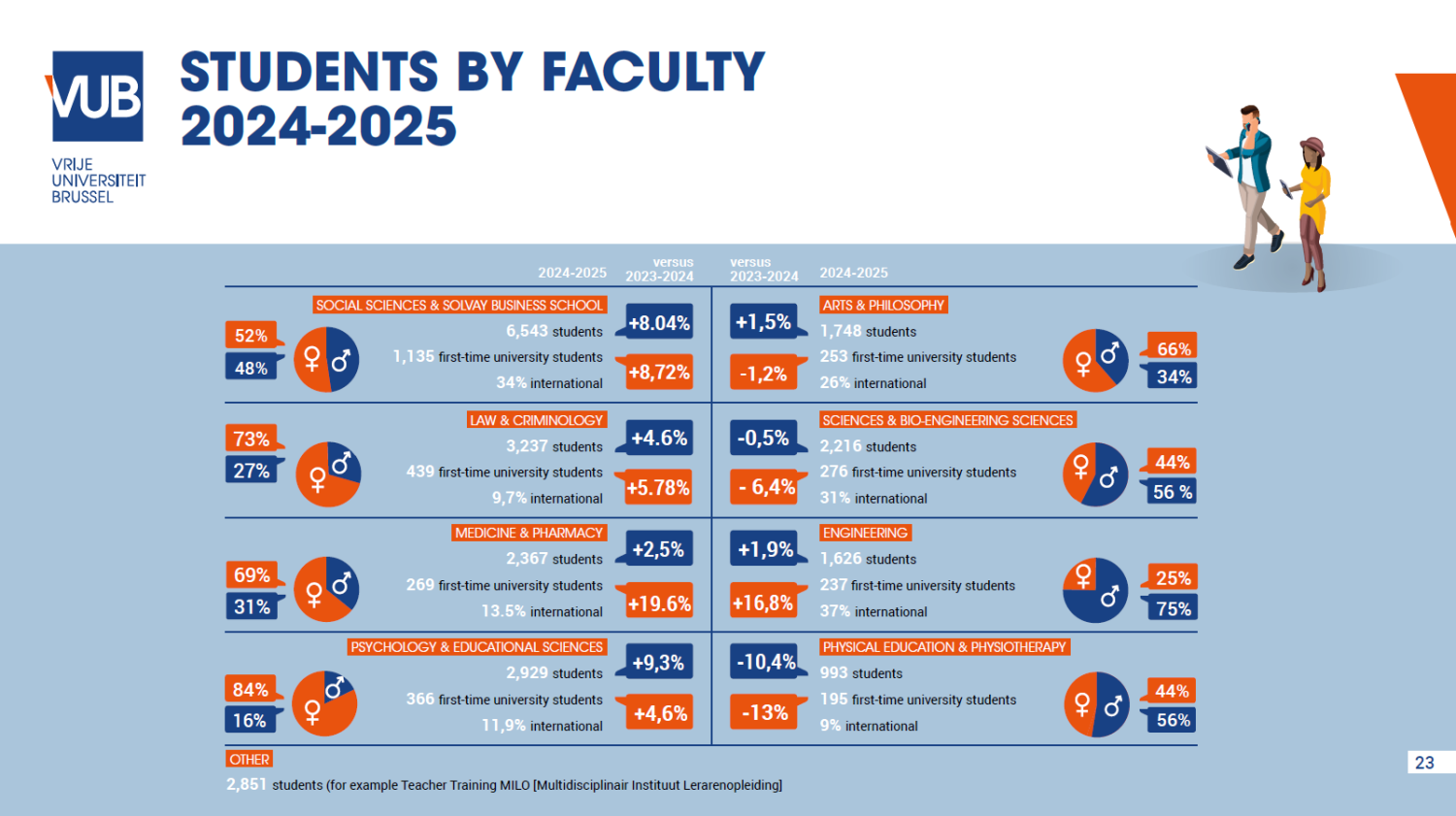
With 24,199 students (+3.57% compared to the previous academic year), VUB is once again proving to be an attractive choice for students. 59.2% of students are female, and 24.38% come from abroad, representing 151 nationalities. The largest intake is at Social Sciences & Solvay Business School (6,543 students), while Engineering (+16.8%) and Sciences & Bio-Engineering Sciences (+19.6%) are growing remarkably strongly.
Learning and Innovation Center
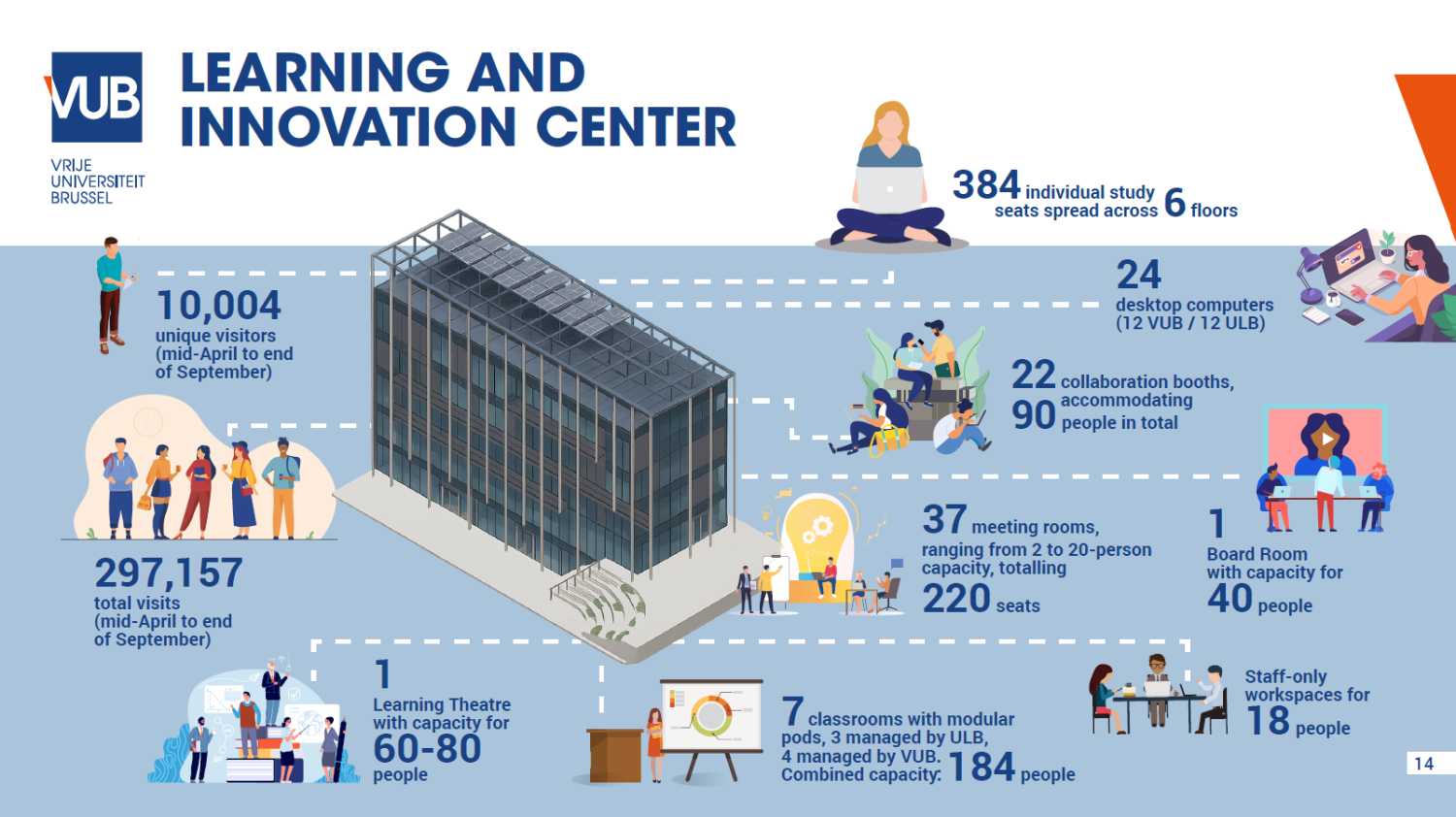
For the first time, the new Learning and Innovation Centre (LIC) is fully operational, a state-of-the-art learning environment that focuses on innovative and flexible educational concepts. The LIC has 384 individual study places, 37 meeting rooms and a Learning Theatre, and offers creative spaces such as a Podcast Studio and an Immersive 360° Room. Since its opening, the centre has welcomed more than 10,000 unique visitors.
Digital backbone
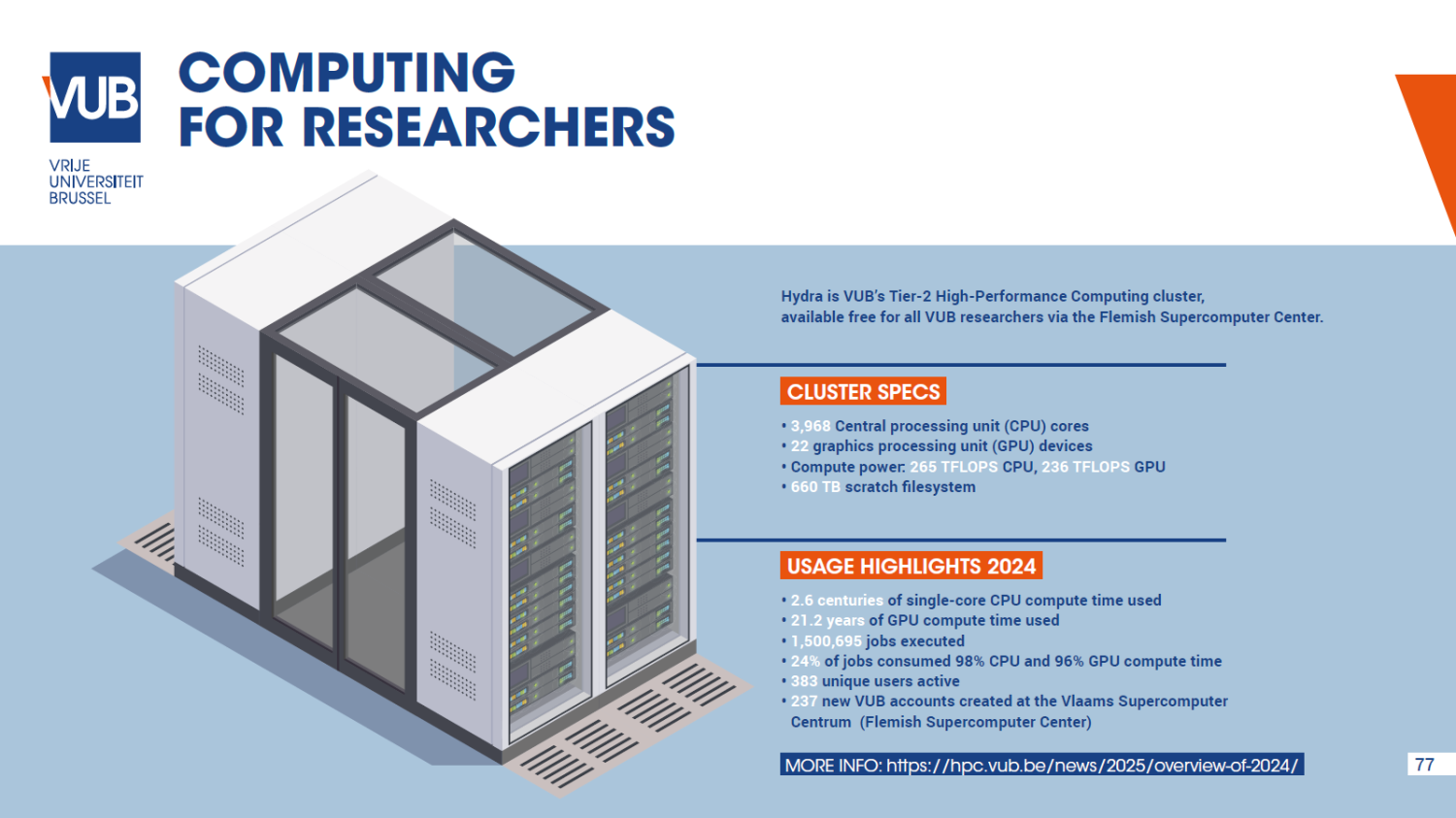
The ICT department solves the digital problems of VUB staff and students. The helpdesk received more than 9,400 problems via email, telephone, the web portal and even walk-ins. The Nexus Data Centre forms the heart of the digital infrastructure, with 48 server racks, 900 computing cores and 3 petabytes of research data. The Hydra HPC cluster provides computing power for big data and AI research with 3,968 CPU cores and 22 GPUs. In addition, VUB manages 2 petabytes of Pixiu research storage and hundreds of terabytes in Microsoft cloud solutions. These investments prepare VUB for AI-driven education and large research projects.
Research and innovation at record levels
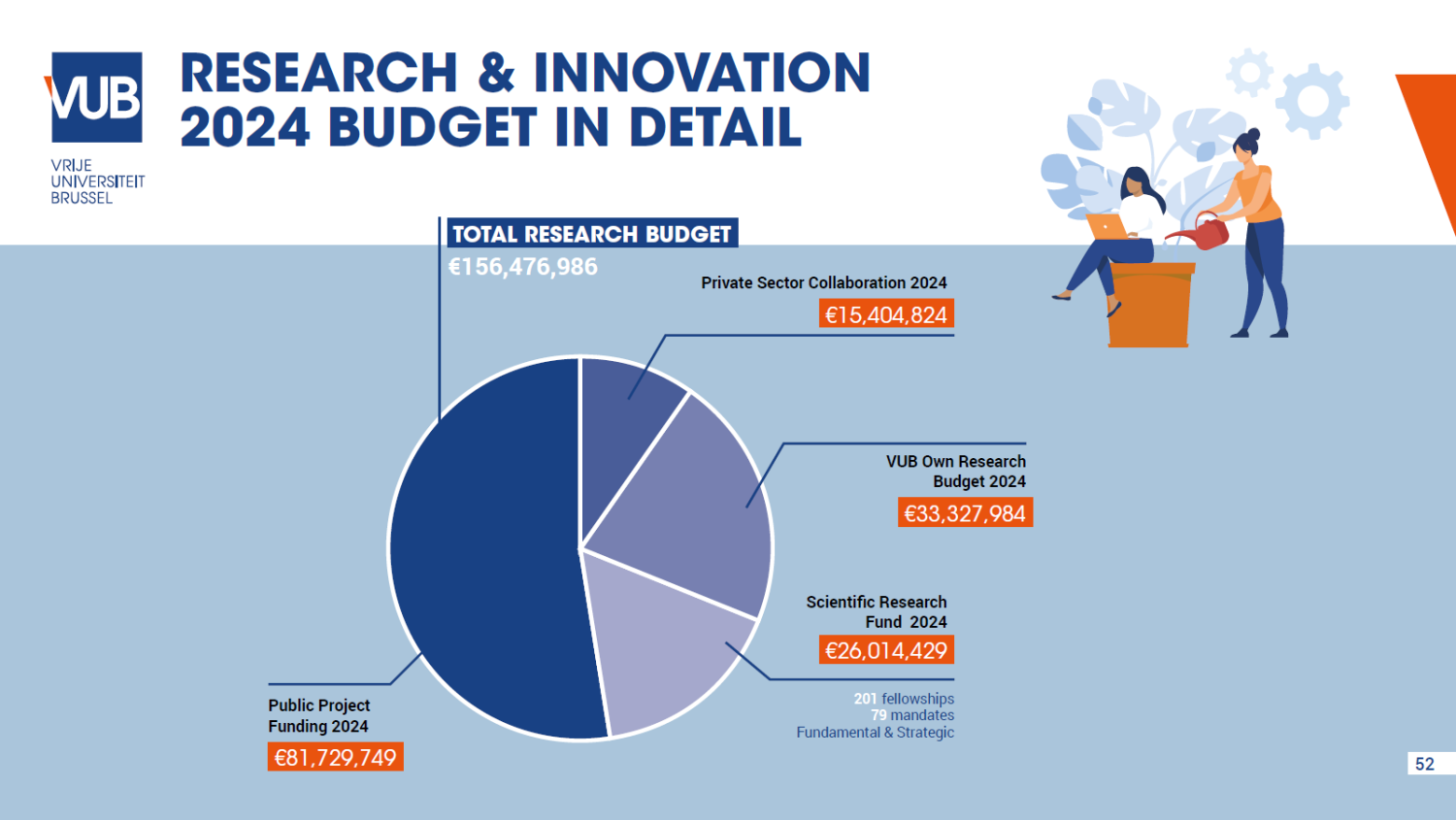
With a research budget of €156.5 million, five new ERC grants and 47 active spin-offs, VUB remains a strong player in the European research landscape. The number of active patent families rose to 223, a 60% increase since 2018.
Sustainability and societal impact
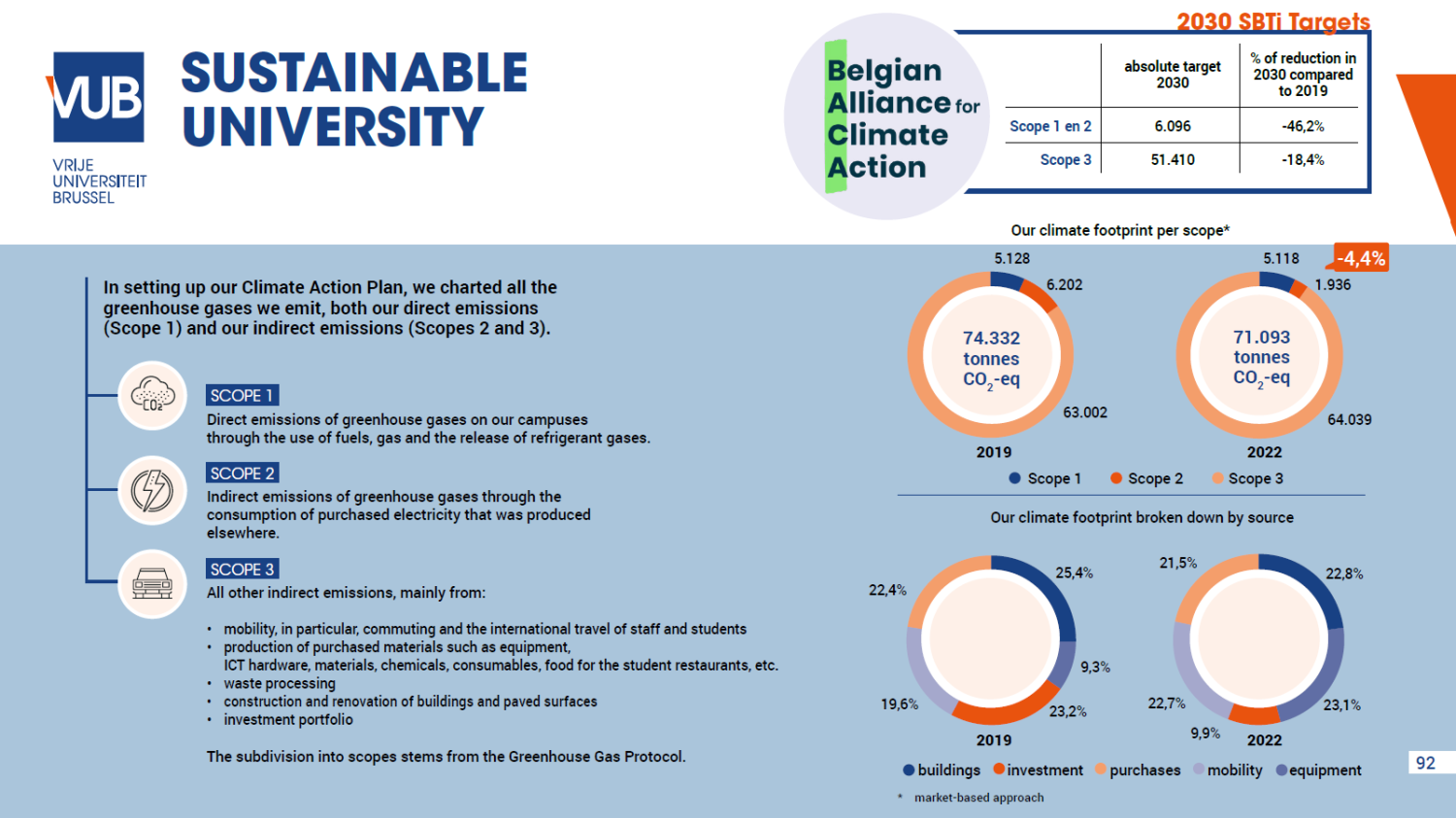
VUB is taking ambitious steps towards climate neutrality: a CO₂ reduction target of -46.2% by 2030, increased waste sorting (Etterbeek 48%, Jette 38%) and a shift towards plant-based food, which now accounts for 27% of all meals sold. Rector Jan Danckaert: "The major challenges of our time – climate change, the energy transition, the challenges of AI and also: a better understanding of our own brains and their dysfunctions – can only be tackled with thorough knowledge, new insights and humanism as our guiding principles."
More than 2,300 doctoral students are helping to build the future at VUB
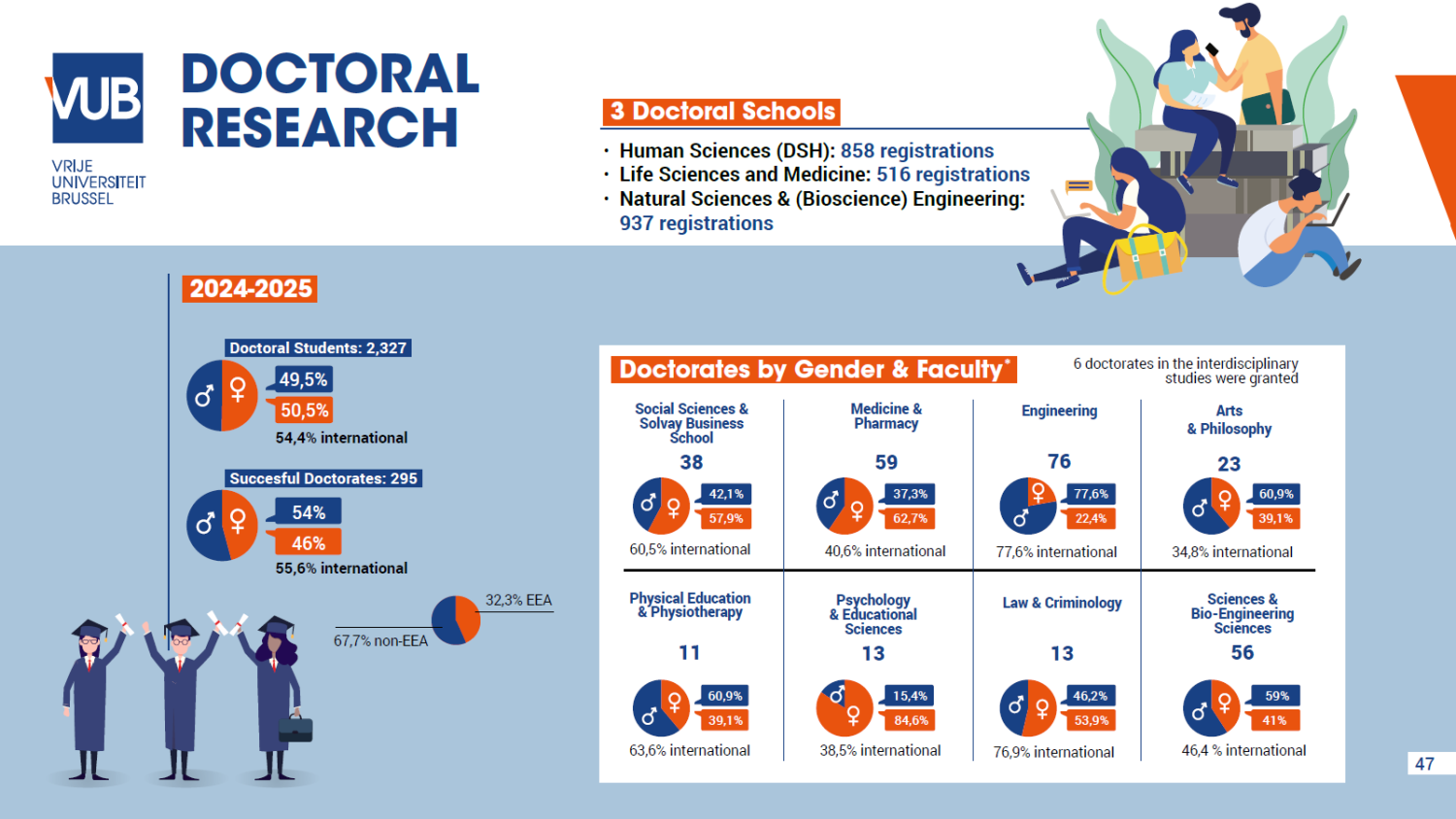
Vrije Universiteit Brussel currently has 2,327 doctoral students. Behind this figure lies a dynamic community of researchers who delve into complex issues and contribute to knowledge that advances our society. From the humanities to biotechnology, from medicine to engineering, VUB offers a broad research landscape in which young scientists can develop their talents.
VUB's international appeal is striking. More than half of its PhD candidates come from abroad, creating a rich mix of perspectives and a strong international research network. In 2024, 295 doctoral degrees were successfully defended, including six in interdisciplinary studies – evidence of the growing collaboration between disciplines.
Most doctorates were obtained in Engineering Sciences (76) and in Sciences and Bio-Engineering Sciences (56). It is striking that Engineering Sciences and Law and Criminology have many international PhD graduates: 78% and even 77% respectively. The share of women also varies greatly by discipline. In Psychology and Educational Sciences and Medicine & Pharmacy female researchers are in the majority, while in Engineering and Sciences & Bio-Engineering Sciences, men are the majority.
A PhD is more than just a title that prepares you for a scientific career. It's an intensive learning experience where researchers develop strategic insight, analytical skills, and project management. They learn to communicate complex ideas, work in international teams, and find creative solutions to challenging problems. This combination of expertise and soft skills makes our PhD students highly sought-after professionals, both in academia and industry.