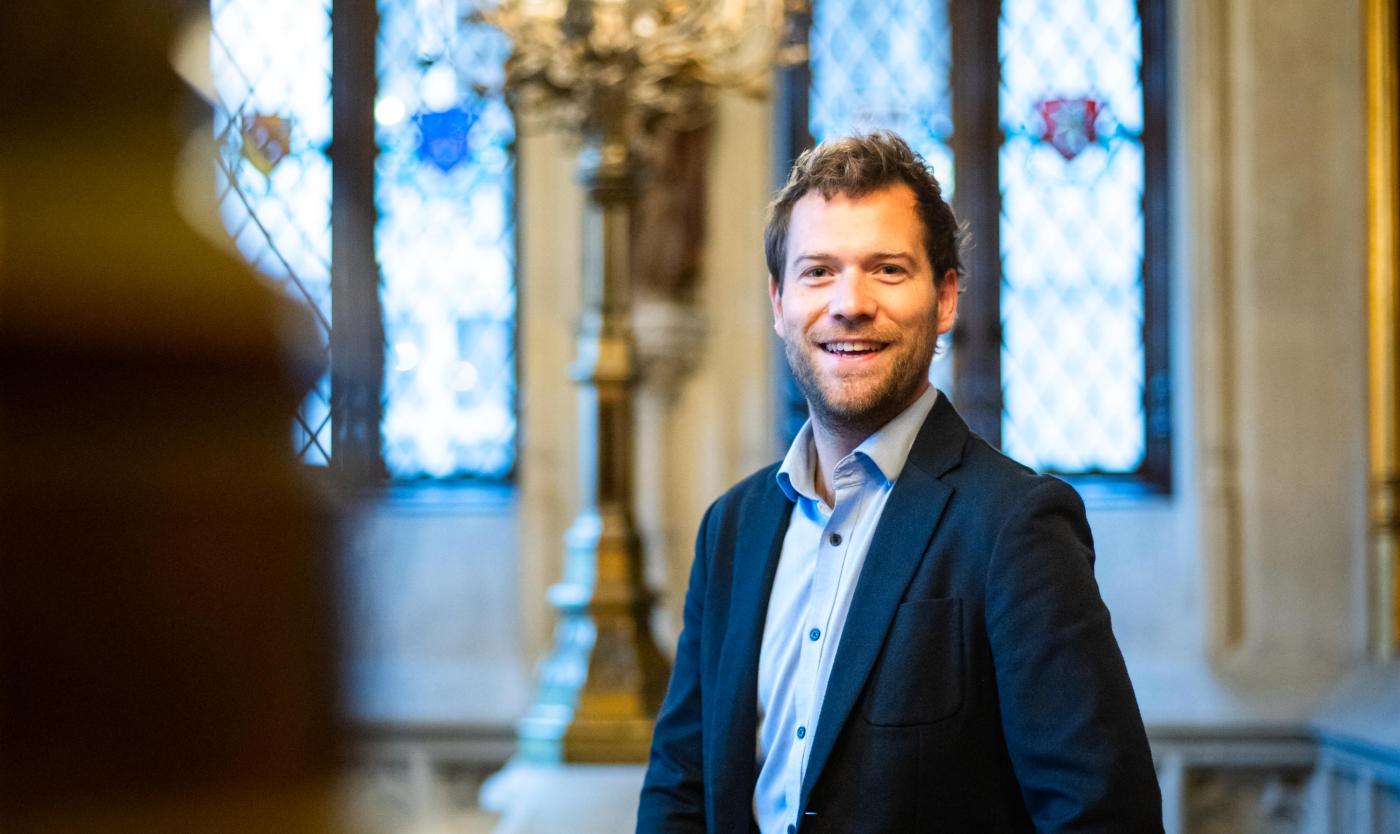


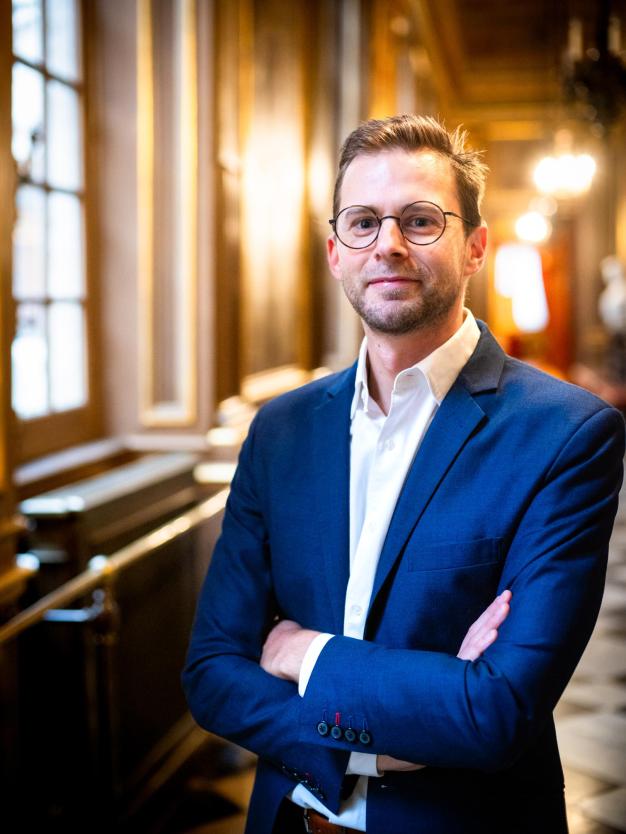
Gilles Claeys (35) graduated from the VUB with a degree in Photonics Engineering. Today, he works as Head of OEM (Original Equipment Manufacturer) Partnerships at Materialise, where he develops strategic collaborations with technology companies across the international 3D printing industry. “You do not need to know straight away what you want to do. Give yourself the space to discover where your talents and interests lie.”
Do you breath science and technology? Come and study at VUB!
What does your current role involve, and what do you find most rewarding about it
Gilles Claeys: “At Materialise, I establish new strategic partnerships with technology companies across the 3D printing sector. We explore how we can combine our expertise to create greater value for customers together. What I find most rewarding is precisely that spirit of collaboration.
Each company brings its own strengths to the table. When those strengths come together, they can create something that neither organisation could have achieved on its own. Helping to accelerate innovation and unlock new possibilities is incredibly fulfilling.”
“Professor Jan Danckaert has always stayed with me. He had a remarkable ability to explain complex subjects in a way that was both clear and accessible”
What memories do you have of your time studying at the VUB?
“When I look back on my student years, what stands out most is the strong sense of community on campus. To me, the VUB always felt like a green oasis in the heart of the city, where students and professors were approachable and closely connected. What I remember most are the moments outside the lecture hall: sitting on the grass with fellow students, chatting after classes, or simply spending time on campus. That sense of belonging is something that has stayed with me ever since.”
Are there any professors who left a particular impression on you?
“Absolutely. Professor Jan Danckaert is someone I have always remembered. He had a real gift for explaining complex subjects in a way that was clear and accessible. In my view, that is one of the most valuable qualities a lecturer can have.
Professor Hugo Thienpont also made a lasting impression on me. He often brought a different, more entrepreneurial perspective to technology and innovation. I found that combination of academic expertise and a broader vision particularly inspiring.”
Did you have a clear idea of what you wanted to do after graduating?
“Not really. What I knew most clearly was what I didn’t want to do. During my thesis, I realised that pure laboratory research was not the right fit for me. I was more interested in working in an industrial environment where technology and real-world applications come together. As I was still exploring my options, I started my career as a consultant. That gave me the opportunity to work across different roles and organisations, helping me discover what I genuinely enjoyed. Over time, I developed a strong interest in product management and technology development, which eventually led me to Barco and later to Materialise.”
Has the VUB had a strong influence on the way you think?
“Absolutely. You spend five formative years there, so it inevitably leaves a lasting impression. What shaped me most was the university’s open and personal culture. Because of its relatively small scale, interaction with professors was very direct and approachable. It encouraged me to think critically, ask questions and explore different perspectives. That mindset is something I still carry with me in my professional life today.”
“At the VUB, I learned to listen to others without prejudice.”
What does the ‘V’ in VUB mean to you, and do you carry that into your work?
“For me, the ‘V’ stands above all for freedom of thought. Not only the freedom to form your own opinions, but also the willingness to listen to others without prejudice. That is particularly important in my work. Innovation often happens when people with different backgrounds, experiences and ideas come together. By remaining open to different perspectives, you have better conversations and, more often than not, arrive at better solutions.”
Do you think student life is different today?
“I believe it is. Technology has made education far more flexible. Students can now follow much more of their coursework online and combine their studies more easily with other activities. At the same time, I sometimes wonder whether something of the sense of community I experienced has been lost along the way. For me, the encounters and conversations on campus were at least as important as the lectures themselves. Those social interactions play a significant role in your personal development as well.”
How are current economic and geopolitical developments affecting your sector?
“They certainly have an impact. Because we operate internationally, we feel the effects of geopolitical tensions and economic uncertainty quite directly. At the same time, we see sectors such as aerospace and defence making significant investments in new technologies. That also creates opportunities for innovation within the 3D printing industry. So it is a landscape that brings both challenges and opportunities.”
How do you try to make a positive contribution to society today?
“For me, it starts with the way you interact with people. I try to put empathy, respect and openness at the heart of my day-to-day work. I also believe it is important to share my knowledge and experience with younger colleagues. I strongly believe that small positive actions can have a wider impact. When you help others grow, it creates a ripple effect that extends far beyond yourself.”
What ambitions do you still have for your career?
“I am very happy with where I am today. Over the past few years, I have had the opportunity to work on a wide range of fascinating projects and gain valuable international experience. Looking ahead, what appeals to me most is a role where I can spend more time coaching and mentoring others. I look forward to passing on the knowledge and experience I have built up to the next generation of professionals. To me, that feels like a meaningful next step.”
“Don’t be influenced by preconceived ideas about universities or degree programmes. In the end, what sets you apart is what you do in the workplace”
Do you have a piece of advice for students graduating today?
“You do not need to know straight away what you want to do for the rest of your career. Many people are still figuring things out when they graduate, and that is perfectly normal. Stay curious, try different things and do not let yourself be confined by the box your degree may seem to place you in. By embracing new experiences, you will often discover talents and interests you did not even know you had.”
And specifically for engineering students?
“Don’t be influenced by preconceived ideas about universities or degree programmes. The quality of your education provides a strong foundation, but ultimately it is what you do in the workplace that makes the difference. Have confidence in the knowledge and skills you have developed. Keep learning, keep challenging yourself and be willing to step outside your comfort zone. Show what you can do. In the end, that matters far more than the name of the university where you studied.”