

Wim Versées, professor and researcher at Vrije Universiteit Brussel, has been awarded the Franz Bingen Prize. The prize honours researchers with ten to twenty‑five years of seniority in the basic, natural and applied sciences, as well as in bioengineering sciences. Through his research into the structure and function of proteins, Versées has made significant contributions to our understanding of neurological disorders such as epilepsy and Parkinson’s disease, and to the development of new therapeutic perspectives.
The award ceremony will take place at the VUB Health Campus in Jette on Thursday, 30 April.
What does the prize mean to you?
“The fact that I am receiving the very first Franz Bingen Prize is an especially valuable recognition of the research that I have been building up together with my team over the past years. At the same time, it is a strong motivation to continue striving for new scientific breakthroughs.
In our discipline, research is always a genuine team effort: as a researcher, you are only as strong as the people you work with. That is why I am happy to dedicate this prize to all my current and former collaborators. They have not only made scientific progress possible, but have also contributed to a strong team spirit and a pleasant working atmosphere. That is what makes working in research and teaching so meaningful on a daily basis.”
What have been highlights in your scientific career?
“A scientific career consists of a succession of smaller and larger breakthroughs, interspersed with moments of disappointment. Personally, I derive a great deal of satisfaction from the almost daily discussions with my PhD students and postdoctoral researchers. The shared enthusiasm when unexpected results emerge remains one of the most motivating aspects of this work.
If I had to point to one real turning point, it would be the period between 2016 and 2017. During that time, my research—which until then had been mainly fundamental in nature—not only led to new insights into proteins involved in epilepsy and Parkinson’s disease, but also opened up concrete perspectives for therapeutic intervention.
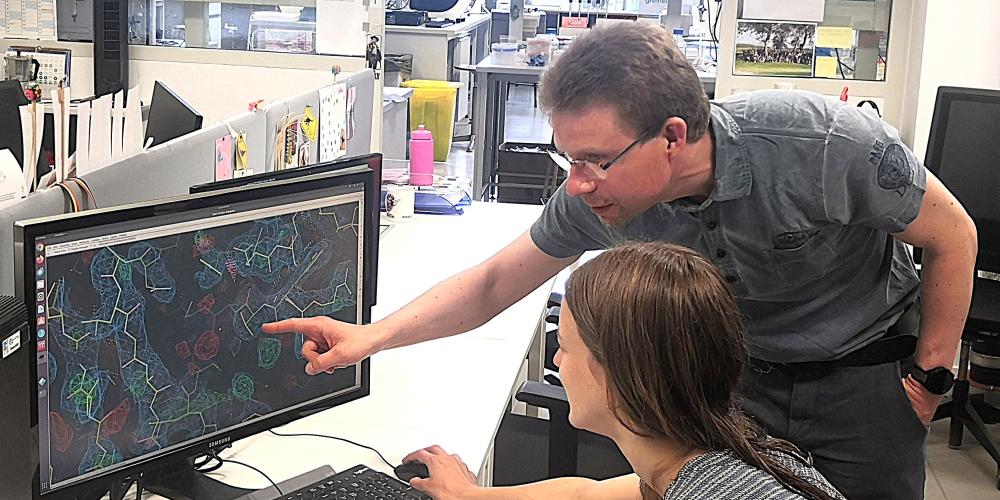
For example, by studying the three‑dimensional structure of a protein involved in epilepsy, we discovered a completely unknown function and were able to show how this function is disrupted in patients and how it might be restored. In Parkinson’s disease, we almost simultaneously identified a new property of a protein that is overactive in patients, and mapped out how mutations disrupt this process and how it might be targeted therapeutically.
These results were made possible thanks to a strongly interdisciplinary approach and intensive collaboration with research groups in Belgium and abroad. Since then, my research has increasingly focused on medically relevant proteins and on strategies to intervene therapeutically.”
What made it possible for you to conduct top‑level research at the VUB?
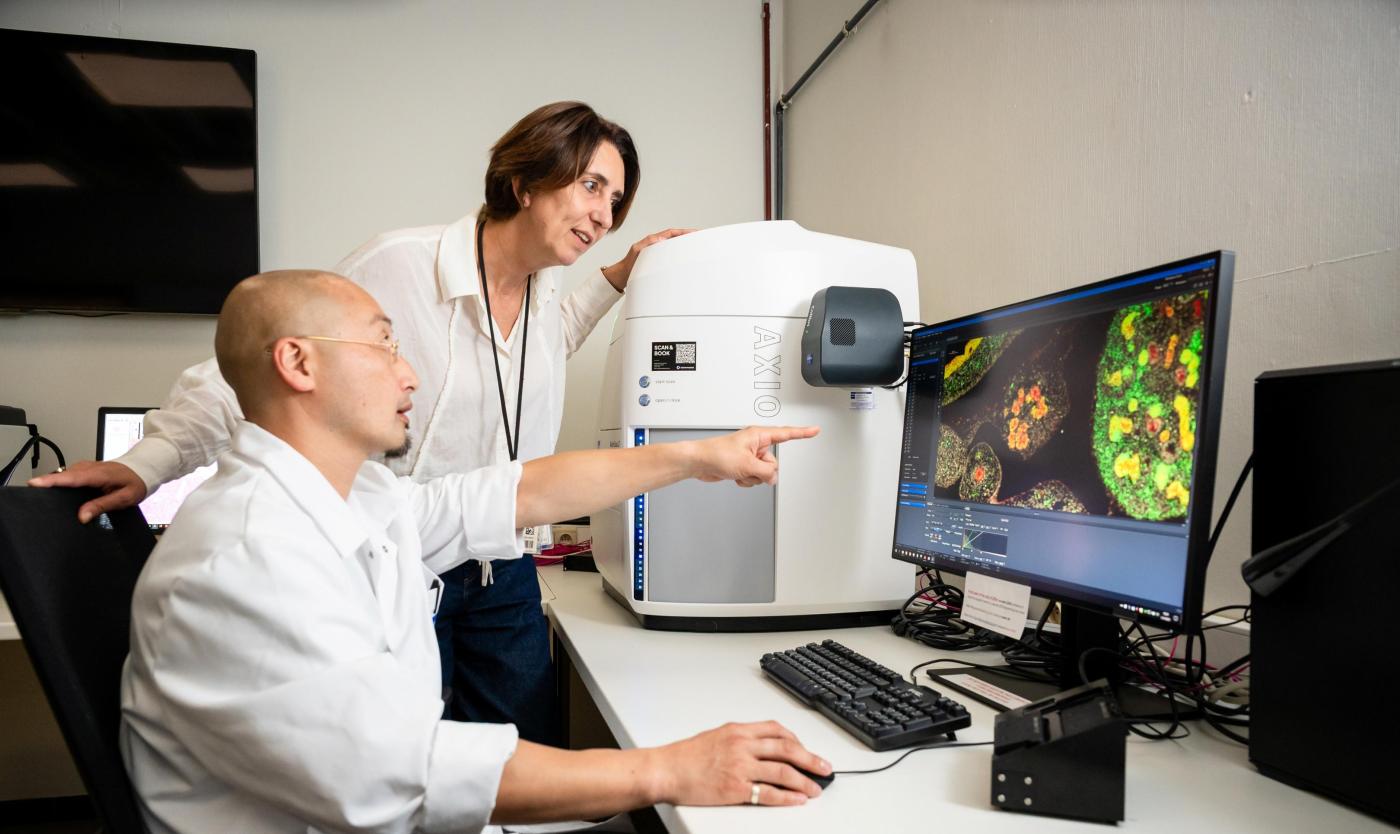
“I was fortunate to be part of Structural Biology Brussels, a large and high‑performing research group at the VUB, with access to advanced technologies and a highly stimulating research environment.
My field of research lies at the interface between the exact sciences and the life sciences, where breakthroughs are only possible through interdisciplinary work. In addition to collaborations with external partners, the VUB also offers a great deal of expertise in‑house. The proximity of different disciplines on campus, combined with initiatives from the Research Department, encourages such collaboration. For years, my research group has been part of an interdisciplinary Strategic Research Programme (SRP), which is essential for translating fundamental insights into potential applications for patients.
This remains a budget‑intensive research field, requiring major investments in infrastructure and consumables. The VUB’s core facilities are therefore a significant asset. At the same time, securing sufficient funding remains a constant—and increasingly competitive—challenge.”
Bio Wim Versées
Wim Versées investigates how proteins—the small building blocks that enable the human body to function—work. Together with his team, he studies what happens when these proteins malfunction and cause disease, and how such processes can be corrected.
His research has generated new insights into conditions such as Parkinson’s disease, certain forms of epilepsy, and persistent bacterial infections. In this work, Versées inventively applies nanobodies: extremely small and highly precise antibody fragments that can stabilise or restore defective proteins. This approach opens up new perspectives for targeted therapies.
Through internationally recognised research, prestigious distinctions—including an Impact Award from the Parkinson Foundation—and a strong commitment to teaching and public engagement, Versées demonstrates how fundamental science can lead to advances that are meaningful for patients and society alike.