

“I am working towards a world in which humans and machines strengthen one another through mathematics”
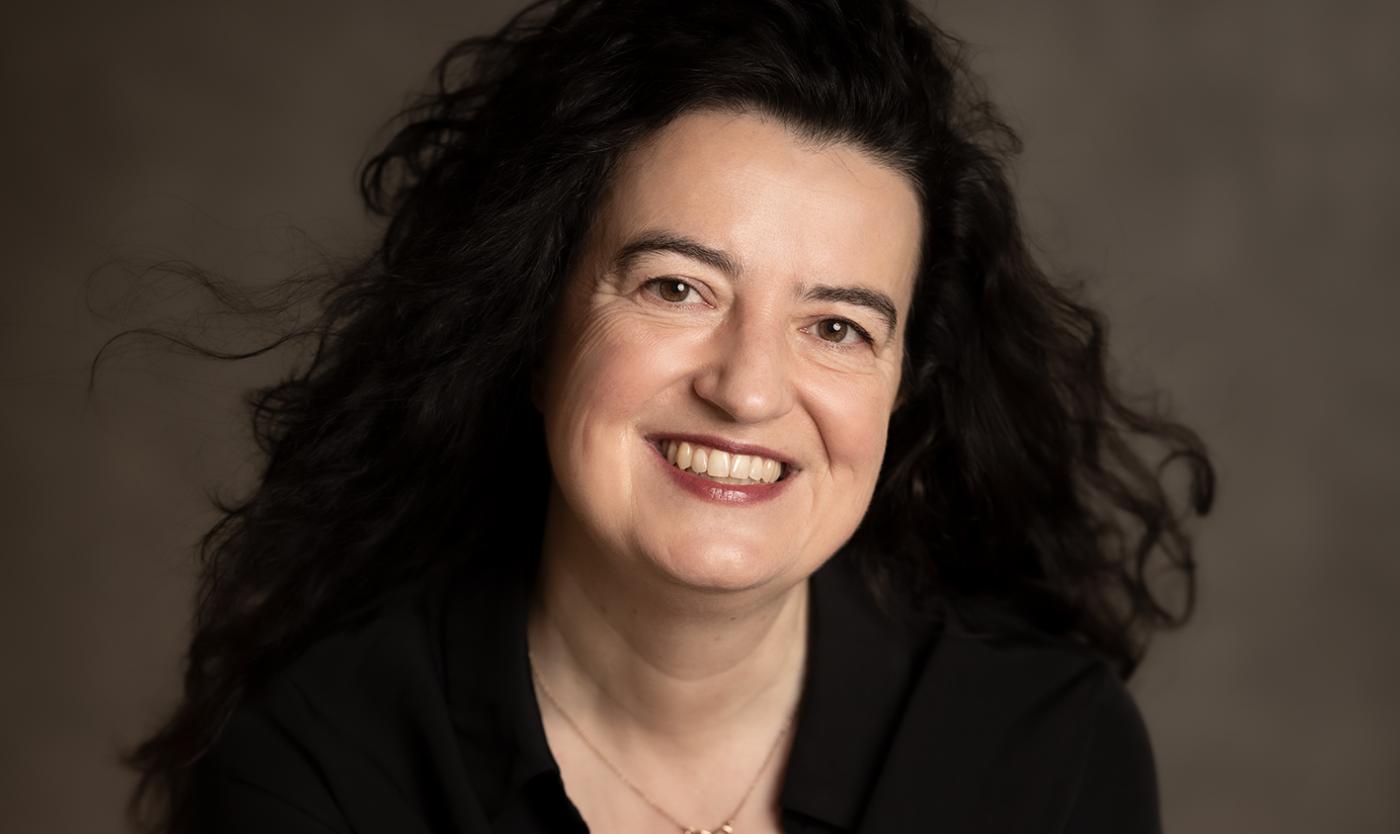
Ann Dooms
Professor of Mathematics and Data Science
“My fascination with mathematics began in 1995, when I read in the newspaper that the British mathematician Andrew Wiles had proved Fermat’s Last Theorem — mathematical world news. At the time, I was studying Latin–Mathematics, and for the first time I realised that mathematics is not finished: sometimes, to solve a problem, you have to invent new mathematics.”
A visit to the VUB information day convinced me for good, through its rigorous approach, the passion of the professors and the many future opportunities it offered. Mathematics is — and remains — one of the most sustainable fields of study: the knowledge remains valid, and the skills are essential in a rapidly changing society.
Today, I am a professor and lead the Mathematics & Data Science research group, with around seventy members. My expertise lies in what we call digital mathematics: the theoretical foundations of pattern recognition on computers, and therefore, in particular, of AI. Digital data — such as text and images — have mathematical representations that allow structure to be uncovered. With my team, we develop mathematical methods to automate complex or time-consuming tasks in economically and socially relevant applications.
One important application area is AI for medical image processing. Together with the Centre for Reproductive Medicine at UZ Brussel, we are working on AI techniques to model the quality of mature egg cells based on microscopic images. This has a significant impact for women with cancer who freeze their eggs prior to treatment, but who today often receive little clarity about whether those eggs offer a good chance of pregnancy.
In addition, we collaborate with the Royal Library of Belgium on AI algorithms that extract text from old, damaged documents and link it to image material — an approach that also helps companies automate complex document flows. Because we work at an abstract level, our results are broadly applicable.
“A solid knowledge of mathematics empowers young people in life and helps them understand the language their smartphone speaks — the algorithms of today and tomorrow.”
Alongside my research, I teach in several degree programmes and serve on committees for research, education and defence. As Chair of the Education Committee of the European Mathematical Society, I work to bring the core principles of high-quality mathematics education into classrooms through webinars. A strong grounding in mathematics gives young people confidence and enables them to understand the language their smartphone speaks — the algorithms that underpin today’s and tomorrow’s technologies. That is why I also share my expertise through lectures, books and monthly columns in EOS Wetenschap and De Tijd.
A major step in my career came when, after a postdoctoral position in mathematics, I was given the opportunity to apply my research to image authentication within engineering sciences. This brought me into contact with Ingrid Daubechies, the world-renowned mathematician known for her wavelets in image compression. Together, we developed algorithms to authenticate paintings, based on the work of artists such as Van Gogh, Gauguin and the Van Eyck brothers. That experience gave my research wider visibility and made me realise just how broad the applications of pattern recognition could be.
In terms of research, I want to contribute to the intelligent algorithms of tomorrow — tools that support people in solving problems that truly make a difference. New developments, such as neuro-symbolic AI, which links language models with symbolic reasoning to, for example, automate the construction of proofs, already make me very optimistic about the future.
What continues to inspire me are mathematicians who dare to explore new paths. Beyond Andrew Wiles and, of course, Ingrid Daubechies, I also think of Alan Turing — the computer pioneer whose work I once highlighted in a Canvas documentary — and Ada Lovelace, the mathematician who wrote a computer programme long before computers existed and who inspired Turing. Their work forms the foundation of my own career: I began my research in algebra, like Wiles, and used that expertise to develop digital mathematics, building on the work of Daubechies and tailored to the machine conceived by Lovelace and realised by Turing.
BIO
Ann Dooms is Professor of Mathematics and Data Science and leads the Mathematics & Data Science research group. Her expertise lies in digital mathematics — the theoretical foundations of computer-based pattern recognition — with applications in medical image processing, document and art analysis, cryptography, and artificial intelligence.
In addition, she holds several governance roles, including Chair of the Education Committee of the European Mathematical Society, Vice-Chair of the Scientific Council of BELSPO, and Vice-Chair of the Scientific Council of Defence. She also regularly writes about mathematics for a broad audience.
In a rapidly changing world, independent, science-based insights are indispensable. Ann provides journalists and editorial teams with clear analysis and context on current issues, within her fields of expertise.
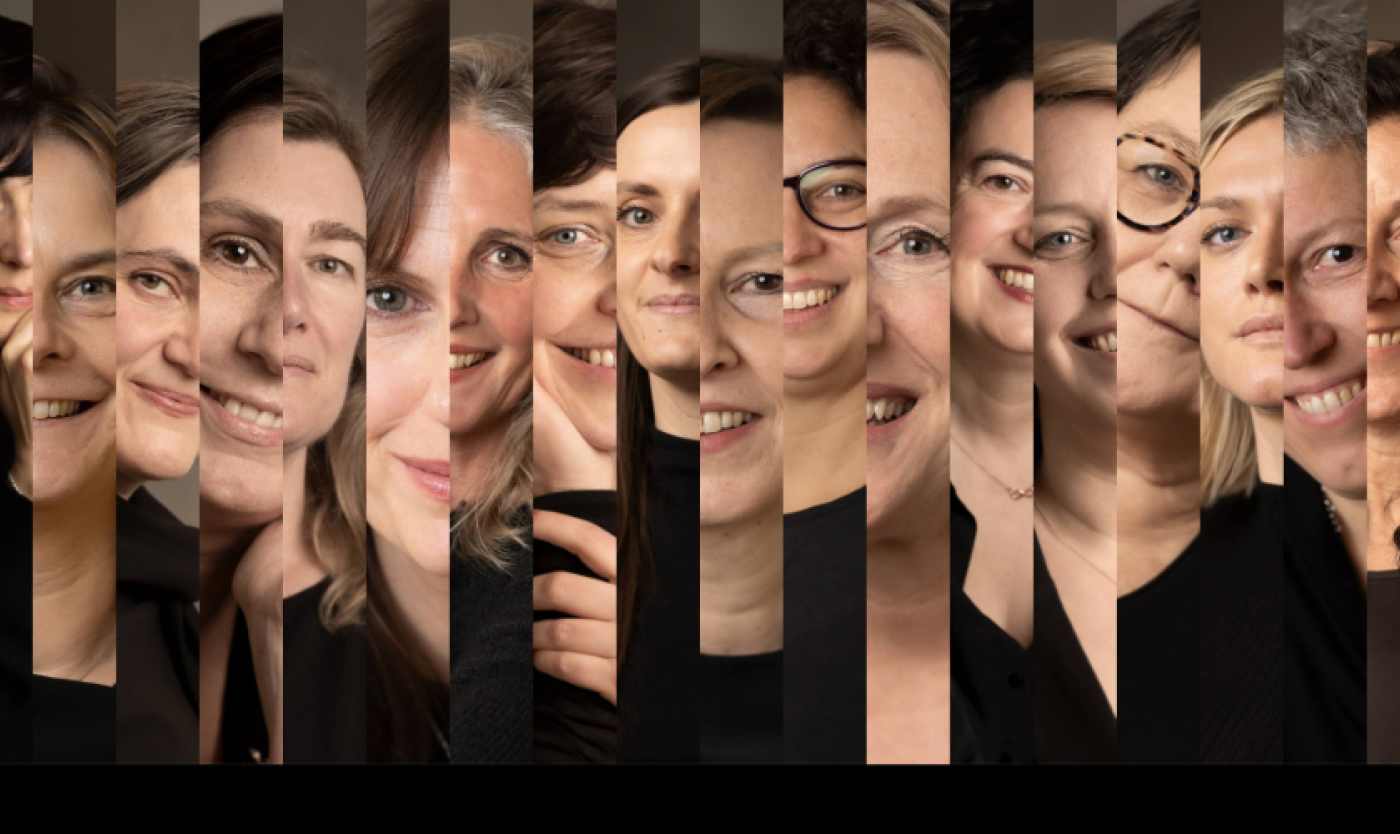
Women shaping science. You make it possible.
This campaign is more than a tribute. It is an invitation to reflect on the role of female scientists and on the obstacles they still face in fully realising their potential. But visibility alone is not enough. Women remain underrepresented in research, receive fewer opportunities, and encounter barriers more frequently throughout their academic careers.
With your donation, you help female researchers to continue their work, develop new insights and find solutions to the challenges of tomorrow.
