

“I want to present the true potential of AI, grounded in scientific evidence, beyond the hype surrounding generative AI”
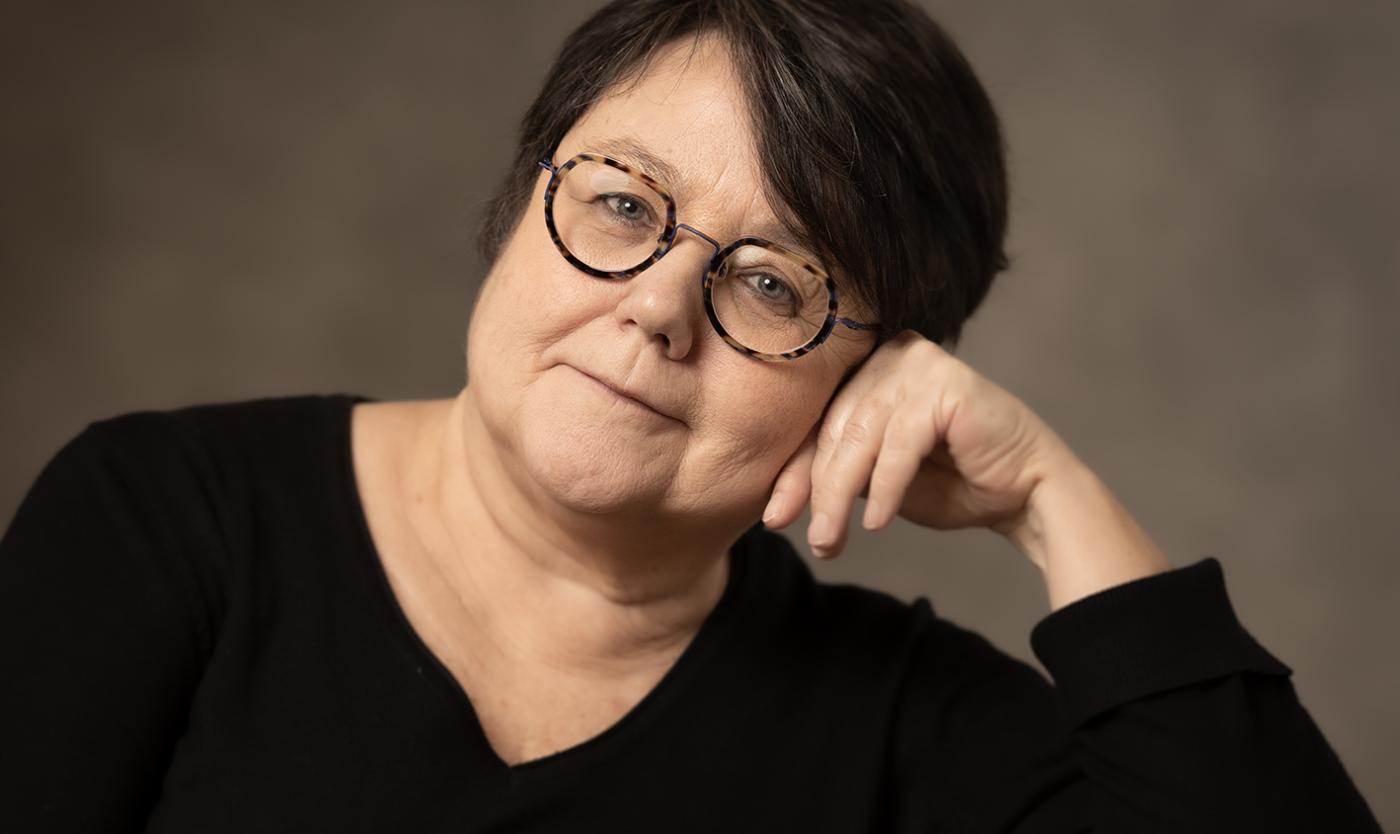
Ann Nowé
Professor of Artificial Intelligence
“From an early age, it was clear to me that I had far more aptitude for numbers than for languages. Later on, my results in mathematics and the sciences were consistently much higher than in other subjects, with the exception of sport — though that depended very much on the discipline. My choice of studies was therefore quickly made: mathematics, with a minor in computer science. At the time, computer science was quite popular; it was not associated with ‘nerds’ at all — quite the opposite.”
I completed my PhD as an assistant, which meant I had six years — rather than four — to finish it. About halfway through that period, a conference took place at VUB. Although the topic did not directly align with my research, I plucked up the courage to ask the organisers whether I could attend the sessions for free. Fortunately, that was possible. During one of those sessions, I suddenly had the idea for what would later become my PhD topic.
In fact, my PhD emerged as a response to the views of some of the speakers, with whom I fundamentally disagreed. To this day, I am very grateful to my supervisor for allowing me to change topic halfway through the trajectory — and to switch to reinforcement learning, which at the time was relatively unknown and not a field she herself was familiar with.
Reinforcement learning refers to systems that learn autonomously from experience. Rather than being told exactly what to do in advance, they are given the opportunity to improve by doing — through trial and error and learning from mistakes. This approach is inspired by concepts from psychology, particularly operant conditioning, but it also has strong mathematical connections with stochastic approximation and optimal control.
Reinforcement learning is mainly applied to sequential decision-making problems, where optimal decisions cannot simply be calculated in advance. Concretely, we develop algorithms that can handle increasingly complex problems. A great deal of attention is paid to formal guarantees: does the algorithm actually do what we believe it does, and can we explain the strategy it has learned? That latter point is essential for trust in the final outcomes.
“In the field of AI, we talk about summers and winters — but what we are experiencing now is a real heatwave.”
In terms of applications, our focus lies on socially relevant challenges, such as managing an energy grid or learning which measures are needed to bring an epidemic under control. In this context, our work on multi-agent reinforcement learning and multi-objective reinforcement learning is particularly relevant. These systems often involve multiple stakeholders with diverging interests, all of whom wish to retain their autonomy. A centralised approach is then often not feasible. Fairness also plays a crucial role: both efforts and benefits must be distributed in an equitable way.
This aligns closely with the objectives of FARI, the AI Institute for the Common Good, which we founded together with ULB and which brings together ten research groups. Within FARI, we connect technical AI challenges with social, ethical and legal questions. Over time, I have gradually left the safety — and the beauty — of abstract mathematics behind, moving increasingly towards interdisciplinary work.
Looking ahead, I do not see myself ever stopping learning; once you have been bitten by the research bug, it never really lets go. In AI, we often speak of cycles of boom and bust, of summers and winters — but what we are experiencing today is a genuine heatwave. It has become difficult to see the wood for the trees, even for early-career researchers. I therefore see it as an important responsibility to guide them and to share my experience. I also want to help the wider public find their way in the vast and complex world of AI.
I draw inspiration above all from connections with other disciplines: from seeing where AI still falls short in addressing concrete problems, and from exploring the fundamental work needed to overcome those limitations. My PhD students also inspire me. I sometimes compare them to my own children — I have two — because, like them, they are all very different in their interests and talents. Watching them grow during their PhD and then seeing them find their own paths afterwards gives me immense satisfaction.
BIO
Ann Nowé is Professor of Artificial Intelligence at Vrije Universiteit Brussel (VUB) and an expert in reinforcement learning. She works on algorithms that enable systems to learn autonomously from experience, with a strong focus on formal guarantees and societal relevance, including applications in energy grids and epidemic response.
She is also a co-founder of the FARI – AI Institute for the Common Good, where technological, ethical and social dimensions of artificial intelligence are brought together.
In a rapidly changing world, independent, science-based insights are indispensable. Ann provides journalists and editorial teams with clear analysis and context on current issues, within her fields of expertise.
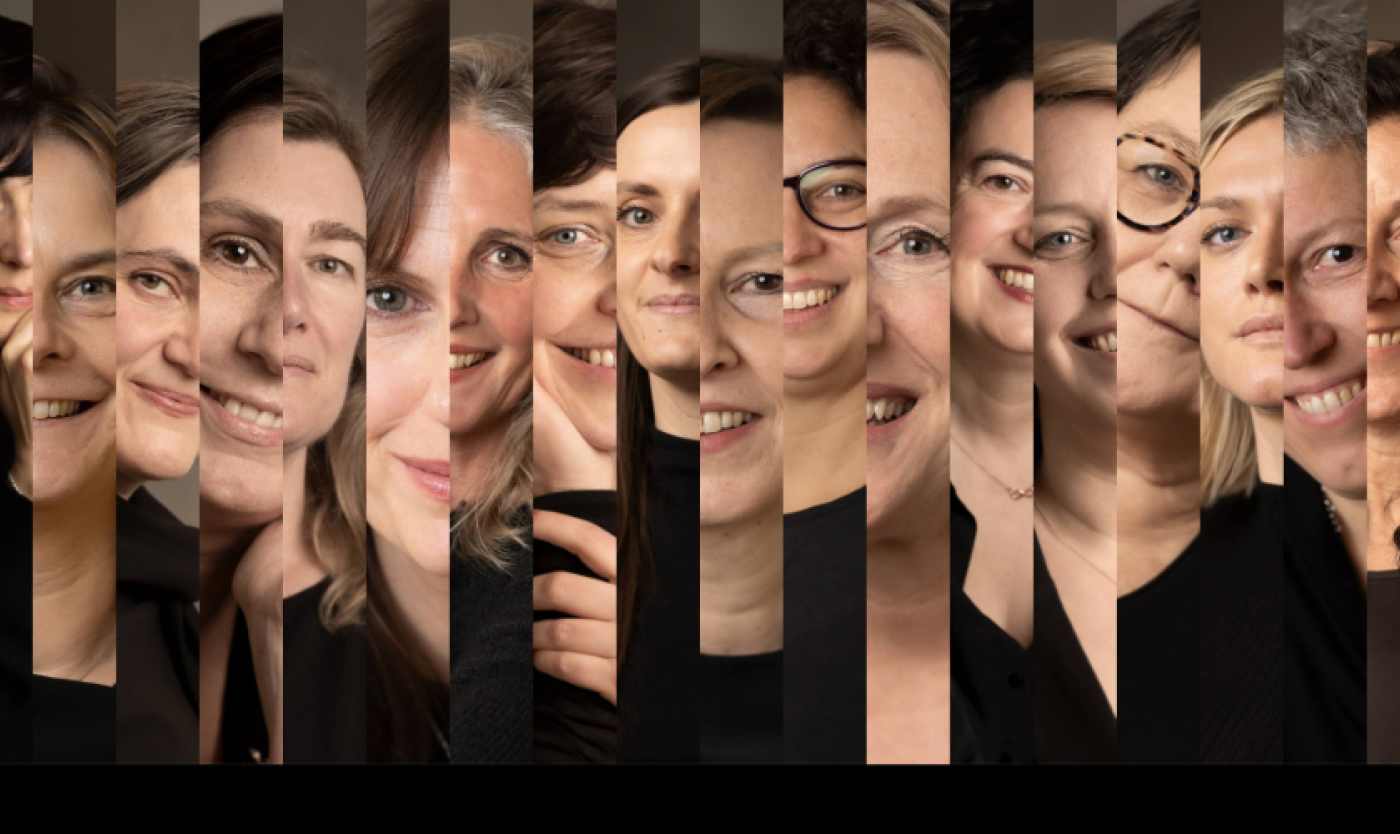
Women shaping science. You make it possible.
This campaign is more than a tribute. It is an invitation to reflect on the role of female scientists and on the obstacles they still face in fully realising their potential. But visibility alone is not enough. Women remain underrepresented in research, receive fewer opportunities, and encounter barriers more frequently throughout their academic careers.
With your donation, you help female researchers to continue their work, develop new insights and find solutions to the challenges of tomorrow.
