
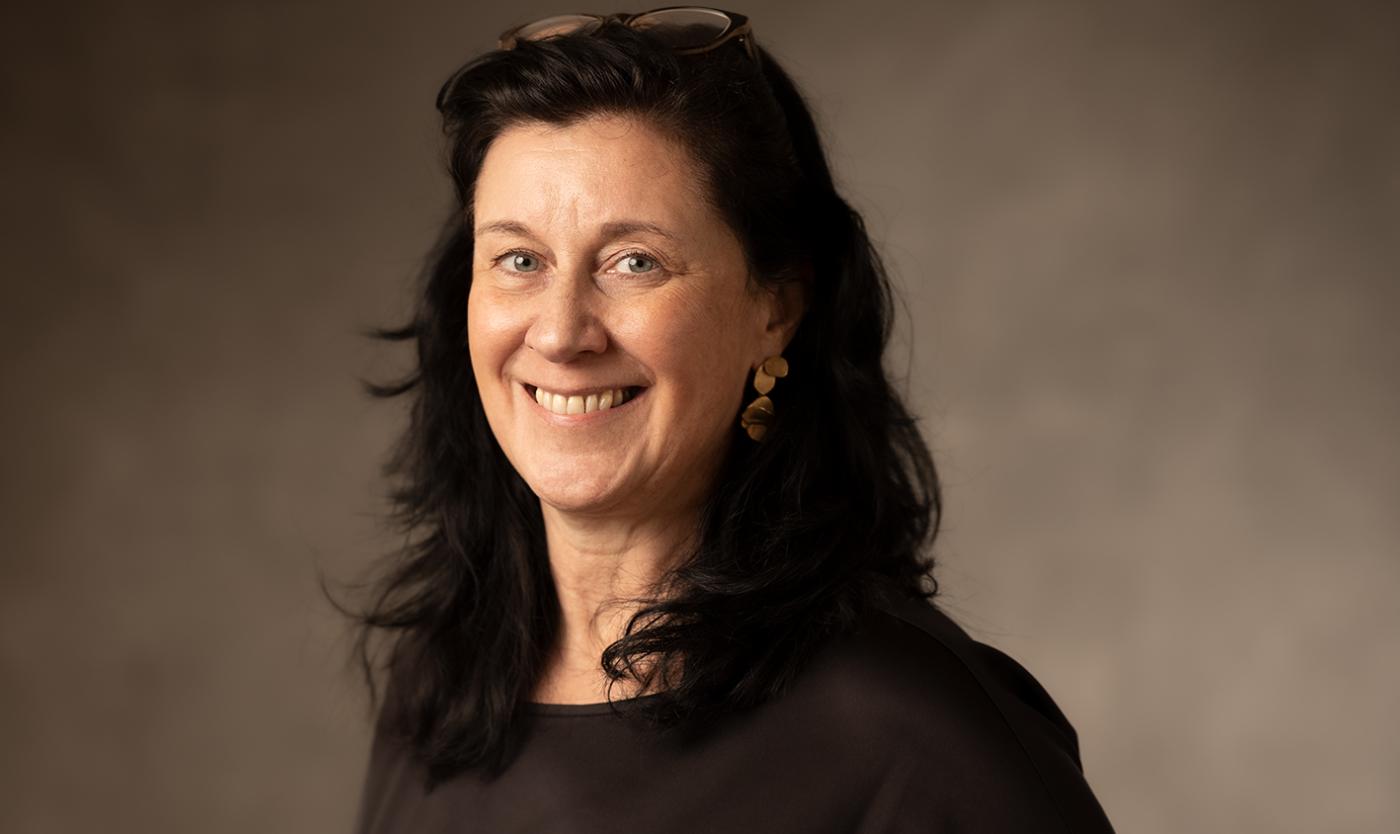
“My research on metals contributes to safe, high-performing, and sustainable technology”
Iris De Graeve
Professor of Engineering Sciences
“By the age of 15, I already knew I wanted to become a civil engineer. I was good at maths and sciences and, above all, fascinated by technology. In secondary school, my chemistry teacher played a key role in shaping that interest. He guided me towards chemistry, and during my master’s thesis, my focus shifted mainly to materials — with chemistry, of course, as the building block.
Today, my research focuses on metals and their surface properties. Metals are everywhere in our lives: in buildings and bridges, cars and planes, smartphones and laptops, but also in energy applications such as wind turbines, solar panels, and batteries. Almost every technological application relies on metals. That is why I believe this research can have enormous societal impact.
I have a strong focus on 3D metal printing. These techniques allow us to produce items with less raw material, which is better for the planet. At the same time, 3D printing enables us to optimise designs: making them lighter, stronger, and better suited to their function. Think, for example, of personalised biomedical implants or lighter components for transport applications. But these new manufacturing methods also create entirely different microstructures in metals, leading to new and unexpected behaviours. Understanding how these microstructures form and how they influence the properties of metals is a major scientific challenge that still requires extensive research.
I also study how recycling affects the properties of metals, for example recycled aluminium used for window frames in the construction sector. This research is conducted in close collaboration with industry and is strongly driven by sustainability. Restoring, reusing, and recycling metals is not only necessary to conserve resources, it also requires less energy and produces fewer greenhouse gas emissions than mining new ores. In this way, we strive to develop technologies that are both higher-performing and more environmentally friendly.
Beyond conventional metals, I work with more exotic materials, such as gallium alloys that are liquid at room temperature. These are used in flexible and stretchable electronics, for example in sensors for medical rehabilitation. This type of research illustrates how broad the field is — from heavy structural applications to extremely fine, innovative uses.
“Looking ahead, I hope for even stronger international collaboration; there is so much power in European networks.”
A major turning point in my career was becoming a professor and being able to build my own research line. That independence is crucial: it allows you to think outside the box, make choices, and set your own course. I have built an excellent international team of researchers from all over the world. That diversity enriches not only the research itself but also the human collaboration and growth within the team.
For the future, I hope to see even stronger international collaboration. As coordinator of the Marie Skłodowska-Curie Doctoral Network DurAMat, focused on 3D metal printing and part of the EUTOPIA alliance, I see just how powerful European networks can be. By the way, if you are looking for a role model for women in chemistry and materials research, Marie Skłodowska-Curie is undoubtedly the woman par excellence who, with intelligence and perseverance, left her mark on our understanding of radioactivity. As a woman in a male-dominated scientific world, she — alongside Einstein, Bohr, Schrödinger, Planck, Heisenberg, and many other renowned scientists — featured prominently in the famous group photo of the 1927 Solvay Conference. She knew she belonged there with her groundbreaking work. What an example as a researcher, a perseverer, and a woman!”
BIO
Iris De Graeve is a professor at the Faculty of Engineering Sciences at Vrije Universiteit Brussel (VUB) and chair of the Department of Materials and Chemistry (MACH). Her research focuses on metals, surface engineering, and sustainable production technologies such as 3D metal printing and recycling.
She works closely with industrial and international partners to make metal applications safer, higher-performing, and more environmentally friendly.
In a rapidly changing world, independent, science-based insights are indispensable. Iris provides journalists and editorial teams with clear analysis and context on current issues, within her fields of expertise.
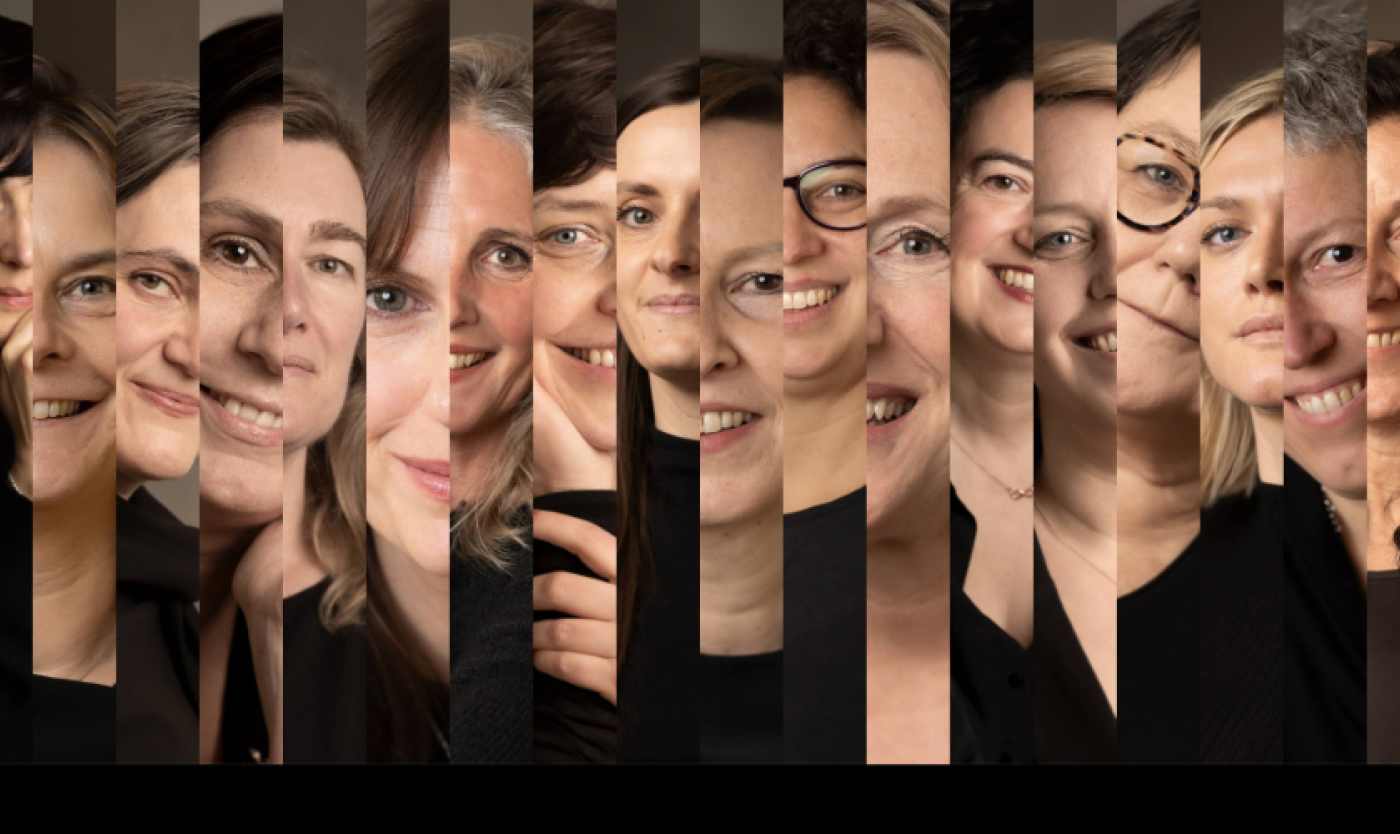
Women shaping science. You make it possible.
This campaign is more than a tribute. It is an invitation to reflect on the role of female scientists and on the obstacles they still face in fully realising their potential. But visibility alone is not enough. Women remain underrepresented in research, receive fewer opportunities, and encounter barriers more frequently throughout their academic careers.
With your donation, you help female researchers to continue their work, develop new insights and find solutions to the challenges of tomorrow.
