

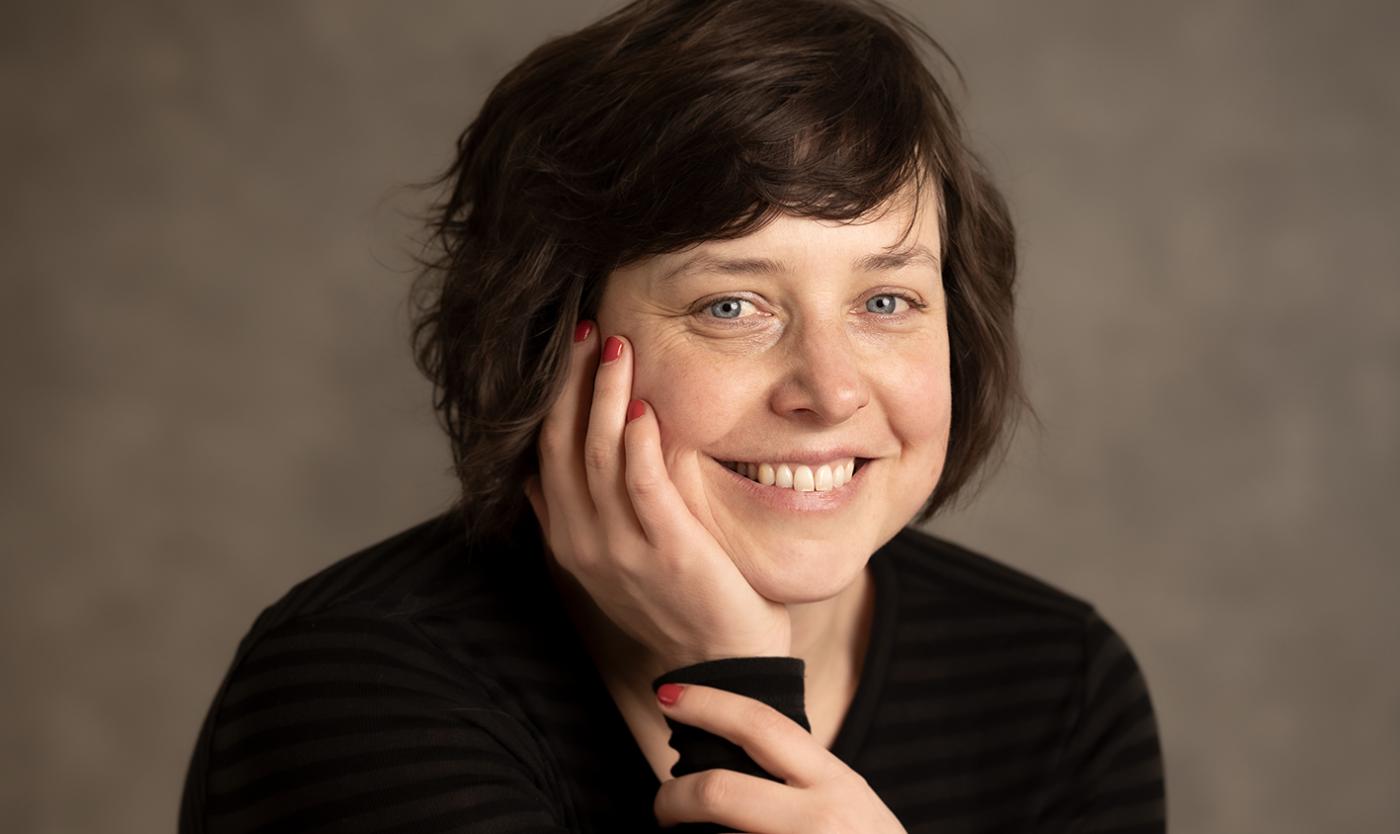
“For me, impact means taking a stand. I want to train agogues who recognise inequality, and tackle it”
Liesbeth De Donder
Professor of Agogic Sciences
“For me, impact means taking a stand. I want to train agogues who recognise inequality — and tackle it.” Liesbeth De Donder Professor of Agogic Sciences
“I have always had a strong sense of justice, and a keen awareness of my own privileged position. I grew up in a family where opportunities seemed self-evident: a good education, no financial worries. A school trip to the Flemish Parliament has always stayed with me. We travelled by bus through Brussels, and I was genuinely shocked by the poverty and the slum housing we saw. Afterwards, I even wrote a letter to the Flemish Parliament to denounce it. Looking back, I can see how moments like that helped set my direction. I did not start agogic sciences with some grand plan. What I knew, above all, was that I wanted to work with people and help build social change. And look: I am still here.
Today, my research focuses on who is able to participate in our society — and who is not. And why. I work on participation and care across the entire life course, with particular attention to two groups that, at first glance, seem to have little in common: older people and people in detention. For me, it is the same story: how we so often reduce people to a single label — ‘too old’, ‘detained’ — and how that label determines how much say and how many opportunities they are still given. Decisions are often taken about them, rarely with them. Both groups depend on systems that can provide support, but can also diminish them or exclude them altogether. With my research, I want to make clear that this is not individual failure, but a societal choice — and that we can make different choices.
For me, impact means taking a stand. Through education, I want to train agogues who are not afraid of engagement, but who recognise inequality — and tackle it. I also strongly believe in participatory action research: not only generating knowledge, but bringing about change. Working together with older people, people in detention, civil society organisations, professionals and policymakers — from the questions to the solutions. Research is not an end in itself; it has to set something in motion.
A major turning point was winning the Supervisor Award in 2021. The fact that my own team nominated me felt like recognition of the way I try to work together. My advice to early-career researchers at the time was: don’t give up. That is something I have had to learn myself as well. After two rejected project applications, a professor emerita whom I greatly admire, Ingrid Kristoffersen, once told me: Point n’est besoin d’espérer pour entreprendre, ni de réussir pour persévérer. You do not need to hope — or succeed — in order to persevere. We submitted the project for a third time, and this time it was funded. That marked an important start to my career. My sabbatical was just as important. From interviews with senior professors, I learned that there is rarely a tightly defined plan. Serendipity. Follow your path. That gave me the confidence to make my own choices.”
“I have been given a great deal of freedom, but I also see how women, in particular, are sometimes made to feel smaller.”
“Systems can create opportunities, but they can also diminish people. That is true for older people, for people in detention — and for academia as well. I have been given a great deal of freedom, but I also see how women, in particular, are sometimes made to feel smaller: being called ‘girls’, receiving little explicit recognition, or being met with commentary rather than congratulations when a project is secured. That is something I want to name — and change.
My future? I want to slow down in order to be able to leap better. That is why I will be working part-time for a while in the coming academic year. Not to stop, but to stay closer to myself. As I grow older, I notice that I am becoming angrier about systems that squeeze out humanity. I want to keep transforming that anger into care and engagement. As in the poem by Remco Campert that, as a student of agogic sciences, I carried for years on a beer mat in my bag: resistance begins by asking yourself a question — and then asking that question of someone else. That is often where change begins.”
BIO
Liesbeth De Donder is Professor of Agogic Sciences at Vrije Universiteit Brussel and heads the Society and Ageing Research Lab. Her research focuses on social participation and inclusion, with expertise in participatory research and learning in detention, older people’s participation, social gerontology, and inclusive, caring neighbourhoods.
She is a member of the Board of Directors of the Knowledge Centre for Welfare, Housing and Care, and received the VUB Excellent PhD Supervision Award in 2021.
In a rapidly changing world, independent, science-based insights are indispensable. Liesbeth provides journalists and editorial teams with clear analysis and context on current issues, within her fields of expertise.
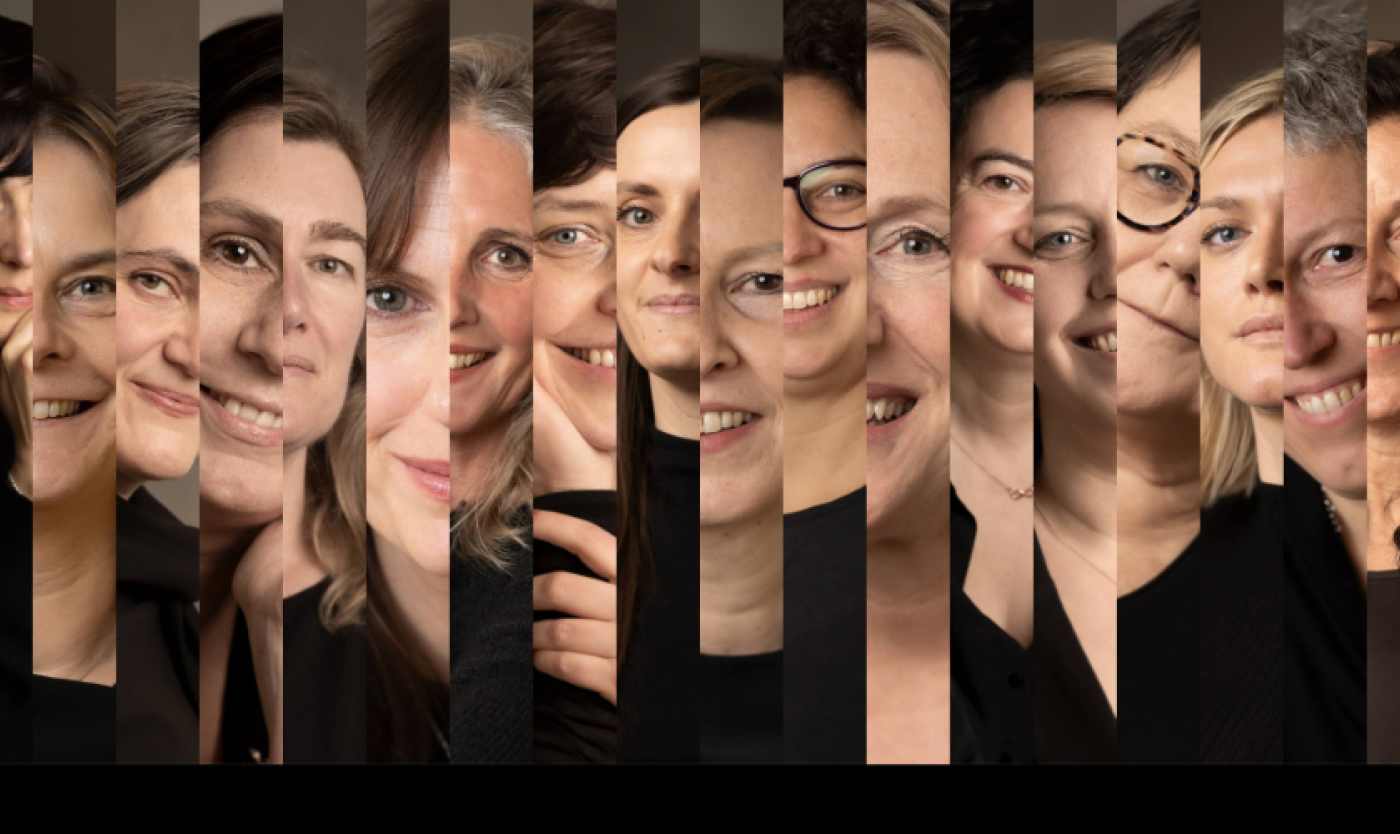
Women shaping science. You make it possible.
This campaign is more than a tribute. It is an invitation to reflect on the role of female scientists and on the obstacles they still face in fully realising their potential. But visibility alone is not enough. Women remain underrepresented in research, receive fewer opportunities, and encounter barriers more frequently throughout their academic careers.
With your donation, you help female researchers to continue their work, develop new insights and find solutions to the challenges of tomorrow.
