

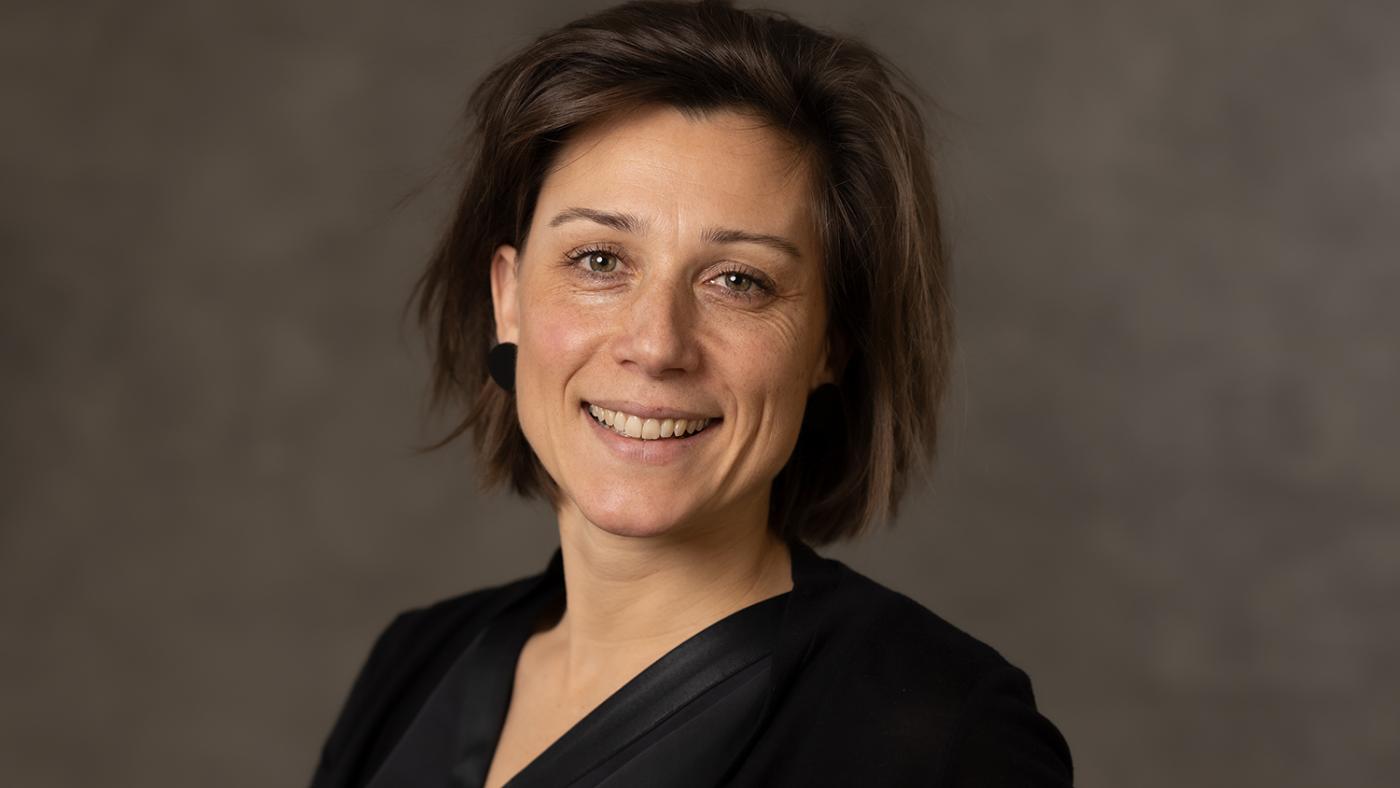
“I would like exercise therapy to become a fundamental right within cancer care, from prevention to the palliative phase”
Nele Adriaenssens
Professor of Rehabilitation Sciences and Physiotherapy
“I grew up in what you could safely call a paramedical family. Health, care, and science were part of everyday life at home. My grandfather, godmother, and sister are doctors; my father is a physiotherapist, my mother a nurse. That I would end up in healthcare myself never felt revolutionary — more organic. Initially, I wanted to follow in my father’s footsteps as a generalist in his private practice, a warm but small-scale environment. But during my student years at VUB — where I was actively involved in the student association MESACOSA — an unexpected turn came: I was asked to temporarily cover for an assistant on maternity leave. The plan was two semesters. And here I am, still going strong.”
“My first research project was an adventurous blend of care and design: prosthetic bras for breast cancer patients, developed in collaboration with engineers and a well-known lingerie designer. That early experience taught me how powerful interdisciplinarity can be when technology, aesthetics, and patient-centred thinking reinforce each other. Later, I worked with my supervisors, Prof. Emeritus Dr. Pierre Lievens and Prof. Emeritus Dr. Jan Lamote, on a project investigating physical side effects in the breast clinic at UZ Brussel. The topic hit close to home: as with anyone, there are people with cancer in my own family and social circle.”
After my PhD, I had the opportunity to partly succeed my supervisor at VUB while remaining clinically active at UZ Brussel. That combination — researcher and clinician — has always been a deliberate choice. In 2014, I fully redirected my research towards exercise oncology and lymphology. At the time, and unfortunately still today, exercise as therapy for cancer was not widely established in Belgium. Yet the timing proved decisive, as the field was accelerating internationally.
Today, I continue to coordinate cancer rehabilitation at UZ Brussel and lead research within the Rehabilitation Research (RERE) group at VUB. My work focuses on scientifically underpinning and implementing exercise therapy for people living with and after cancer. Recent projects, for example, investigate whether improved body composition and higher physical activity during chemotherapy lead to fewer side effects and better treatment tolerance. The goal is clear: not just survival, but also improving quality of life, resilience, and recovery. My mission: to structurally embed exercise therapy across the entire spectrum of cancer care, from prevention to the palliative phase. Numerous studies show that exercise therapy not only reduces side effects, but can also influence the risk of developing cancer, recurrence, and even survival. Yet implementation in Belgium still lags behind. Through the European Cancer Organisation (ECO), I was able in November 2025 to advocate for physiotherapy as an essential component in the Europe’s Beating Cancer Plan (policy paper) — a significant victory, though the real challenge remains translating this into practice, even in our own UZ Brussel.
“Where career moments provide direction, my children bring balance. That doesn’t make the path easier, but it makes it more meaningful.”
Impact is not made through publications alone. That is why I also strive to be visible to society: giving lectures for patient associations, delivering (inter)national webinars and presentations for colleagues, hosting an awareness event in the European Parliament, and participating in a roundtable with Minister Vandenbroucke on World Cancer Day 2024. Knowledge must reach the patient. As a former chair of the faculty PR committee, I have also invested more in my social media presence in recent years, particularly on LinkedIn, which I find valuable for dissemination and networking. Furthermore, my dual appointment at VUB and UZ Brussel allows me to continuously connect theory — research and teaching — with practice.
My career has not had a single breakthrough, but rather a series of turning points, beginning with an early appointment as a lecturer at just 27. Personal experiences — becoming a mother in 2016 and 2018 — have also broadened my perspective. Where career milestones provide direction, my children bring balance. That does not make the path easier, but it does make it more meaningful.
My dream is an integrated, interprofessional cancer rehabilitation centre where exercise, oncology, psychology, nutrition, and science come together — fully accessible and reimbursed for everyone. I also aim to continue building a strong, loyal team to train the next generation of researchers and clinicians. Ultimately, my work is about precisely that: helping people stay in motion — literally and figuratively — when life tests them.
I should add that it was largely thanks to my very active student years (at MESACOSA) that I had already built an academic network, which I believe is why I was asked to step into that early teaching role. And perhaps in UZ Brussel, they could take “practice what you preach” a little more literally.
BIO
Nele Adriaenssens is Professor of Rehabilitation Sciences and Physiotherapy at Vrije Universiteit Brussel (VUB)and is clinically active as Coordinator of Cancer Rehabilitation at UZ Brussel. Her research focuses on cancer rehabilitation, with a particular emphasis on exercise oncology and lymphology.
She combines science, clinical practice, and teaching to structurally embed exercise as a core component of care for people living with and beyond cancer.
In a rapidly changing world, independent, science-based insights are indispensable. Nele provides journalists and editorial teams with clear analysis and context on current issues, within her fields of expertise.
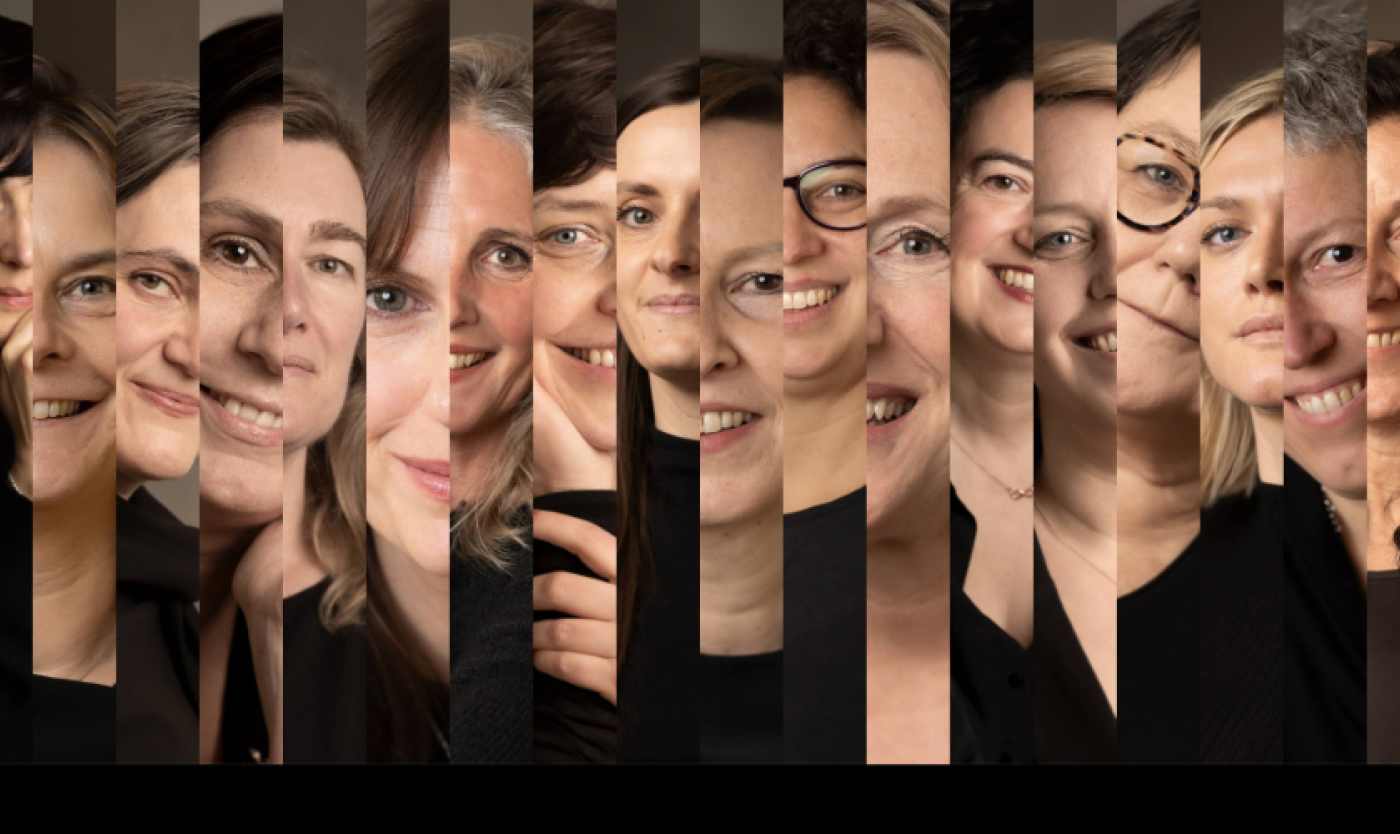
Women shaping science. You make it possible.
This campaign is more than a tribute. It is an invitation to reflect on the role of female scientists and on the obstacles they still face in fully realising their potential. But visibility alone is not enough. Women remain underrepresented in research, receive fewer opportunities, and encounter barriers more frequently throughout their academic careers.
With your donation, you help female researchers to continue their work, develop new insights and find solutions to the challenges of tomorrow.
