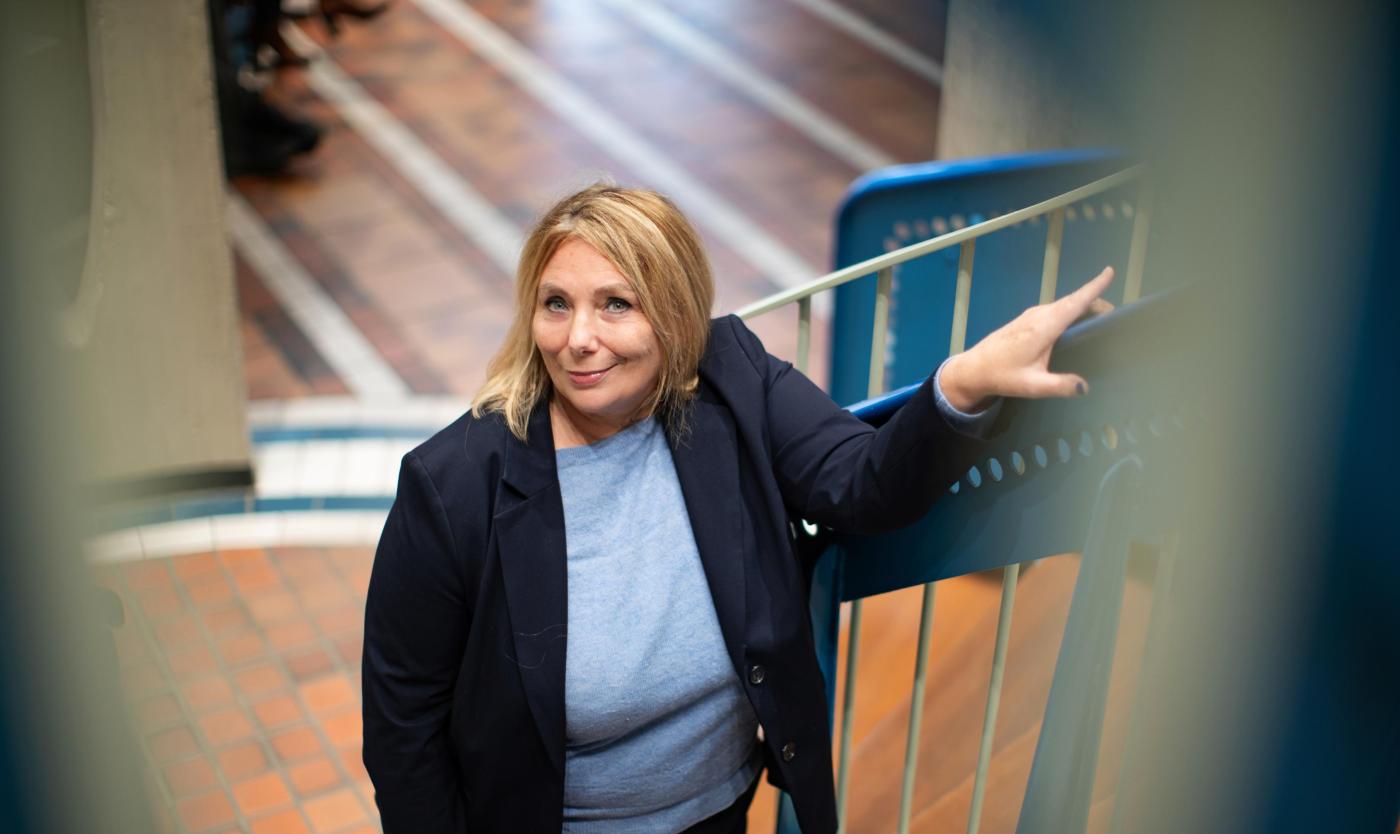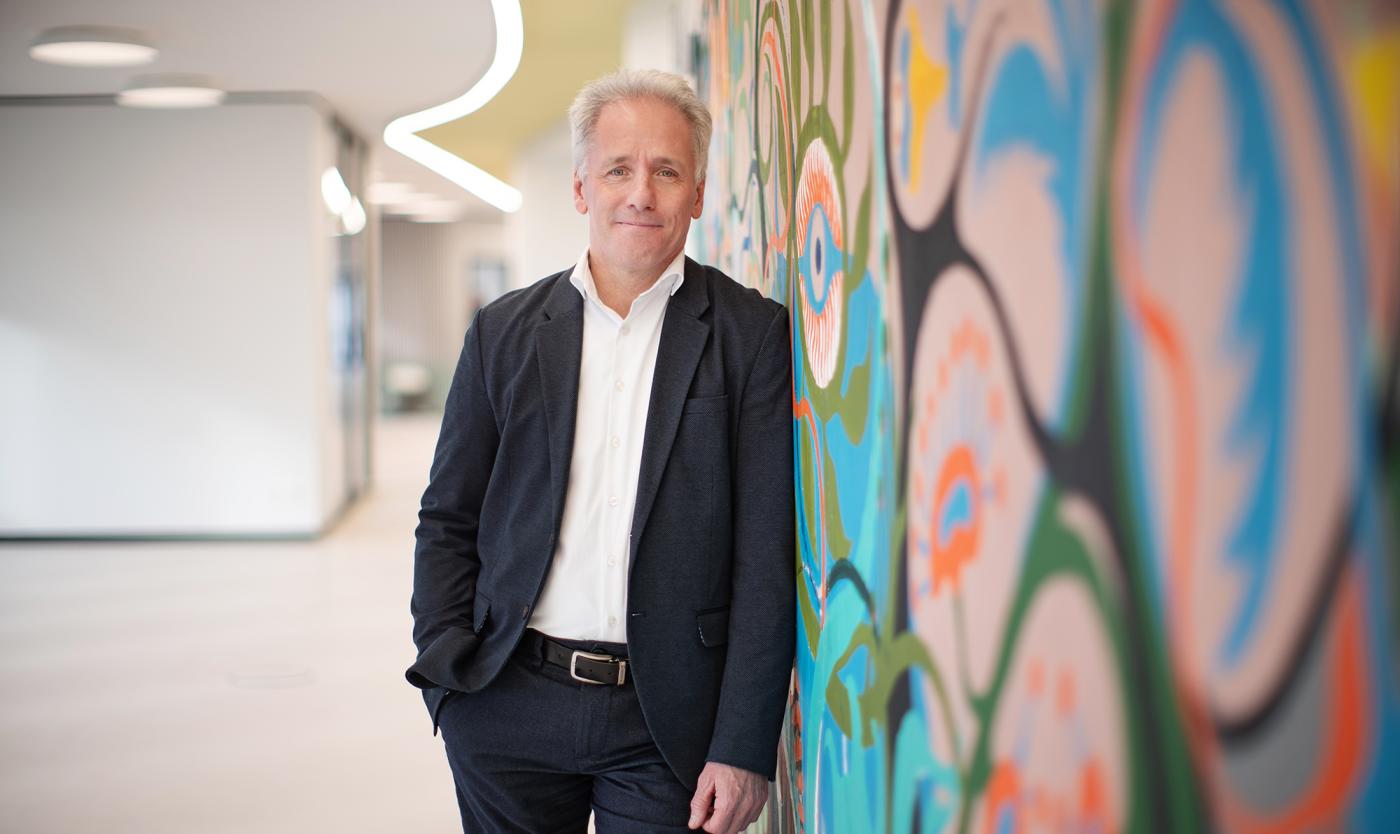
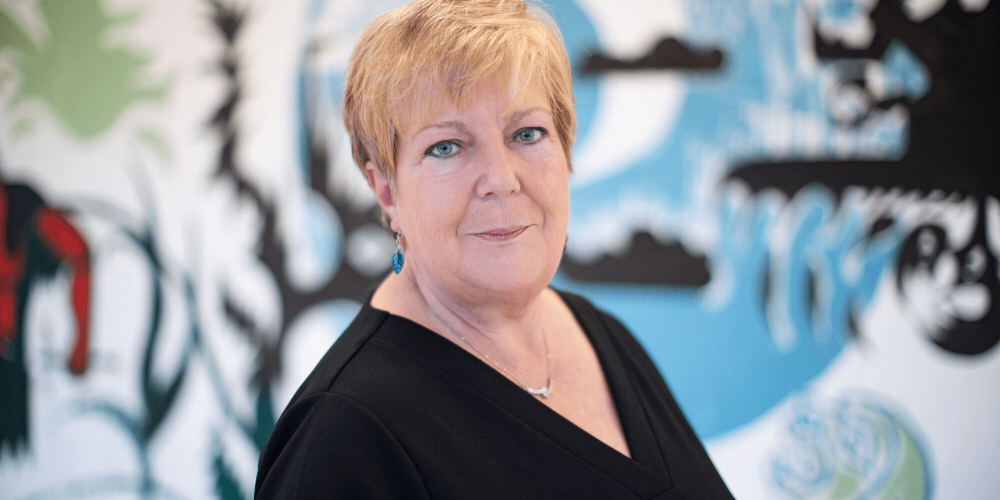


The aftermath of Covid and the arrival of AI have caused a shift in higher education. Vice-Rector for Education and Student Affairs Nadine Engels sees threats, but also many opportunities. ‘Hybrid learning will become the default model.’
Looking back before looking ahead: what has been the focus of the Vice-Rectorate for Education and Student Affairs in recent years?
“Implementing the education vision ‘VUB as an urban engaged university’ has been a major task and remains a work in progress. The Education Congress has played an important role in bringing new dynamics to teaching. Simply delivering knowledge in large lectures does not allow us to train students’ reasoning skills and critical thinking. It is not always easy to promote active learning methods, given the large student groups in some programs, but we have tried.
Since Covid, students have also come to expect more online resources. However, providing lecture recordings alongside live classes is not what we consider blended learning. Blended learning involves much more. Think of short knowledge clips that allow students to prepare interactive on-campus workshops, a mix of on-campus or online instruction sessions with case discussions in smaller groups. One of our tasks has been to make the entire VUB community aware of the possibilities and the importance of this approach.
Moreover, VUB is situated in an urban environment where many perspectives on reality come together. This brings challenges related to polarization. Finally, I think of artificial intelligence. AI can no longer be ignored, but our task is to support students and staff to use it positively, ensuring that AI remains an assistant, rather than the other way around. This requires a lot of discipline.”
“Providing lecture recordings alongside live classes is not what we consider blended learning. It involves much more”
What impact will AI have on the future of education at VUB? Will knowledge acquisition become less important?
“Indeed, it is often said that attention should shift from learning content to developing higher-order thinking skills for complex and critical analysis. I am more cautious. First, the underlying hypothesis—‘knowledge reproduction for AI and thinking for humans’—underestimates what AI is already capable of. Second, to think, you need tools. And these tools are not just methods, they also include content. You cannot reason mathematically without mathematical knowledge. So it is too simplistic to say that we will completely shift our focus. Both content and thinking skills are necessary.”
Students will naturally use AI, but are teachers finding their way as well?
“It is a challenge to bring everyone along. Some still think: ‘This does not apply to my subject, because I teach problem-solving.’ But AI is evolving and can already do much more than some realize. Both teaching and student assessment need to be reconsidered. Take the master’s thesis, for example. Having students produce long written texts is no longer the best way to assess them. Some programs have already implemented changes. Students now submit shorter texts with a technical report on sources used and justification of theoretical framework, methods, and data processing. Oral defense then becomes more important, allowing teachers to assess whether students truly understand what they have done and why.”
“Having students produce long written texts is no longer the best way to assess them. Oral defense becomes more important”
Since Covid, online education has gained a place at VUB. How do you see this evolving in the future?
“Today’s student generation has grown up with virtual reality and visually engaging formats. They are also used to receiving immediate online feedback. We will need to integrate this into online learning environments to keep them engaged. Hybrid learning will become the default model. We will need a good mix of face-to-face instruction, collaborative practice, and live knowledge exchange, combined with students working online. This has great potential. Despite growing class sizes, we will still be able to offer personalized guidance and tailored feedback. For example, next year, a tool will be introduced to allow us to respond quickly if students fall behind or stop submitting assignments. We will also assess starting competencies and provide immediate personalized feedback.”
This also involves support for competencies and mental well-being, some of which is delivered online. Aren’t students already online enough?
“Given the ratio of the ever-growing student population to the number of mentors, we had to implement a stepped approach: first, self-directed materials; then group sessions; and only individual support when necessary. I do notice, however, that today’s generation has lost some social and emotional skills. Mental health figures among young people have never been as low as now. That’s why we also need to focus on social interaction. Just having all these tools should not lead us to leave students alone in a corner with their AI tools. Social connection and face-to-face contact must not be forgotten. Students themselves also recognize this need. This is evident in phenomena like the ‘mass study sessions,’ where students seek each other’s social oversight to stay focused. As a university, we can build further on this in the future.”
Besides AI and new technologies, what other priorities are there for the future of education?
“Interdisciplinarity is becoming increasingly important. You can already see this in many, sometimes unexpected, collaborations between research groups. For example, the cooperation between the Faculties of Science and Arts & Philosophy in archaeological research. To encourage interdisciplinary research and better prepare students for professional life—where interdisciplinarity is also an asset—we should incorporate more flexibility in curricula. The idea is that students can integrate (clusters of) courses from another discipline into their program. This is not entirely new, but I think we can expand it further, even across institutions. A university does not need to be a specialist in everything. In the future, students might get a core education at their home university and choose a specialization from various European programs. This could be within our European alliance Eutopia or beyond, ensuring students receive a solid academic education while also being able to navigate different (professional) cultures.”
Earlier, you mentioned the urban engaged education vision. How can that engagement be further promoted?
“Through internships, for instance, we give students the opportunity to work with societal actors to find solutions to real problems or challenges. In teacher training, for example, we collaborate with schools not just for classic teaching placements, but also to solve specific issues they face. The idea is for students to learn in an investigative, research-oriented way. This can be further expanded. In all areas, we also try to enhance students’ sense of responsibility. We will follow up with students who are not making sufficient progress, but if they want support, they must take the initiative. Want a dorm on campus? Great, but you must achieve certain academic results. Being able to motivate oneself and show discipline in acquiring knowledge and skills is crucial, especially in a world—bringing us back to AI—where so many tools exist to complete assignments with a click.”
Finally, if this interview had been with the Vice-Rector for Education and Student Affairs at another Flemish university, would the story have been different?
“Some aspects are similar, such as the need to teach students to work interdisciplinarily. I do think we emphasize preparation for professional life more. In medical programs, that is standard, but we emphasize professional preparation and global citizenship across all programs. We prepare students to function in a diverse society.
“The fact that Brussels is a major city presents challenges, but also allows the university to serve as a training ground for global citizenship. Learning through research in collaboration with societal actors is a distinctive feature here, as is the focus on independent judgment. The Brussels context naturally brings additional support needs, both financially and in terms of housing. Many students have to work to finance their studies, which can delay graduation.
Due to the strict study credit requirements in higher education, students must earn 60 credits within two academic years, a rule in effect since 2023–2024. I am curious to see its impact on second-term results. The home context of many students is also why we are redesigning orientation weeks this academic year. Students get the chance to connect with teachers and peers on a smaller scale, helping them navigate academic life and feel socially connected. This should boost their confidence. If you are the first in your family to attend university, it is harder to feel comfortable in this environment. I hope this will positively affect their academic success.”