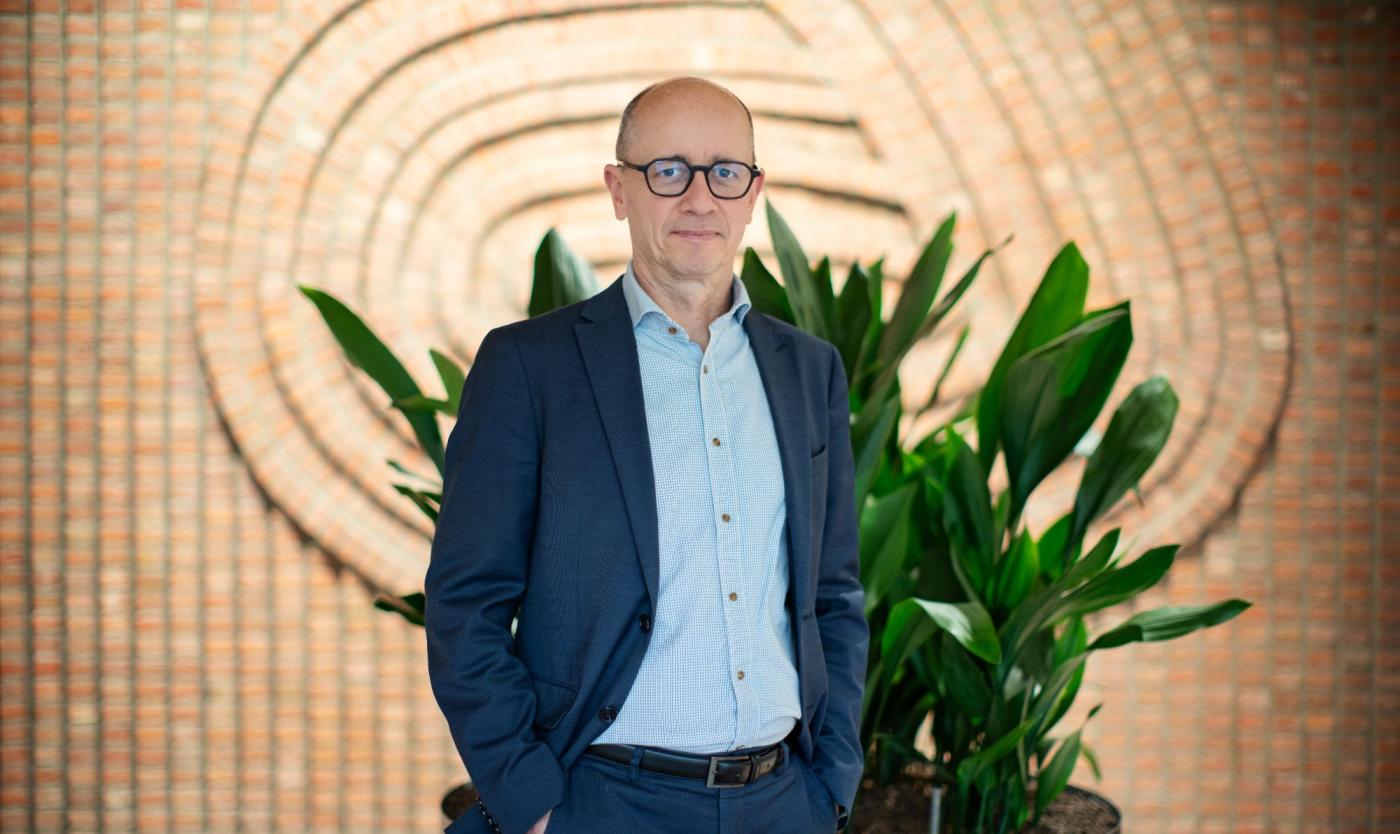


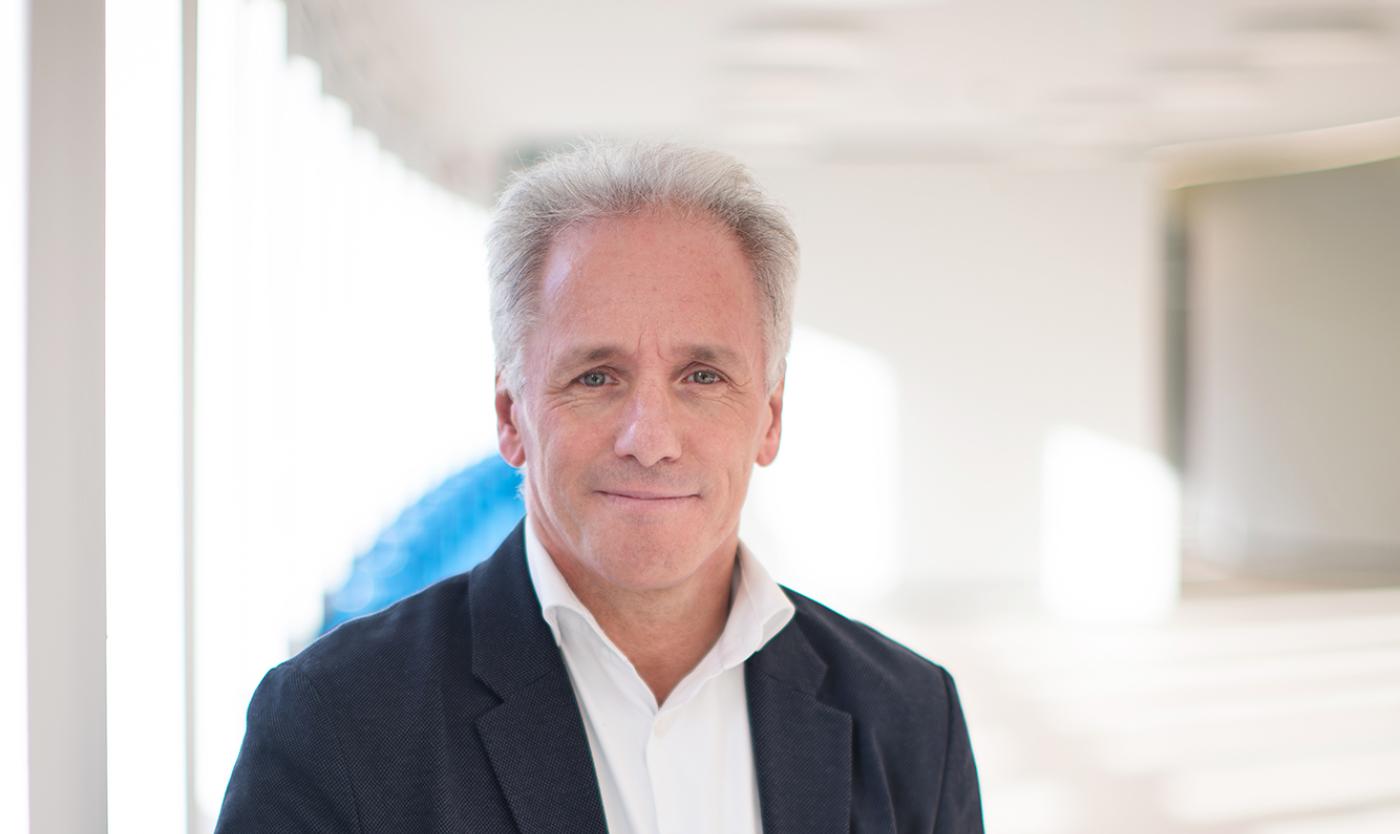
The resources secured by the Vice-Rectorate Innovation & Industry Relations have grown exponentially in recent years. Yet Vice-Rector Peter Schelkens still sees room for further growth: “At the European level, we will not be able to maintain the current pace. Any additional expansion will mainly come from collaborations with industry.”
Before we look ahead, let’s briefly take stock. What is the starting point for future policy?
Peter Schelkens: “The achievements of recent years are, of course, the merit of the VUB TechTransfer team and of my predecessor, Prof. Hugo Thienpont. I myself have only been in office for a year. One important accomplishment is our excellent performance in securing European projects. We have invested heavily in this over the past ten years, for example by hiring extra support staff to guide researchers in drafting project proposals. Over time, we see revenues increasing as well. The VUB is in the top 20 of the university ranking within Horizon Europe. When adjusted for the number of professors, we are in first place. That is a true success story. The same applies to Brussels-based funding channels, where we also perform strongly — crucial for both research and education, as many researchers on those projects also teach. In terms of Flemish funding, the VUB is strong in several channels, such as Strategic Basic Research (SBO); for others, especially those requiring intensive industry collaboration, there is still growth potential.”
What explains the VUB’s strong position?
“As we attract more resources, the university allocates more internal funding to the vice-rectorate, allowing us to hire additional support staff. That strategy pays off. People often say that proximity to the European Commission helps, but the strong performance of Flemish universities overall is remarkable. I am convinced that the Flemish government’s policy through the Industrial Research Fund (IOF) plays an important stimulating role. Through this fund, the government provides resources to encourage valorisation at Flemish universities, partly through European project activities. Naturally, such a policy must be well implemented, but this impulse has certainly helped. It means that in Flanders there is structural funding for valorisation support and a strong competitive climate among institutions.”
Are there other achievements worth highlighting?
“Our spin-off policy, supported by the necessary investment funds, has existed for some time but remains successful. Collibra, founded at the VUB, is the first Belgian-made start-up ‘unicorn’. Major players such as Ablynx and Biotalys also rely on VUB intellectual property. Today we establish three to four spin-offs each year — amounting to more than 60 in total so far, of which 50 are still active. By the end of this year, the counter will likely reach five. I would also like to mention the VUB Foundation, where we are seeing a steady rise in income from fundraising and legacies.”
Is further growth possible?
“For European projects, we may still improve slightly, but the explosive growth of recent years will not repeat itself. We are approaching the limit there and must continue working hard simply to maintain our current position. Locally, most growth will come from collaborations with Brussels and Flemish industry. Because of the Brussels context, we are still somewhat behind. Where UAntwerp, UGent, UHasselt and KU Leuven are the only universities in their city, Brussels also hosts ULB, UCL and several foreign universities. But we are catching up.”
“Locally, growth will mainly come from collaborations with Brussels and Flemish industry”
What concrete plans exist for collaboration with Brussels and Flemish industry?
“One important activity in that context is the research park in Zellik. The project has been running for some time, but we are now entering an acceleration phase. By the end of the year, we will take over management of the park from VLAIO. That creates opportunities. Several strong innovation players are located there, with whom we already collaborate or plan to collaborate. In addition, there is space for reconversion. Companies that fail to sufficiently strengthen their innovation activities will not have their permit renewed. There are also unused plots and vacant buildings available for new activities.”
“The first new building, developed in collaboration with Ghelamco, is the sustainable data centre, now taken over and operated by Penta Infra. It is currently home to the VUB Computing Center, and in a few weeks the new Flemish supercomputer will be inaugurated there. Soon, the first stone of the Origin building will be laid. It will accommodate around a thousand employees from various companies, and several VUB activities will also be housed there. In the former Roularta building, recently acquired by the VUB, we are currently installing a 7 Tesla magnetic resonance scanner (MRI) for advanced medical imaging research, together with the other Flemish universities. In the same building, in consultation with the Flemish Government, we are working towards establishing an incubator for robotics technology, building further on the unique expertise of Brubotics. Discussions are also underway with various parties about constructing a new building dedicated to the incubation of bio- and medtech technologies. This is important given the proximity of UZ Brussels and our medical campus.”
Is Flemish industry waiting for this?
“There is very strong demand. Many business and research parks are saturated. The Province of Flemish Brabant is currently exploring how to make business parks in the region more attractive and efficient. In the Flemish periphery we are examining what role we can play: we are in talks with business parks in Vilvoorde, Neder-Over-Heembeek, Halle and Sint-Pieters-Leeuw. There are opportunities everywhere. It is also important to mention our world-renowned Photonics campus in Pajottegem, which we also want to develop further. In addition, we are trying to establish a presence in other parts of Flanders, such as Ostend and Aalst.”
Beyond Brussels, Flemish and European valorisation opportunities, what about global plans?
“I do not want to get too far ahead, but the international dimension will become more important. We have a strong position in Europe, but we are also examining which other regions in the world are strategic for strengthening — or at least maintaining — our presence. Refining that global positioning is a university-wide effort, led by the Vice-Rectorate for Internationalisation. But from the Vice-Rectorate Innovation & Industry Relations, we will also contribute and provide support. Together, we will need to determine where to focus and in which regions — not an easy task in times of geopolitical tension. Reciprocity is an important parameter.”
“The international dimension will become more important”
Do these ambitions also mean strengthening the entrepreneurial mindset of students and researchers?
“Yes, and StartLAB.Brussels — a collaboration with ULB — can play an important role. Through StartLAB, we prepare researchers and students for valorisation. Last academic year we supported around 200 student entrepreneurs. This support stimulates entrepreneurial appetite, something we want to reinforce further.”
“We also want to create clarity about procedures and expectations around establishing spin-off companies. Universities are noticing increasing frictions in the creation of spin-offs. We are in a highly competitive environment with enormous financial pressure and significant geopolitical shifts. This creates uncertainty and a less favourable investment climate, compounded by the fact that Europeans are traditionally more risk-averse. This results in a shift towards higher product maturity levels before incubation and sometimes in intense, lengthy discussions when launching spin-offs. Investors often ask: ‘Why should universities profit from this? Aren’t you already publicly funded?’ Investors and innovation consultants tend to argue that university participation in spin-offs and the return should be minimal, acknowledging only a limited part of the effort involved. They believe they carry the risk together with the prospective entrepreneurs, while downplaying the fact that the university already mitigated substantial risks through prior research and valorisation activities — efforts that can amount to tens of millions of euros. The government requires us to valorise knowledge at market-conform conditions; otherwise, we would be creating hidden state aid, which is not permitted.”
“Our researchers are therefore often caught between two fires: the university, which wants to valorise its contribution, and investors, who want to limit the university’s return as much as possible. We want to bring more clarity here. As a university, we must receive a return — not to fill our own coffers, but because, under our valorisation regulations, one third of revenues goes to the valorisation fund supporting new spin-off initiatives. The other two thirds go to the research groups involved and the individual researchers who played a key role in the valorisation.”
Defence is a growing industry. Are there opportunities there?
“Absolutely. In the current situation, with conflict on European soil, we have a responsibility as a university. We cannot bury our heads in the sand. But we must make ethical considerations about what we engage in. Within the Board of Governors, the Ethical Committee has developed guidelines on this. The Ethical Committee for Dual Use, Military Use and Misuse screens every project aimed at defence research and applies these guidelines in its assessment. At present we are in discussions with defence actors to explore what we can do for one another. This spans a wide range — from technology to medical research — including, for example, the protection of underwater infrastructure, the pressing issue of drones, or medical support in critical situations. This brings challenges. Certain developments require higher levels of security. But how do you secure such projects without undermining the open functioning of the university? We are currently developing a framework for this.”
“In the current situation, we have a responsibility as a university. We cannot bury our heads in the sand”
Finally, are there only plans for economic valorisation?
“No, we also need to focus more on societal valorisation — especially today. Creating more jobs is not necessarily the right driver in a context where many vacancies remain unfilled. Sustainability and social impact are also important factors, though not always easy to measure. In future, I would like to strengthen our efforts here and involve more groups in valorising their research results. But whatever we do must generate income. Nothing comes for free. If we invest resources, costs must also be covered. A defining characteristic of this vice-rectorate is that it largely pays for itself. Much of the funding comes from external sources, and internal funding depends on the performance of the department and the university. We can only finance extra staff if we generate sufficient return on investment. We must not lose sight of that.”