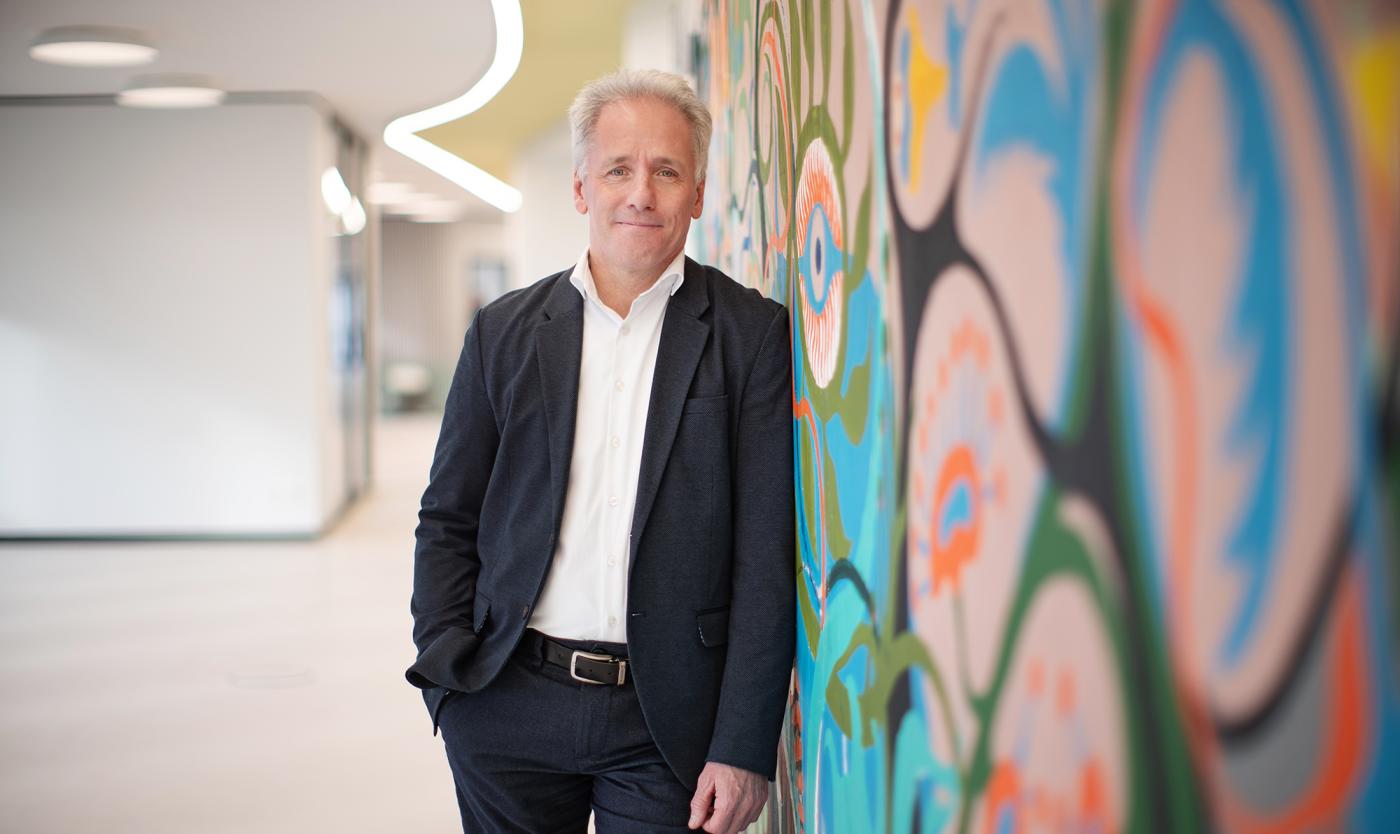


VUB TechTransfer supports researchers in translating their work into industry and society. Over the past years, Sonja Haesen, Director of VUB TechTransfer, and Philippe Westbroek, who coordinates the European Research & Innovation Support Team, have managed to secure significantly more funding for applied research at the VUB thanks to improved researcher support. “The TechTransfer team, where a great deal of expertise comes together, makes the difference.”
The Vice-Rectorate for Innovation & Valorisation turns ten. The TechTransfer Office implements the policies set out by the Vice-Rector. How have you seen its operations evolve?
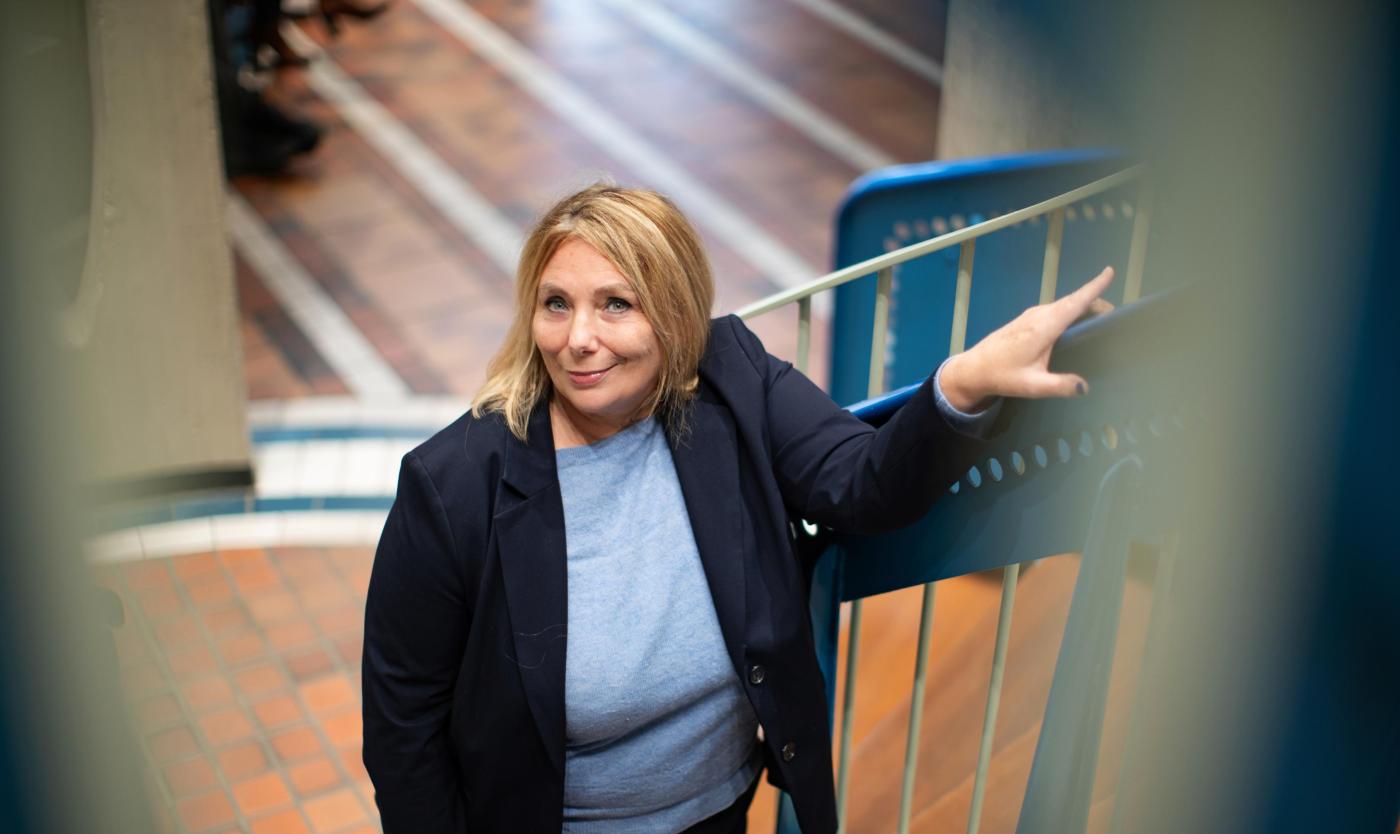
Sonja: “Even before 1998, the VUB appointed staff to build bridges between research and industry. As a university, it’s our role to bring research results into society. From 1998 onwards, structural funding from Flanders was added to support that mission. Thanks to those financial impulses from both the Flemish and Brussels governments, the TechTransfer operations could be further professionalised. For a long time, however, the service fell under the Vice-Rectorate for Research, where it was not seen as a direct priority. Only in 2015, under the rectorship of Paul De Knop, was a separate vice-rectorate launched, allowing the development of a dedicated policy focused on more applied research and valorisation. Vice-Rector Hugo Thienpont immediately recognised both the need and the potential to attract more European funding. That’s how the ERIS unit was created.”
“As a university, it’s our role to bring research results into society”
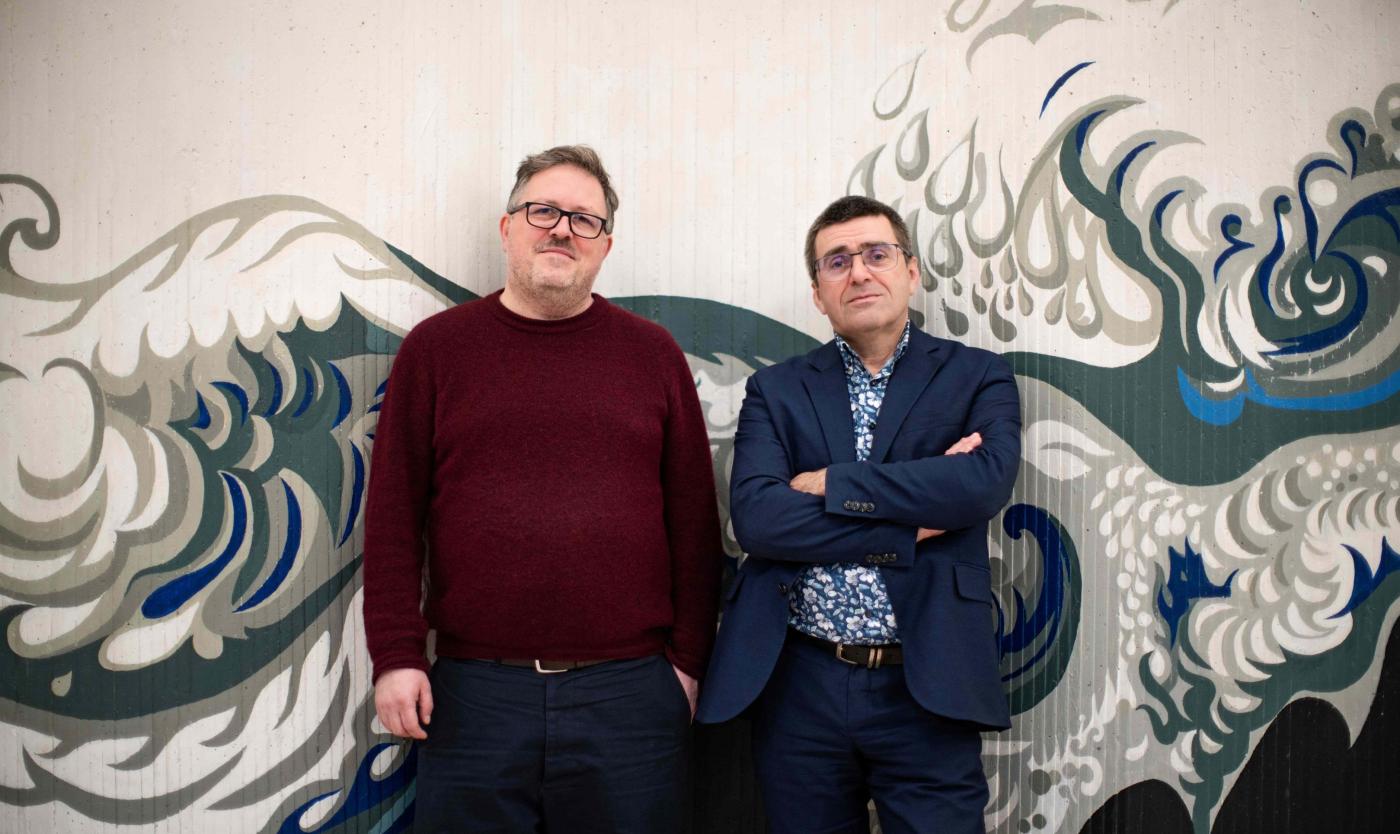
Philippe: “Ten years ago, I was the only one in my team supporting European project applications (ERIS). Today we are six. Thanks to that growth, the VUB has increased its annual European funding from five million euros to 25 million. In fact, we’re punching above our weight: we rank among the top 20 European universities, as the smallest university in the group, alongside giants such as KU Leuven, Ghent University, the University of Copenhagen, Denmark Technical University and University College Dublin. At the same time, our specific approach to European proposals — offering full guidance from the first idea to submission — inspired the TechTransfer teams that support Brussels and Flemish funding. There too, we see a substantial increase in acquired research and innovation resources.”
From 5 to 25 million. What makes your operation so effective?
Sonja: “Philippe has twenty years of postdoctoral experience and has worked on European projects himself. He proved right away that investing in staff with research or industry experience truly adds value. That set the ball rolling. In a short time, our entire team expanded with experts from different backgrounds. We were able to demonstrate that they generate a real return on investment — they more than pay for themselves and significantly increase research funding. These colleagues support our researchers in their search for additional resources for applied research, or for ways to valorise their work and fulfil their societal mission. They often work in teams, each bringing their own expertise.”
Philippe: “As a researcher, you don’t simply apply for innovation-driven projects. You have to prepare a valorisation plan. And if you’re aiming for a high Technology Readiness Level at the European Commission — the higher the level, the closer you are to bringing your innovation to market — you even need to provide a preliminary business plan. That requires expertise, because for many researchers this is entirely new. And that expertise sits within our TechTransfer environment.”
“For many researchers, a valorisation or business plan is new. That’s exactly why you need the experts we have embedded here”
Did you attract more projects, or bigger ones?
Philippe: “In fact both: more projects, and larger amounts per project. But in recent years, we’ve also increased income by focusing on more specialised programmes beyond the classic European framework programmes — think Digital Europe, EU4Health, INTERREG, CERV, the Innovative Health Initiative, and another dozen programmes. Each of these programmes has its own guidelines and templates, often running to hundreds of pages. We used to lack the capacity to make sense of all that and extract what mattered for our researchers. Today, 25% of acquired funding comes from those less well-known programmes.”
How about transfer to Flemish industry?
Sonja: “We also perform well in Flemish fundraising. Thanks to the Industrial Research Fund, the funded consortia now also have the capacity and expertise to develop valorisation roadmaps, target the right funding channels and build relations with companies. The VUB deliberately invests these IOF resources in research groups that already have a track record in applied research and valorisation. That allows us to help those groups grow towards excellence and compete internationally. But at Flemish level, there is still room to grow in our collaboration with industry. Because we’re based in Brussels, we’re not naturally embedded in the industrial fabric. We don’t have the historical ties that the University of Antwerp has through its port, or KU Leuven through its many research parks. The VUB has to catch up there, and Vice-Rector Peter Schelkens is making this a priority. At the moment, the VUB has one research park in Zellik. We plan to create more living labs there, where researchers and companies can work together. We also want to strengthen our presence in other parts of the Brussels periphery, such as Neder-Over-Heembeek, Aalst and Halle. In addition, there is a partnership with Ostend to make the VUB more visible there in terms of education and to strengthen ties with the port industry.”
You also guide researchers not only in funding, but in setting up spin-offs. How is that going?
Sonja: “We’ve had a spin-off policy for many years. We establish an average of three to four spin-offs per year, but we’d like to increase that pace. That also aligns with the policy priorities of Minister Diependaele’s cabinet. Starting a spin-off, however, requires substantial guidance. How do you turn your research into a company? What are the risks? Not all researchers are prepared for that. At the same time, we must ensure that the transfer of intellectual property happens at market-conform conditions. Researchers can’t simply take everything developed at the university for free — that would distort the market. These negotiations are not always easy. How do you value technology that isn’t fully market-ready yet? How do you determine the university’s share? Together with colleagues from other universities, we’re working to sharpen procedures and expectations. Every case is unique, and every university valorises within its own context, but we want to avoid being played off against one another.”
StartLAB.Brussels also stimulates entrepreneurship. Can you tell us more?
Sonja: “StartLAB is an initiative by ULB and VUB to coach researchers and students who want to start a business in their early stages. They learn to pitch, conduct market analyses, and think about building a team. This academic year, we have more than twenty registrations for StartLAB for Researchers. That shows many researchers are planning to take their own work further in a spin-off.”
“Valorisation isn’t only about technology. It’s also about turning knowledge in the humanities and social sciences into impact”
Is TechTransfer only about technology?
Sonja: “No, that’s a persistent misunderstanding. It’s also about valorising knowledge. We support researchers from the humanities and social sciences just as much. Sometimes it involves methodologies that can be used in a spin-off, but often it happens through policy-preparatory research. Take the current debates on the budget: behind the scenes, a whole team is calculating and predicting the impact of certain measures. Our researchers in the humanities and social sciences are well equipped for that kind of work. We also broaden our impact in other ways. At Crosstalks events, for example, we bring together researchers, artists, thinkers and policymakers. That opens minds and sparks new insights. The Fellowships tie into that as well. Fellows carry the VUB’s vision into society while bringing expertise from industry, policy or the arts into the university, for example through guest lectures. These Fellowships build bridges between academia and society in a different way and embody what we, as a university, stand for.”
Postdoctoral researcher Hichem Sahli from the ETRO research group on the VUB TechTransfer Office
“In the first instance, TechTransfer supports our research group with research funding. They monitor the calls, both from the European Commission and from the Brussels-Capital Region and Flanders. They alert us early to new opportunities and conduct targeted searches for calls on themes we propose. That saves us an enormous amount of time.
In addition, TechTransfer helps us prepare our dossiers. They do not act as an administrative service, but become part of the research team thanks to their expertise. After all, we share the same goal: securing funds in order to create impact. TechTransfer is also particularly strong in highlighting the right elements around societal and economic added value in our applications. They not only guide the drafting of our proposals, they also handle the entire follow-up. They take care of the contractual aspects so that we can focus on the research itself.
Recently, two major projects on the impact of environmental pollution on our health were approved, thanks in part to their support. For ENACT, a project with 20 European partners, VUB and UZ Brussel received 2 million euros in Horizon funding from the European Union. In Brussels, Innoviris approved the Brussels Environmental Exposome Project, in collaboration with UZ Brussel, ULB and Sciensano.
Beyond research funding, the TechTransfer Office supports us in the valorisation of our research. They assist in drafting business plans, managing the administrative processes around patents, and offer strategic guidance to ensure the successful creation and growth of spin-off initiatives. Here too, we’ve recently achieved strong results. The PoC ‘iHealthy Path — AI to Monitor Pulmonary Embolism’ was recently awarded the jury prize of the MedTech Accelerator 2025.”
Within Mobilise, Professor Koen Mommens leads a research team on sustainable logistics.
“We work intensively with both academic partners and with governments and companies: the Department of Mobility and Public Works, Bond Beter Leefmilieu, Comeos, Colruyt, Bpost… We provide policy advice to public authorities, for example on zero-emission urban freight transport. Companies approach us with questions on optimisation and sustainability. Recently, we worked with Bpost on a major project to make deliveries in Brussels emission-free.
When we collaborate with an external partner, it’s crucial for us that we can build scientific knowledge and publish on it. But if a company pays for the research, they often want to retain the intellectual property (IP). TechTransfer supports us in reconciling these conflicting interests and in drafting the often very technical collaboration agreements. That creates trust right from the start.
TechTransfer also guides us through the funding landscape. When we have a project idea with a company, they search with us for suitable calls and indicate what we need to emphasise in our application. That saves us a lot of time and increases our chances of success. For our collaboration with Bpost, for example, they directed us to the Joint R&D Call of Innoviris. As it was the first time Bpost submitted such a dossier, TechTransfer also advised them. It is certainly thanks to their contribution that the project was approved and successful. We built up a great deal of academic IP through it. This is demonstrated by ten conference papers, four journal articles and a book chapter. There is even a seed planted for a new proposal.
We are extremely satisfied with TechTransfer. They make it possible for us to collaborate, pursue our research goals, and — through our partners — bring about societal change. Without the foundations they help to anchor in our collaboration agreements, this would not be possible.”
For more information, visit the VUB TechTransfer website.