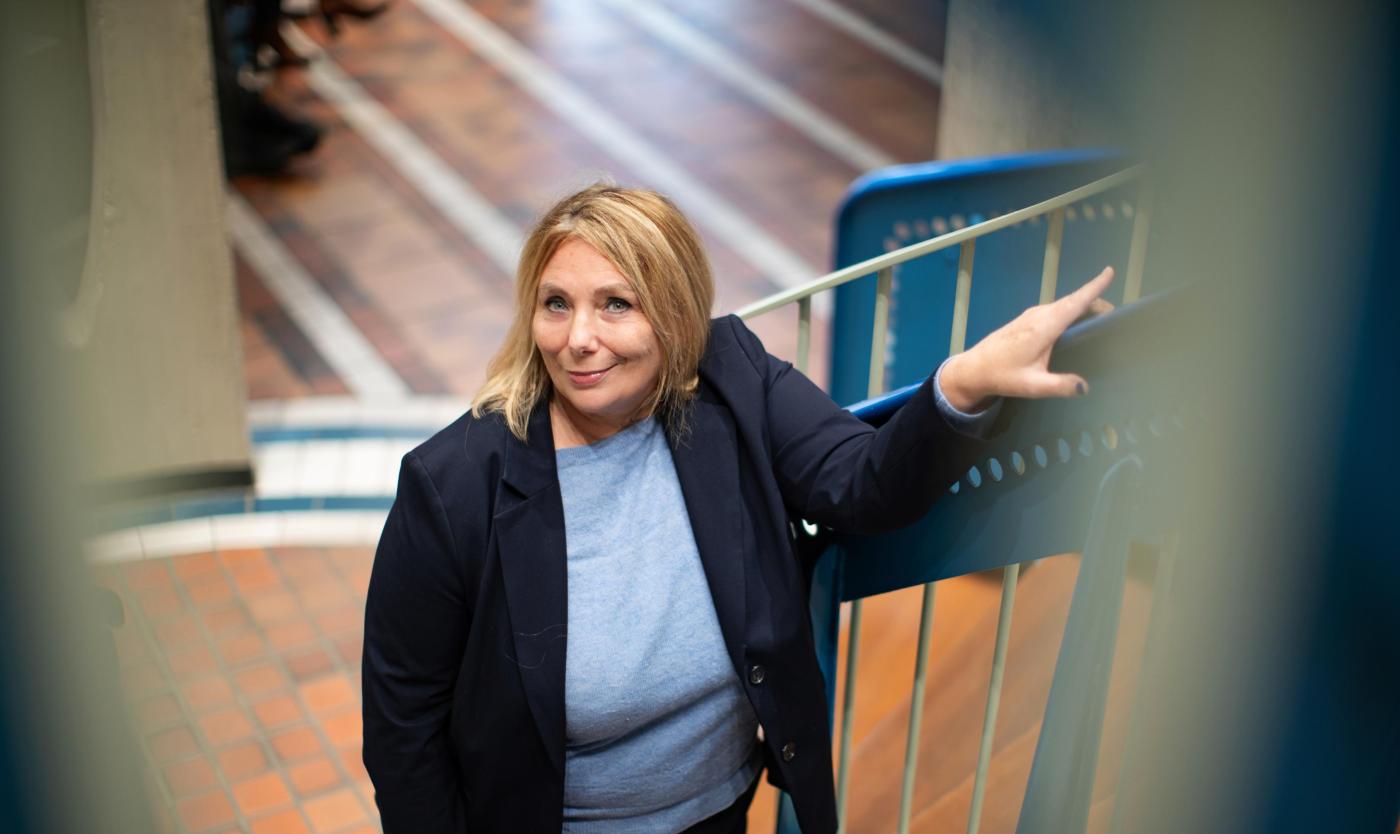
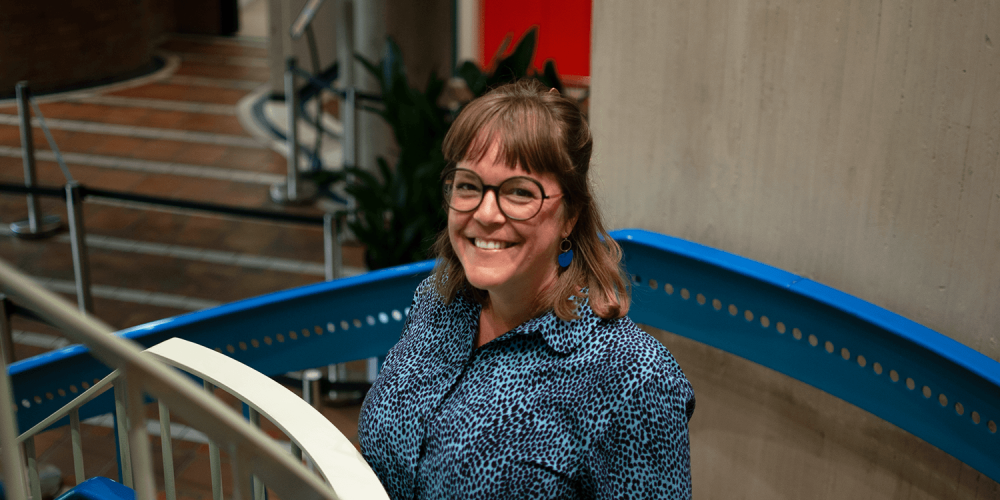


Over the past few years, Education and Student Affairs has faced a wide range of challenges: from worrying signals around mental wellbeing and substance use on campus to increasing toxic polarisation in the lecture theatre. Head of Student Affairs Sofie De Smet explains: “What we see happening among our students reflects what is going on in wider society. We do not shy away from that – on the contrary, we actively look for solutions.”
Let’s start with the mental wellbeing of young people and students, a hot topic since Covid. How is it at VUB?
“The current generation of students is much more aware of mental wellbeing than the previous one and openly discusses the topic. That is positive. Their wellbeing is under pressure, which cannot be denied. The issue is therefore high on our agenda. If you look at the surveys from the Flemish Wellbeing Monitor, the situation at VUB is similar to that of other Flemish universities. The majority of students report no complaints. Around 25% report mild emotional problems, 10% mild to moderate problems, and about 5% experience serious emotional issues and require urgent care.”
The Vice-Rectorate for Education and Student Affairs has developed a policy called the “community of caring.” Can you tell us more about it?
“Until a few years ago, the focus was mainly on academic guidance and, in particular, on student psychologists for supporting or strengthening students’ mental wellbeing. Today, everyone at VUB contributes to this. It starts with the smile of the reception staff, but lecturers also have a responsibility. We encourage them to be attentive if a student is struggling and to address it. A listening ear can already make a big difference. We also have ready-made procedures for such conversations, for example how to deal with a student in crisis. In addition, we raise awareness among students themselves to be more caring towards each other. Academic guidance offers a module to train students in caring. In this, students learn how to detect when someone is struggling, how to hold a conversation when concerned, and how to be caring towards themselves and set boundaries.”
So the intention is not always to refer students who are struggling to academic guidance or the student psychologist?
“Not necessarily. Many students today feel that if they are not feeling well, they automatically need a session with a student psychologist. But there is no scientific evidence that feeling low for a short time requires a therapist. Our capacity also limits us; we cannot offer every student an immediate session with a psychologist. We therefore first direct students to self-help materials, for example on healthy sleep habits or exam anxiety. In addition to online self-help modules, we offer group sessions. It can be very helpful for students to realise in a group that they are not the only ones struggling and to find support and recognition among peers. For those students for whom this is insufficient, sessions with a student psychologist remain available.”
“Today, students can indicate if they are concerned about a fellow student’s substance use”
Another priority was the substance policy. Is it true that this came at the request of students?
“Yes. After Covid, student representatives signalled that something had changed. Where drug use used to be hidden, it suddenly became visible to other students. Many students felt uncomfortable with this and came to us asking for action.”
You developed a substance policy with three pillars. Can you give an example of prevention and awareness initiatives?
“For example, alcohol. The stereotypical perception still exists that being a student means drinking (a lot of) alcohol. We want to break that link, for obvious reasons, but also because the number of students who do not drink is growing and they sometimes feel excluded from student life. We want student life at VUB to be inclusive, not just for those who drink. We encouraged our student community to review the beverage offerings at student events. It has been successful. We increasingly see tasty non-alcoholic alternatives, such as mocktails, offered at parties and student events. Another good example is the alcohol-free cantus we organised, with Alexander De Croo and our rector as cantors. On St V. we have also been present from the start of this rectorate with a stand offering non-alcoholic drinks.”
The second pillar concerns care and support. What is new in this area?
“Our student psychologists rarely saw students raising concerns about alcohol or other substance use. The problem undoubtedly existed, but no one felt comfortable discussing it for fear of judgement. Today, students can report concerns about a peer’s substance use. Academic guidance will invite the student for a voluntary conversation. This conversation starts from a caring perspective, to see how we can help, engaging in dialogue in a low-threshold, non-judgemental way.”
The third pillar concerns sanctions and makes clear that illegal drugs are banned on campus. That seems obvious, right?
“It was necessary to emphasise this. Some students mistakenly thought VUB was a kind of safe haven where Belgian drug laws did not apply. That is not the case. On educational grounds, the rules are even stricter: cannabis on campus counts as an illegal drug. We have communicated this clearly. We are not finished yet, but awareness that not everything is permitted has grown.”
Can drugs ever be completely banned on a campus in a city like Brussels?
“No, we must be realistic; we cannot create a drug-free campus. We will continue awareness campaigns and offer support to students in need, but some challenges remain. For example, external dealers on campus are beyond our control. We now have a list of campus locations that attract dealers, which we have shared with the police, who patrol these areas. We also have access to national drug commissioner Ine Van Wymersch, who advises on complex issues that require collaboration with Brussels municipalities, police, or external services. Facility Services, including security, is closely involved. The substance policy is truly a partnership effort.”
A code of conduct for a positive and productive learning environment will also be launched at the start of the new academic year. Why was this needed?
“Some core VUB principles had become somewhat blurred among students. For example, while students are free to be who they want, they must treat others with respect. It had happened that students refused to collaborate or live together in VUB residences due to differences in religion, political views, or sexual orientation. The university will not allow this. You can disagree, but you must learn to coexist respectfully.
We also noticed some students behaving inappropriately around certain academic material, especially on ethical topics, which negatively affected the safe learning environment. Students may have opinions, but discussions in class must be based on data and scientific insight, not personal bias. This safeguards VUB’s principle of academic freedom, which is central to our identity.”
How would you summarise your achievements in education and student affairs during the past vice-rectorate?
“The challenges we face mirror broader societal trends, particularly in an urban context. Our student community is highly diverse, which we are proud of, but it also brings complexity. Our policy does not ignore these realities. We clarified matters such as the substance policy and code of conduct, so students know our values and boundaries. This makes functioning easier for everyone and indirectly improves wellbeing—for both students and staff.”
Preferred Name Policy
Thanks to the preferred name policy, students can register a familiar name alongside their official name at enrolment. Why was this important?
“This is about student wellbeing. Some students found it difficult that their official name was used in all VUB communications. Dutch students often have two first names, with the second being their preferred name. International students, especially from Asia, often prefer a variation that is easier for Europeans to pronounce.
Most pressing were transgender students whose names had not yet been officially changed. These students were addressed by a name that did not reflect their gender identity. Thanks to the ICT team, students can now register a preferred name, which appears on student cards, email addresses, and class lists. Only official documents retain the legal first name.”
Conditional Student Support
A new policy has been developed for sustainable and impactful allocation of support resources. How did this come about?
“In the past five years, the number of VUB students eligible for a Flemish government grant has increased by 36%. Expenditure on rent support rose correspondingly, becoming unsustainable. Applications for VUB rooms reached unprecedented levels: 6,000 requests for 1,540 rooms in 2024.”
“We analysed how to use our resources—rooms and financial support—more impactfully, prioritising students who need them most and make good use of them. Data dashboards were developed to link support with academic progress.
This prevents situations where students remain in a VUB room for three years with a rent allowance but show little academic progress. Students may lose rent support or room priority. This is a major change, but much support remains available for those who use it responsibly. Dashboards allow us to monitor and continuously improve support policy.”
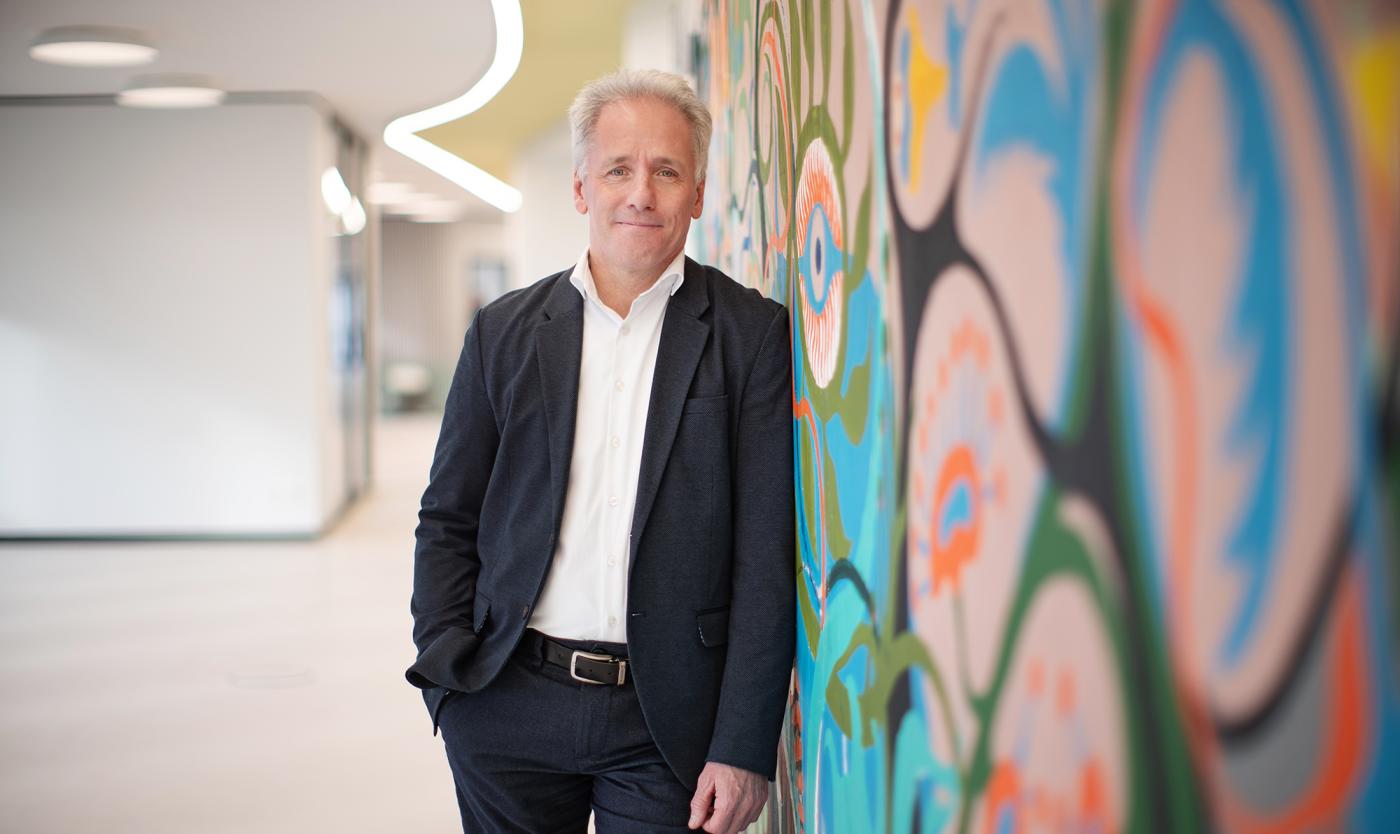
Wout Van Helden, Chair of the Student Council: “Support services have increased and become more diverse”
What have you noticed about the extra focus on mental wellbeing?
Wout Van Helden: “You can see that VUB has started treating mental wellbeing as a university-wide priority, creating a kind of ‘mental health reflex’ across all parts of the organisation. Support services have increased and become more diverse; they have been embedded into the functioning of student associations through the training of confidential advisers, and you can feel that the topic is becoming more openly discussed. Compassionate Week is just one example, but also consider healthy eating initiatives, the sports pass, and the kot coach!”
Was a stricter approach to substance use really necessary?
“When society is under pressure, people look for an outlet—this is seen in all crises. That also explains the increase in illegal substance use among VUB students. A stricter approach per se was not necessary, but an approach with more care and awareness was. This applies to both students and staff.”
What have been the effects of these efforts?
“VUB has evolved into an intersection of community, care for one another and the world, and high-quality education. It is not just a place where knowledge is transmitted, but an environment where students and staff are actively supported in their personal and professional growth. By structurally embedding mental wellbeing, social inclusion, and sustainability into educational policy, the university does not just educate people—it strengthens them.
Concretely, this means that wellbeing initiatives are no longer separate from the curriculum or campus life but form an integral part of them. Think of the presence of confidential advisers in student associations, the kot coach who supports students in their living environment, and the sports pass which promotes physical health. In this way, VUB becomes a place where students and staff are given the opportunity to become the best version of themselves—not just as academics, but as individuals within a connected community.”
Johan De Mey, Professor of Radiology and Member of the Student Wellbeing Steering Group: “Student life is back: on campus, in the societies”
How urgent was the need for mental health support?
Johan De Mey: “Since Covid, some students have not fully recovered from the difficulties they faced. They skipped exams because they were afraid of failing. It’s a well-known mechanism. They don’t want to fail in front of their peers, which leads to strong performance anxiety and, consequently, perfectionism. The result of missing exams is that they earn no points and therefore no credits… a vicious circle. I have the impression that young people today are less resilient, more sensitive. I see the same among trainee doctors: they too are more vulnerable.”
At VUB, the approach to substance use focuses on caring for the individual student. Is that accurate?
“That’s a tricky one. Substance use is widespread across Belgium, in Brussels, in all university cities. Our students are neither naughtier nor better behaved than others.
But our Jette campus is relatively safe. The student body is highly educated and the location is secure. Nevertheless, some students will use substances. As long as it is occasional use of soft drugs, the individual user should not be punished but supported. When it escalates—dealers, hard drugs—we need to act more strictly.”
What results of the education initiatives are already visible?
“After Covid, students have been slowly climbing out of the mire. But now I see them participating again. Student life is back: on campus, in the societies. You also notice that students are supporting each other. Education has worked hard to make that happen.
Digital teaching is gradually maturing. The quality of the online learning environment has improved enormously. We are moving toward a different type of education. People often look at it negatively, but they should also consider the valuable information available online. Before the internet, you wouldn’t have had access to it. We do need to teach students—and young people in general—how to use it sensibly.”
Which challenges still need attention?
“At VUB, we have focused on guiding students to the help available. The support exists, but some still don’t know how to access it. We need to continue working on that. We are making progress, but we must proactively reach out to students who get lost and fall off the radar. Often, these are not the complainers or attention-seekers, but those who have withdrawn, have few or no friends, and little support in their environment. I would like to do more for them.”