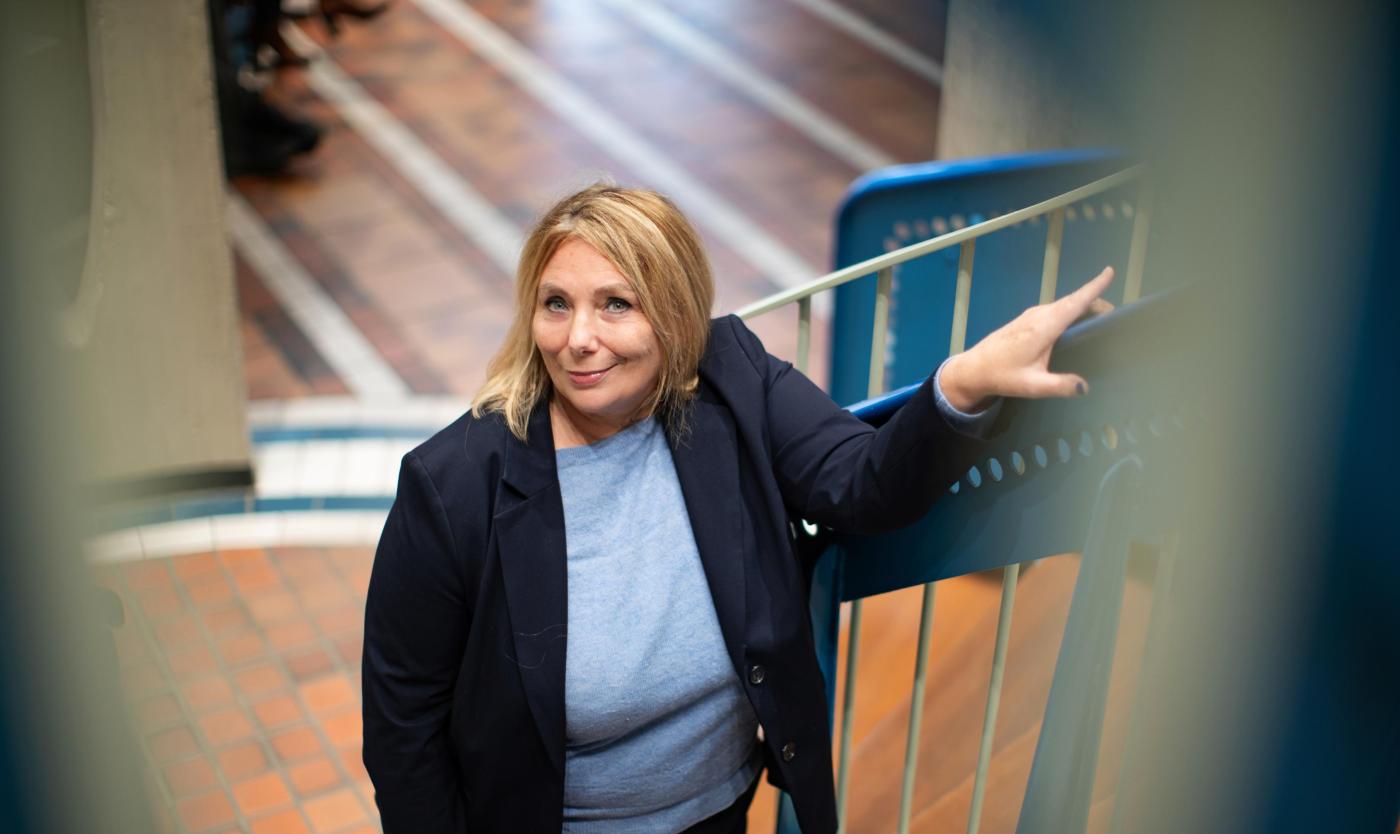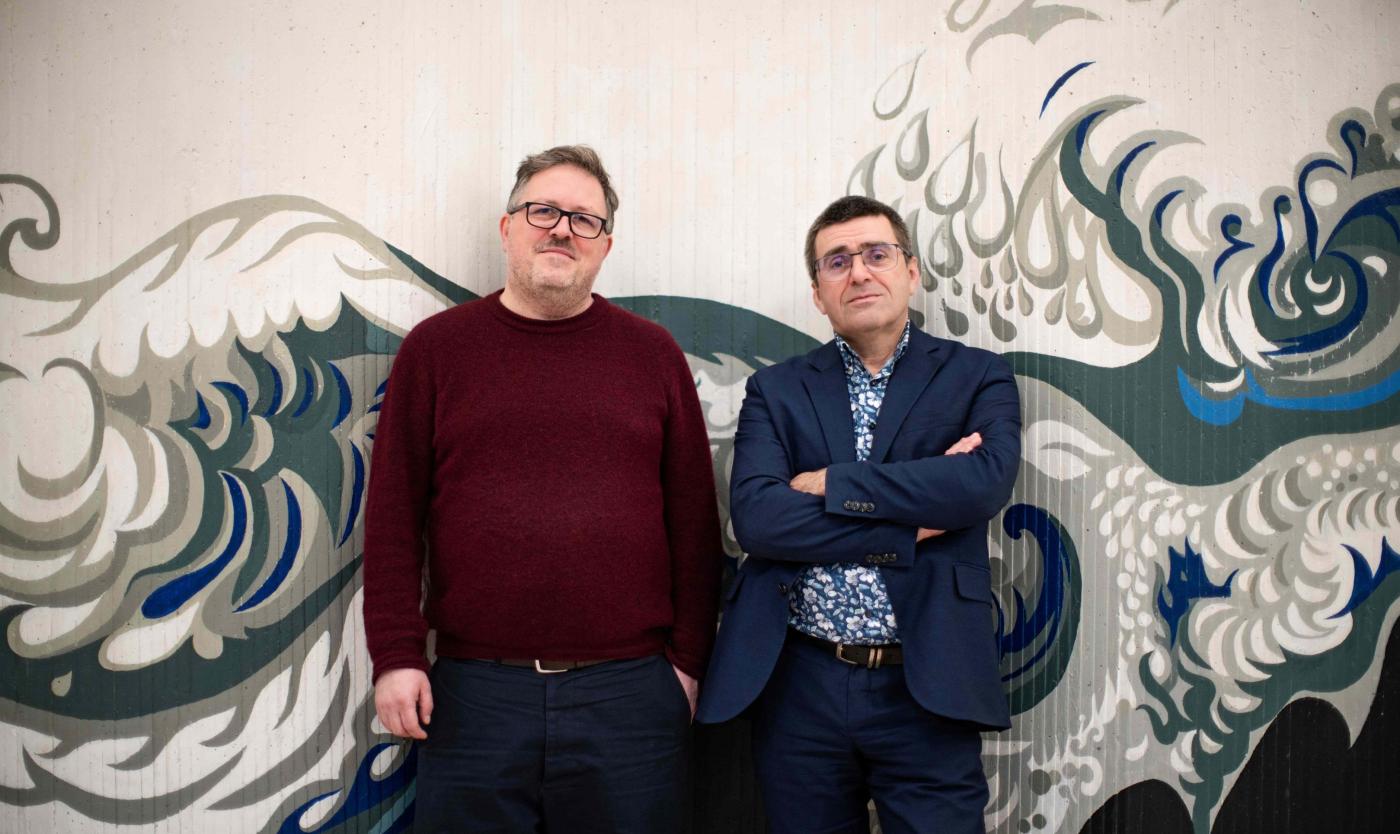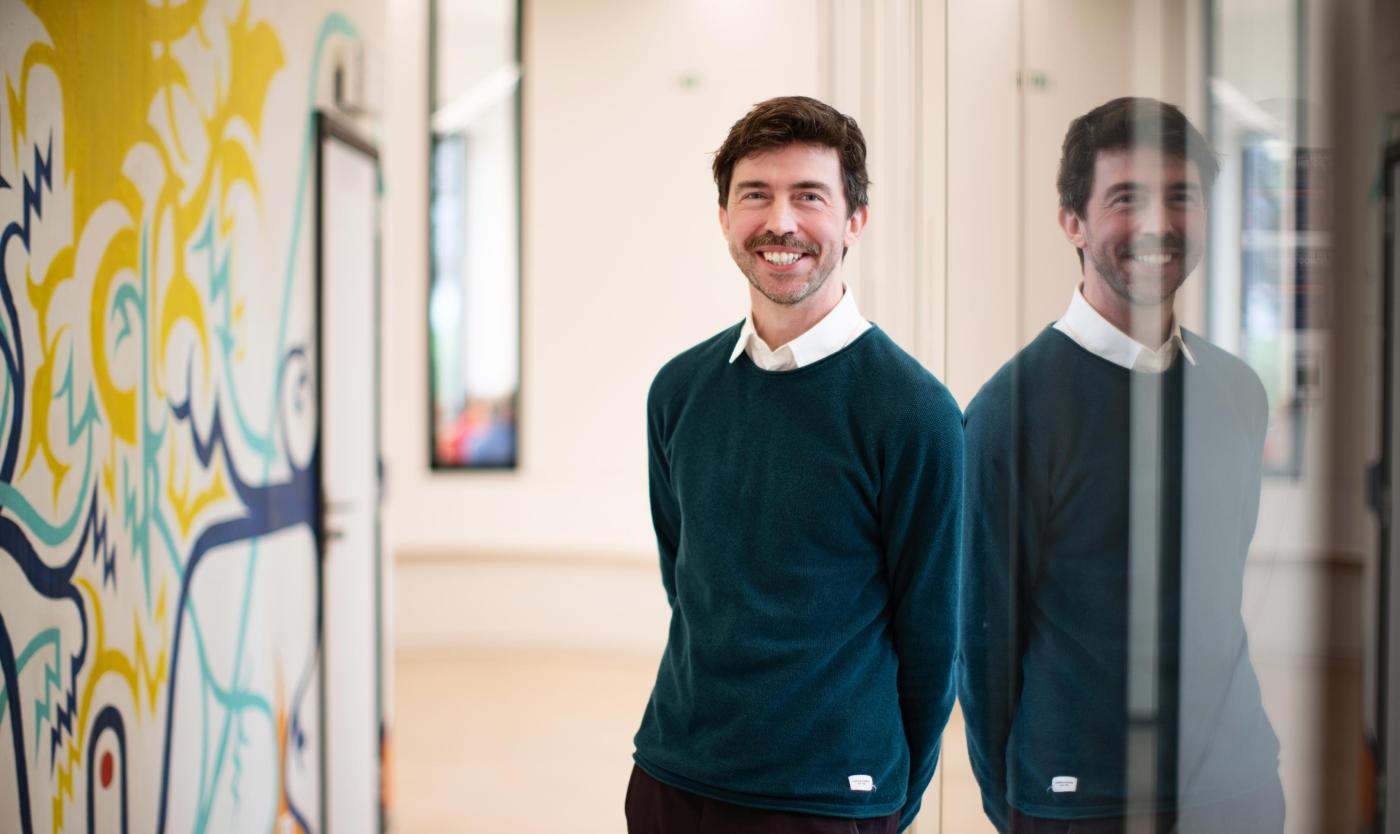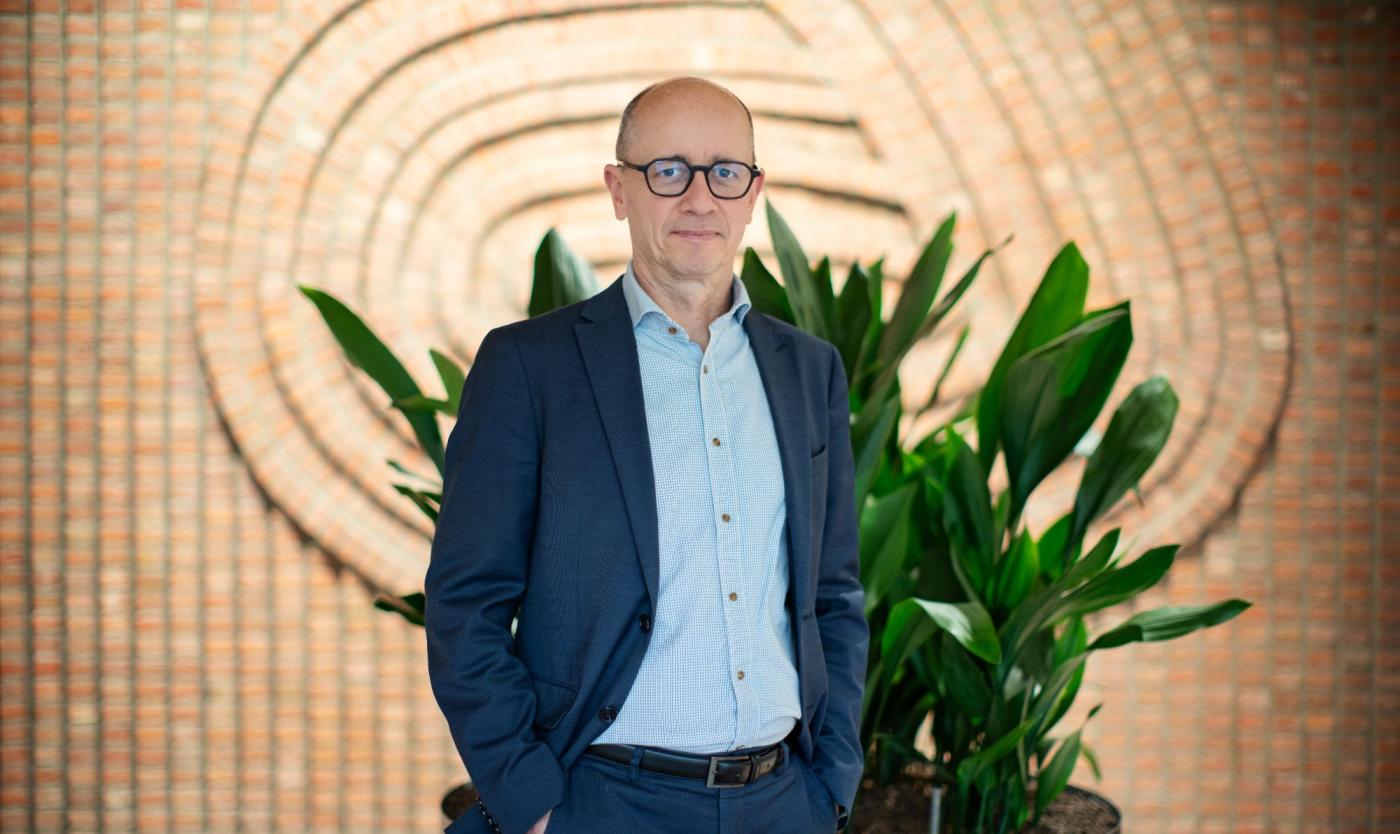


The ambition of the EUTOPIA alliance, of which VUB has been a member since 2019? To internationalise the existing curriculum and add a EUTOPIA layer across the board. Lize De Potter, EUTOPIA policy officer, gives an update: “Today, staff and students spontaneously come to us to say how valuable their EUTOPIA experience was. That never used to happen.”
EUTOPIA is an international alliance of ten universities under the European Universities Initiative. There are now 64 such alliances in total, all of which you follow closely. What sets EUTOPIA apart?
“In 2017, the European Commission launched the European Universities Initiative to make European higher education more competitive. Europe needed to be able to compete once again with higher education in China and the United States. At the same time, the Commission tasked us with transforming higher education in such a way that it embodies a European identity. EUTOPIA was launched in 2019, alongside 16 other alliances. We are among the first movers, which means we have an advantage in terms of time and the number of concrete achievements.
What further distinguishes EUTOPIA is its content-driven approach. Many alliances have set up entirely new joint programmes. EUTOPIA deliberately chose not to do that, opting instead to internationalise the existing curriculum and add a EUTOPIA layer to it. There were two reasons for this. The first was very pragmatic: in 2019, the universities within our alliance did not yet know each other well enough. We had no shared history on which to immediately build a joint degree programme. Secondly, we are convinced that internationalising your entire educational offering is far more inclusive than focusing on, say, one specific master’s programme. That way, you reach many more students, including those for whom an international exchange is less self-evident. At VUB, for example, we have many first-generation students. Their parents and grandparents are often not highly educated. Entering higher education is already a major step for them. We ensure that they can naturally acquire international skills as well, without having to make a major additional effort.”
“EUTOPIA internationalises existing education. That is far more inclusive and allows you to reach students for whom studying abroad is less self-evident”
To what extent is VUB currently permeated by this EUTOPIA layer?
“We have a large number of degree programmes, so there is still a lot of work to be done, but we are proud of where we stand already. A good example is the Connected Communities. In these, we bring together professors with a strong track record in active learning methods and their counterparts at partner universities. We support them in jointly internationalising their field of teaching. This can range from small group assignments to short exchanges or guest lectures. We call these micro-internationalisation opportunities. They do not require a major time investment from students – you do not have to go abroad for an entire semester, for instance. In addition to joint teaching, we also encourage the Communities to explore opportunities for joint research. VUB is involved in the vast majority of these Communities, except where we simply do not offer a relevant course or programme. In eight of them, we even take on a leading role.”
Would it not be more effective to make Erasmus exchanges more accessible? The impact of a semester in, say, Salamanca is surely greater than that of a group assignment with students from another university?
“An Erasmus exchange certainly has a major impact on a student’s personal development – I completely agree with that. But its impact on the curriculum and on the content of teaching is limited. Often, there are separate classes for Erasmus students, and they remain in an Erasmus bubble. With EUTOPIA, the impact at institutional level is greater, because you actually change your educational offering. Moreover, thanks to its low-threshold nature, you reach more students. Over the past six years, some 2,000 VUB students have come into contact with this programme.”
Can you give a few examples of what happens within a Connected Community?
“Of course. In the Connected Community Legal History, Professor Frederik Dhondt asks his students, together with students from the partner universities, to conduct research on themes such as migration or minority rights. The students then come together for a week at one of the universities to present their research to one another. They have already been to Brussels, but also to Warwick and Paris. I hear that students are extremely enthusiastic about this. They experience first-hand that a topic such as minority rights can mean something entirely different in Spain than it does here. Another example is Introduction to Artificial Intelligence. Students from the different universities design an AI system that can play computer games and then pit them against one another in a tournament. That Community takes place entirely online, but it is also very exciting.”
Are these sustainable projects?
“That is certainly the intention. Back when Jan Danckaert was Vice-Rector for Education, he developed a model for this together with Caroline Pauwels. We still use that tool whenever we launch a Connected Community. In principle, the process takes two years: in the first semester, the partners get to know each other; they then have half an academic year to develop their plans. In the following academic year, they implement them, and in the final six months they reflect and make adjustments where necessary. The idea is that, after this start-up phase, a Connected Community can stand on its own and is sustainably embedded in the education and research offering. Many of the earlier Communities have already shown that they can have a long life, provided there is still a modest level of financial support.”
EUTOPIA encompasses much more than the Connected Communities. There is also a Young Leaders Academy. Can you tell us more about that?
“This programme brings together early-career researchers from the different partner universities who show the ambition to move into policy roles in the future. The idea is to bring together researchers from completely different disciplines and support them in building an international network. In addition, they receive training on topics such as leadership skills. As a final output, the Young Leaders jointly organise a symposium. This year’s edition will take place shortly in Venice and will focus on power dynamics in academia. The Young Leaders Academy is particularly interesting because the international networks of young researchers often remain limited to their own field.”
“We want everyone to be engaged with EUTOPIA, but resources are finite. It is a constant balancing act between ambition and reality”
Do you sense a strong level of enthusiasm for EUTOPIA?
“These days, it often happens that staff and students spontaneously approach us to say how valuable their EUTOPIA experience was. That never used to happen. In the past, we had to go out and actively promote it, asking: ‘Have you heard of EUTOPIA yet?’ Today, we sometimes even have to hold back a little. We want everyone to be involved with EUTOPIA, but resources are limited. In other words, we are constantly balancing ambition and reality. We want to communicate widely, but we cannot expand indefinitely. We also sometimes hear researchers say that they already have other partners and ask whether they can continue collaborating with them. Of course they can – if you already have a good partnership, you should certainly continue to build on it. But if you do not yet have such collaborations – and that is often the case for younger academics – then our message remains: take a look at EUTOPIA.”
Professor of Contemporary History Nel de Mûelenaere takes part in the Young Leaders Academy
“The Young Leaders Academy has lowered the threshold for making contact with international colleagues.”
“After four years of teaching, I felt the need to further develop my international research work. The first years as a lecturer demand a great deal of energy, but after a while there is space to take new steps. I was keen to connect with international colleagues from other disciplines who are at a similar stage in their careers. We often grapple with the same questions: how do you put together a strong team, what kind of leader do you want to be, and how do you build a sustainable academic career? The Young Leaders Academy offered the opportunity to consciously make time for these issues.
My trajectory is now nearing its end. Over the past two years, we have followed targeted workshops on leadership, international fundraising and the visual presentation of research projects. In addition, we met regularly as a group. The symposium with which we conclude is the result of that interdisciplinary collaboration: we brought together our best experiences from previous conferences and, on that basis, put together a rich programme. We not only have a solid scientific foundation – for instance, we conducted a large survey on the abuse of power in academia – but there is also room for creativity. A facilitator guides the discussions, and there is even an artistic performance.
On a personal level, the programme has led to valuable collaborations, including with an art historian from Barcelona, who put me in touch with researchers there. Thanks to the Young Leaders Academy, I have found my way within several international history departments, and the threshold for getting in touch has become much lower.
At the outset, I did not give much thought to the group I would end up in, but in retrospect that turned out to be the most valuable aspect. The conversations were inspiring: we shared similar challenges, and where our experiences differed, we learned from one another. We have become a close-knit group, and I am convinced that we will remain in touch.”
Professor of Italian and Literary Studies Ann Peeters has been part of the Connected Learning Community Multilingualism and Diversity since 2019
“The added value for students is enormous: they learn to collaborate across borders and build an international network.”
“What is wonderful about the Connected Learning Communities is the sheer range of possibilities. At the outset, we experimented with different formats. For example, we had an à la carte module in which students could take part in educational activities at other universities, as well as a summer school on linguistic landscaping.
In the early years, students did not receive any credits for these initiatives. They took them on in addition to their regular curriculum and were awarded a EUTOPIA certificate afterwards. We therefore noticed that interest among students was very high at the start of the academic year, but that they dropped the EUTOPIA activity once academic pressure increased. A few years ago, we therefore developed a EUTOPIA semester. Within that semester, students can take up to 30 ECTS credits in EUTOPIA courses. In addition, we organise an autumn school on multilingualism, which is taking place in Brussels for the second time this year. Every March, there is also the EUTOPIA Languages Week, with multilingual activities across all campuses. Think of trial classes in African languages or multilingual menus in student restaurants.
On a personal level, this trajectory has been hugely enriching. Through it, I have built a strong network with colleagues at other universities. Together, we submit new research proposals, such as a recent Marie Skłodowska-Curie joint PhD application. That was not the primary aim at the outset, but working together so intensively has lowered the threshold for embarking on such ambitious project proposals. Of course, the added value for our students is also considerable. Through group work and summer schools alike, they learn to collaborate with students from other countries and cultures. They acquire intercultural competences and expand their international network. In short, I am extremely enthusiastic. My only concern is that funding remains limited and is by no means sufficient to embed this project sustainably in the long term.”