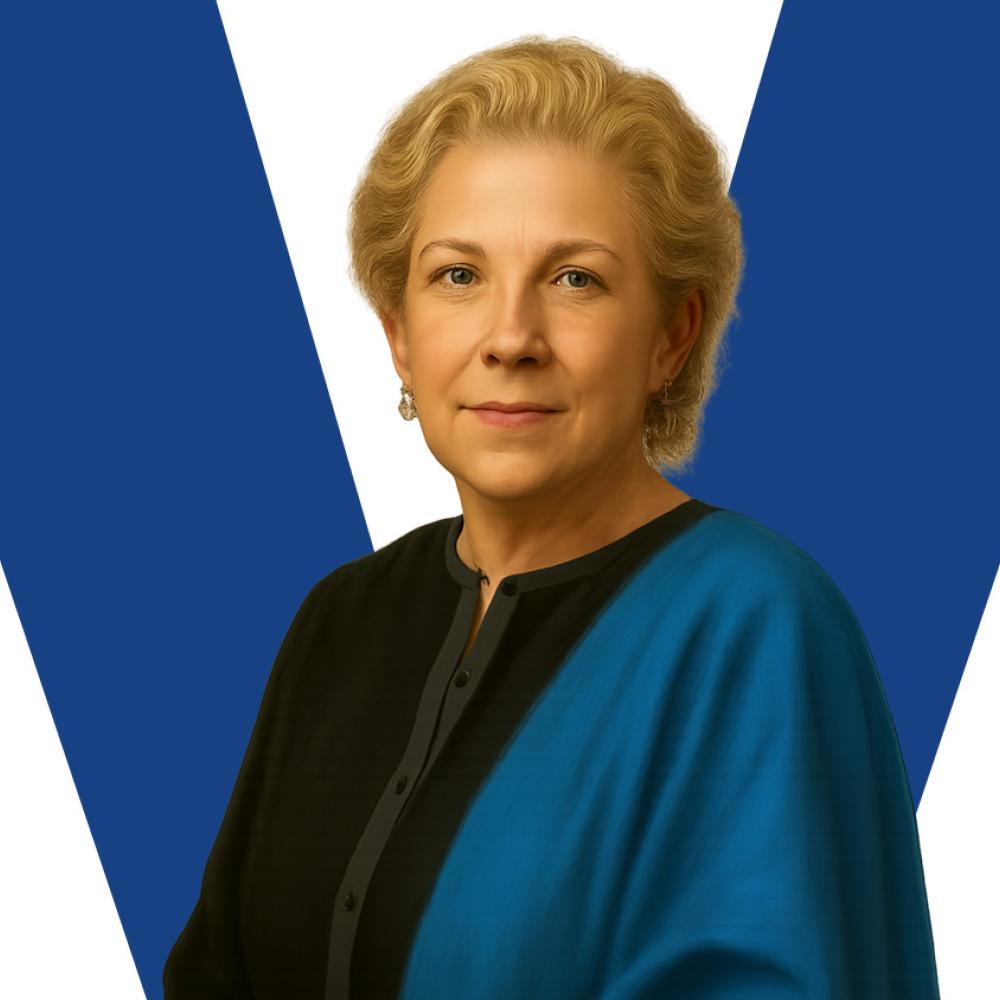
Jennifer Clement (1960) is an American-Mexican author of novels, memoirs, and poetry collections. Her books address issues of profound human significance, such as the abduction of young girls and human trafficking in Mexico, and the consequences of gun violence and arms trade in Mexico and Central America. She has also written about her life in artistic circles in Mexico and New York. Clement was honoured not only for her literary work but also for her significant contributions to public debate and society at large, particularly her efforts to defend freedom of thought and freedom of expression in a changing world. From 2015 to 2021, she served as president of PEN International, a writers’ NGO founded in London in 1921 that promotes literature and freedom of expression worldwide.
Laureate Difference Day Honorary Title for Freedom of Expression 2023
Jennifer Clement is a globally recognised American-Mexican author of novels, memoirs, and poetry collections. Her books tackle issues of profound human significance, such as the abduction of young girls and human trafficking in Mexico, and the consequences of gun violence and arms trade in Mexico and Central America. She has also written about her life in artistic circles in Mexico and New York.
Clement was awarded the Difference Day Honorary Title not only for her literature but also for her significant contributions to public debate and society, and her efforts to defend freedom of thought and expression in a changing world. From 2015 to 2021, she served as president of PEN International, a writers’ NGO founded in London in 1921, which promotes literature and freedom of expression worldwide.
“Today the world is becoming increasingly dangerous for journalists and writers,” Clement said. “This is especially true for journalists reporting on environmental destruction. As laws protecting the planet become stricter, it becomes harder for companies, individuals, and governments to conceal their actions. In these times, the pursuit of truth is more crucial than ever, particularly as repressive governments gain power globally and technologies threaten trust in truth.”
Clement emphasises the importance of creating secure ‘clouds’ where journalists can safeguard their findings. Protecting information in this way reduces the risk of journalists being killed or imprisoned. She advocates for organisations such as Forbidden Stories, which continue and publish the work of journalists who are threatened, imprisoned, or murdered, ensuring their investigations remain accessible.
For Clement, writers have a moral duty to engage. As PEN International president, one of her key initiatives was the creation of the Democracy of the Imagination Manifesto, which calls on writers to defend freedom of expression and the imagination. She considers the Honorary Title a great honour, sharing recognition with some of her heroes: Svetlana Aleksievitch, Zhang Zhan, Ahmet Altan, Daphne Caruana Galizia and her family, Zineb El Rhazoui, Djemila Benhabib, and Raif Badawi. Clement stresses that awards like these underscore that freedom of expression underpins all knowledge. She also reflects on her PEN colleagues worldwide, who often carry out their work under dangerous circumstances.
Highlighting the threats facing free expression today, Clement notes the categories PEN uses when compiling its annual list of writers and journalists who have been silenced: “Convicted, conditionally released, on trial, briefly detained, intimidated, death threats, threatened, exiled, released, executed by the state, murdered, impunity, persecuted, forcibly disappeared, kidnapped, missing, died in custody, attacked, imprisoned, detained, concerns over irregularities, tortured, interrogated, death penalty.”
She recounts the emotional weight of these categories: when adding the name of Maltese journalist Daphne Caruana Galizia under ‘executed with impunity’, she felt as if all the birds in Malta had stopped singing. Adding Kurdish writer Selahattin Demirtaş under ‘imprisoned’ felt like all Kurds in the world had been locked away. She questions how to categorise the courageous women subjected to gendered violence: “Do we need a category for mass poisoning of schoolgirls, as in Iran? Or one for flogging of Afghan girls attending school?”
Clement cited the 14th-century Persian Sufi poet Hafiz’s poem Falling Keys, an ode to freedom, in her acceptance speech:
The little man
builds cages
for everyone
he knows.
While the wise,
whose head must bow
when the moon is low,
keeps dropping keys all night
for the beautiful rugged prisoners.
“Today we know the threats to freedom of expression. But it is also incredibly uplifting to remember those who speak out bravely, risking everything for a poem that questions God, a report that exposes government denials, or a story that continues to tell the truth. It is good to be surrounded by people who drop keys.”
Sources: Difference Day 2023 acceptance speech and laudatio, VUB Today, jenniferclement.org