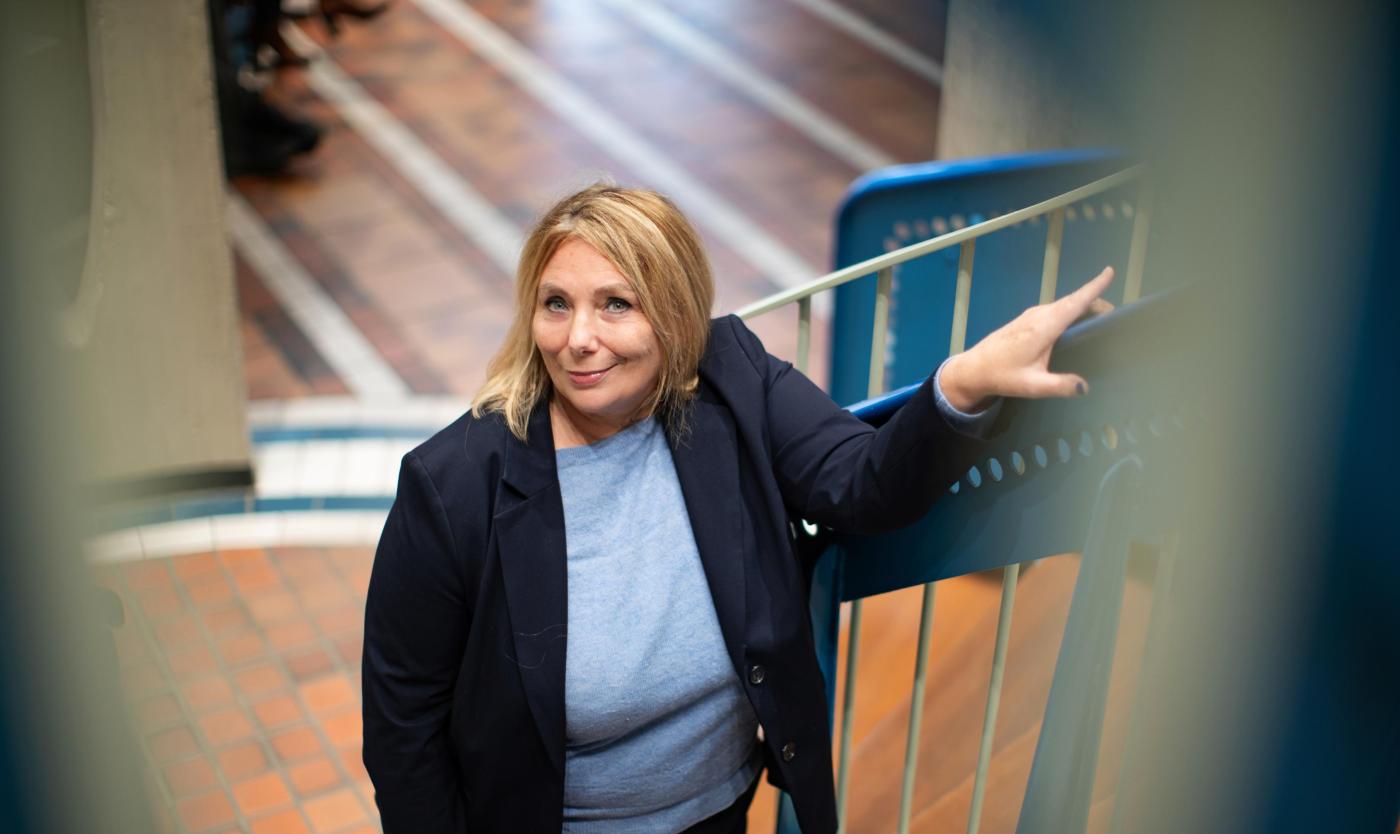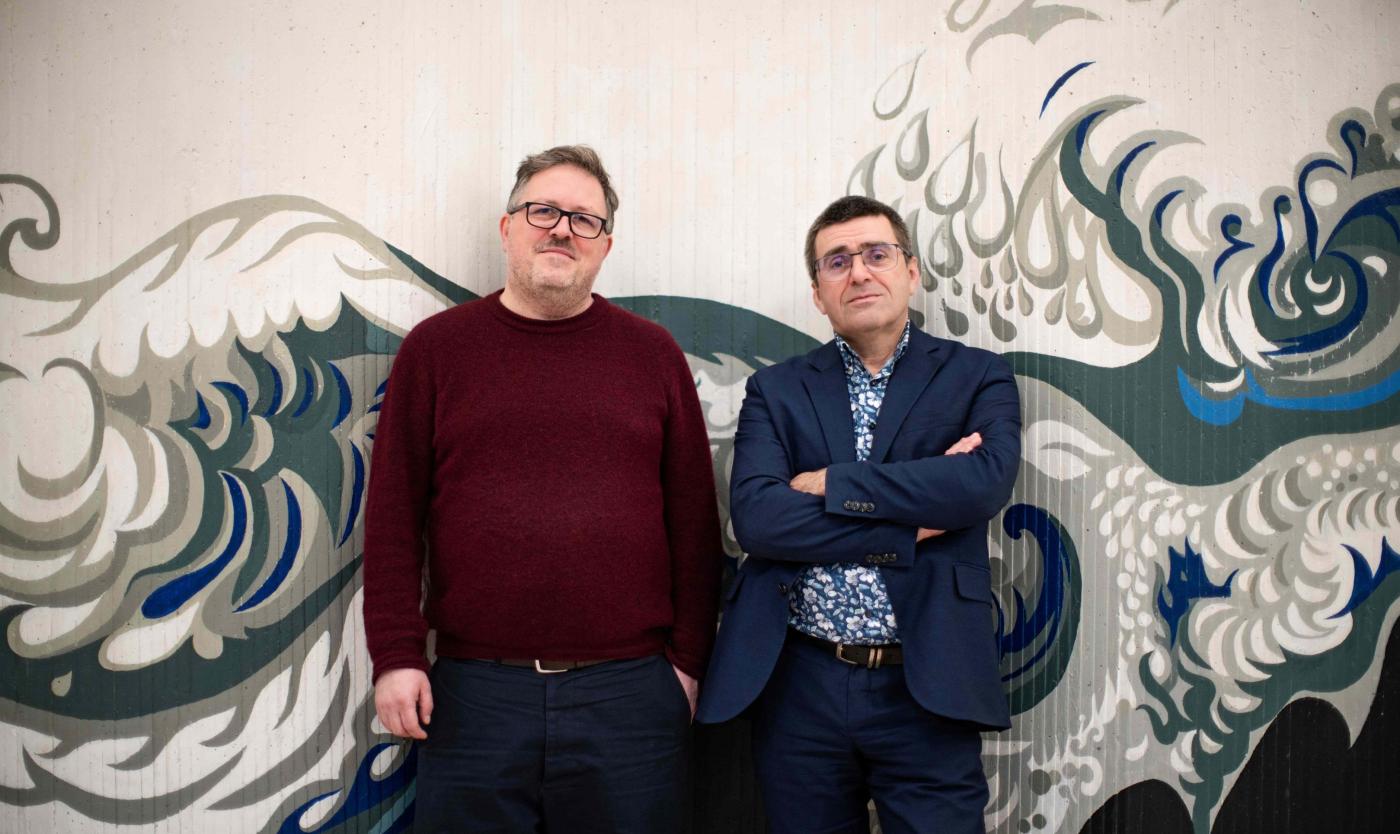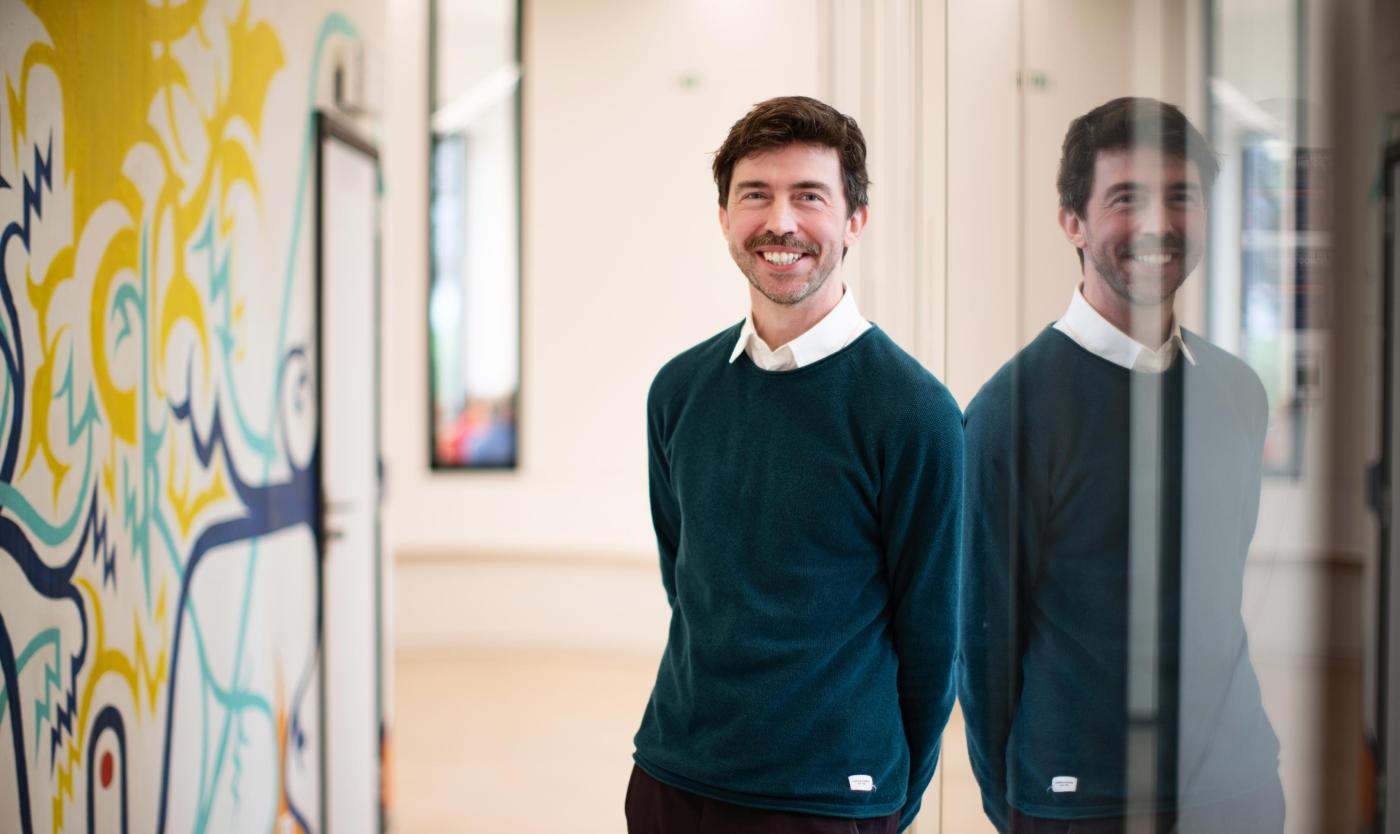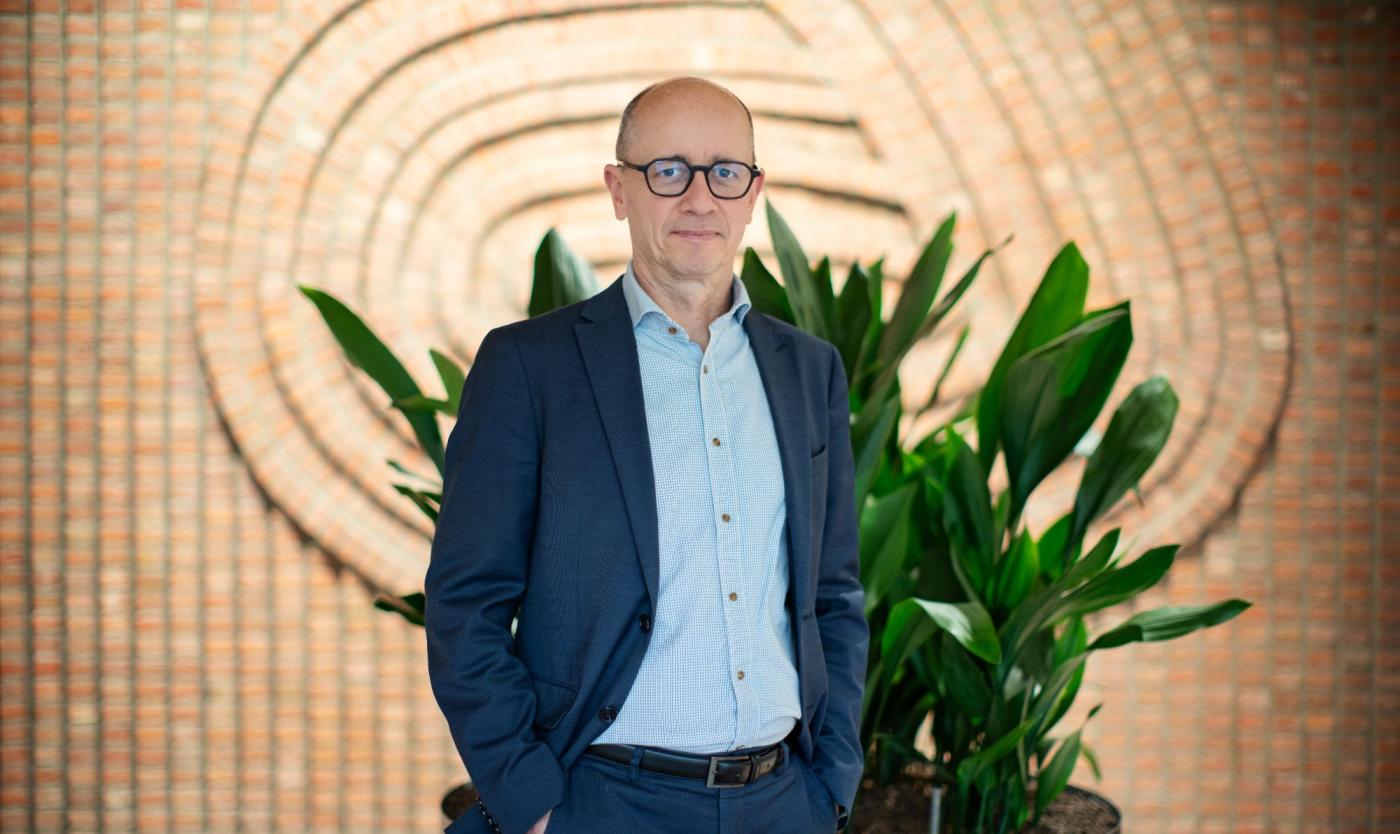


What does it take to be competitive internationally and attract compelling research projects? Scale, says Mieke Gijsemans, Director of the Vice-Rectorate for Research. “That’s why we encourage the creation of large research groups and NSIS research networks. Both focus on collaboration, sometimes interdisciplinary, and aim for societal impact.”
A review had raised some eyebrows. The VUB was home to 150 research groups—far from equally efficient, impactful, or inclined to collaborate with researchers from other disciplines. Some groups were even inactive.
Mieke Gijsemans, Director of the Vice-Rectorate for Research, explains: “In the context of our research policy, it was decided to reduce the number of research groups and aim for larger entities with a clear plan: large research groups (LRGs). These are easier for the administration to support effectively, and communication runs more smoothly. Scale is also essential to be strong internationally. Researchers can pool their resources and budgets and rely on support from project managers and other staff.”
The Vice-Rectorate for Research launched its call in spring 2023. Anyone wishing to establish an LRG had to submit a detailed research plan and seek (interdisciplinary) collaboration around a major theme. The response was quick and broad. The 150 research groups of a few years ago have now been reduced to 92: 42 large research groups and 50 regular groups.
Gijsemans adds: “All research groups receive basic funding of €3.6 million, distributed among them. In addition, some large research groups receive bonus funding—another €3.6 million divided among 30 groups. We operate on three-year cycles, with the first evaluation scheduled for 2026.”
Today, 65 per cent of VUB professors are involved in an LRG. Thanks to the scale, they secure more research funding while interdisciplinary collaboration brings fresh insights and broadens perspectives.
“This evolution doesn’t mean that a smaller, highly specialised research unit has no reason to exist,” Gijsemans clarifies. “No one is forced to scale up: what works for one group may not work for another. At the same time, it is entirely possible to be part of a broader thematic whole while retaining your individuality. Our research policy supports both approaches.”
Alongside the LRG call, a call was also launched for NSIS research groups—Network for Societal Impact Through Science. NSIS replaces the former Expertise Centres, one of VUB’s two interdisciplinary research programmes. The other programme, Interdisciplinary Project Funding (IRP), continues as before.
“NSIS groups are interdisciplinary networks of VUB researchers focused on societal change through science, reflecting the DNA of our university,” says Gijsemans. “They tackle themes that VUB considers highly important and where we aim to make a difference in society.”
The call resulted in five NSIS networks working on migration, chronic pain, urban studies, mental health, and decarbonisation. Each receives €110,000 per year for five years to disseminate their scientific insights beyond the university.
“As a large research group, we can be more ambitious than ever” – Cathy Macharis (LRG House of Sustainable Transitions, HOST)
The House of Sustainable Transitions (HOST) brings together over 200 researchers and 44 professors from 19 different research groups. They share knowledge and work together to find solutions to complex sustainability challenges. Such a large-scale collaboration is quite unique, says Cathy Macharis, who leads the large research group.
“The seed was planted ten years ago with the ‘We are Paris’ campaign. More than a hundred students acted as climate journalists, sharing knowledge and stories. I was the scientific coordinator and felt frustrated. There were so many people at VUB working on sustainability—why weren’t they collaborating on research? Interdisciplinary work is essential because sustainability spans multiple sectors. No single discipline can solve these problems alone; we must tackle them together. At HOST, we operate around five thematic domains, the ‘five rooms’ of our house: energy, mobility, economy, food, and the built environment. Within each room, scientists with different areas of expertise come together. For example, in the food domain, some focus on health, others on agriculture and biodiversity. This approach has been translated into four transversal axes: sustainability analysis, developing evaluation tools; mobilisation, engaging citizens and stakeholders; transformative learning, via bootcamps and other educational programs; and guiding the transition, focusing on new governance models. A recent achievement is our collaboration with the Helios Foundation, which supports contributions toward a sustainable, just, and inclusive society. At our Open House event, researchers and citizens co-developed creative project ideas, with the most promising receiving funding from the Helios Foundation. Being a large research group gives us a strong push. We now have people tracking research calls, internally assessing eligibility, and helping with project proposals. Thanks to the LRG structure, we can be more ambitious than ever.”
“The real innovation is professionalization” – Kristof Verfaillie (LRG Criminaliteit en Samenleving, CRiS)
CRiS conducts multidisciplinary research across youth criminology, penology, urban criminology, and policing and surveillance. What makes it unique is its focus on studying crime both with and about the actors involved in crime control, as well as those subject to it. Led by Kristof Verfaillie, CRiS is a Category I large research group.
“The formation of our group grew gradually and informally over the years. The SRP funding—the VUB’s Strategic Research Programs—accelerated and formalized that growth. As a large research group, we’ve now taken another step forward. The call from the Vice-Rectorate for Research pushed us to come together, define a clear vision, and develop a strategic plan. In the next phase, we addressed areas that were less developed, such as communication policies, data management, and a long-term funding strategy. This also meant creating shorter lines of communication with central VUB services. The impact was quickly visible. We expanded our social media presence and established a data management infrastructure. Previously, ZAP members had to invest their time in these areas—time that should have gone to research. For me, this professionalization is the true innovation of the LRG policy. We now aim to take the next step in professionalization. As a ‘small large’ research group, CRiS does not yet have its own budget for a Project Management Officer. In times of increasing competitive and budgetary pressure, such a position could make a huge difference, with a cumulative effect on the effectiveness of our researchers.”
“Much pain therapy is a waste of money” – Jo Nijs (NSIS Painless Lifestyle Network)
The Painless Lifestyle Network, led by Jo Nijs, is an interdisciplinary collaboration within VUB and UZ Brussel. This NSIS (Network for Societal Impact through Science) group brings together expertise from multiple medical and scientific fields—psychology, oncology, neurosurgery, physiotherapy, health economics, and more—to tackle chronic pain through lifestyle interventions.
“Through the NSIS groups, the Vice-Rectorate for Research stimulates the translation of scientific insights into societal change. In the case of chronic pain, that is urgently needed. Persistent pain is the most common problem in our healthcare system, ranging from back and neck pain, osteoarthritis, and fibromyalgia to post-cancer or post-COVID complaints. Many patients are sent home with ineffective treatments, resulting in wasted money on low-value care. These often involve passive interventions such as medication, injections, or certain surgeries. At best, they provide temporary relief, but in the long term many patients remain trapped in a negative spiral of pain, low quality of life, and work incapacity. Improving this situation is theoretically not difficult. Even without new research, simply applying today’s scientific knowledge would be a huge step forward. For chronic pain, this generally means using conservative, multimodal, evidence-based treatments. Patients are educated about their condition and supported in adjusting their behavior: moving more, quitting smoking, eating healthily, managing stress, addressing sleep problems… It’s not a quick fix, but it is an approach that works. We are pleased that this approach is now at the heart of the new federal national action plan on chronic pain.”
“Together we make more noise than alone” – Ilke Adam (NSIS BIRMM)
At BIRMM, the Brussels Interdisciplinary Research Centre on Migration and Minorities, over 130 researchers from 12 disciplines join forces to study and address issues related to migration, diversity, and inequality. Led by Ilke Adam, BIRMM continues the work of the NSIS program, building on the success of what began as an interdisciplinary expertise center.
“There was a lot of expertise on migration and minorities at VUB, but we didn’t know each other. As a result, we were invisible and missed opportunities. Caroline Pauwels gave the initial push to change that by launching the interdisciplinary expertise centers. With the start of BIRMM, we broke down walls and brought knowledge together. We also collaborated with the target groups, asking minority organizations what research they needed. This increases the likelihood that our research will have a societal impact. The NSIS approach—societal impact through scientific insights—is in our DNA. As an NSIS group, we go even further, involving 25 partners. We organize partner days with matchmaking sessions between researchers and external organizations to explore how we can set up and valorize research together. We also focus strongly on external communication, through press releases, newsletters, events… We’ve already produced a podcast series and plan a new one together with our partners. Sometimes research has a positive impact, and that’s rewarding. Sometimes, it is ignored. Years of research give us insights into why people migrate and what works—or doesn’t—in integrating them into society. Unfortunately, those insights can sometimes be dismissed with an ideological stroke of a pen. That’s why forming a large group is far from superfluous. Together, we make more noise tha