

Student initiation
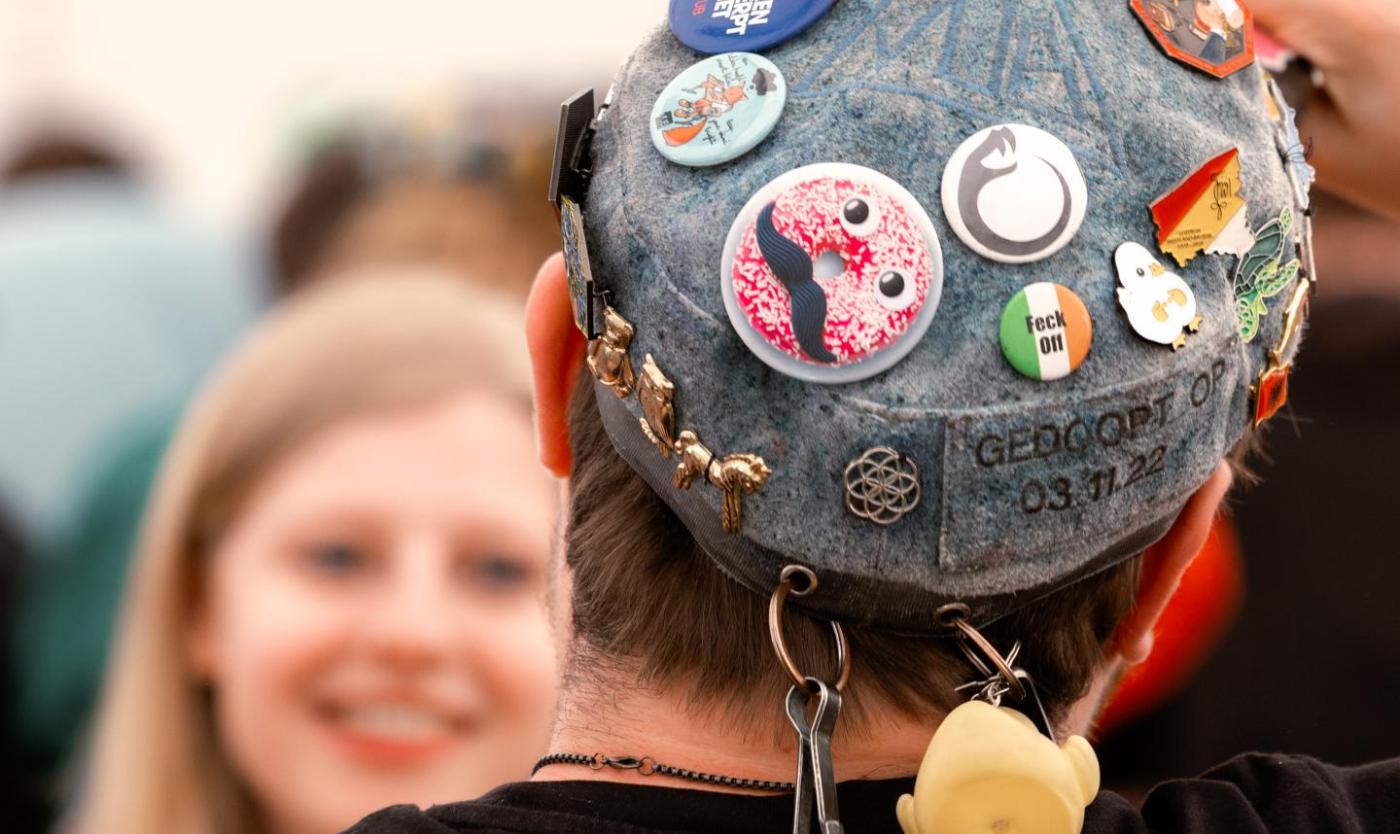
The initiation is one of the best-known traditions within the student folklore at VUB. For many students, it’s a playful and bonding way to get to know their organisation and fellow students.
Spel zonder Grenzen
Every year, ‘Spel Zonder Grenzen’ marks the official start of the folklore season. Traditionally, it takes place on the second Wednesday of the academic year on the Etterbeek campus.
Inspired by the well-known 1970s television format, new students compete in teams, organised by faculty-related student organisations, in a series of playful group challenges. From sliding down a soapy slope to taking part in a tug-of-war, the competition adds energy, but the main focus is on participation, meeting new people and gaining a first introduction to student folklore.

St V
Where will you be on November 20th? Ask any student, alumnus, or student organisation member from the VUB or ULB this question, and you’ll get the same answer every time: on the Zavel, of course!
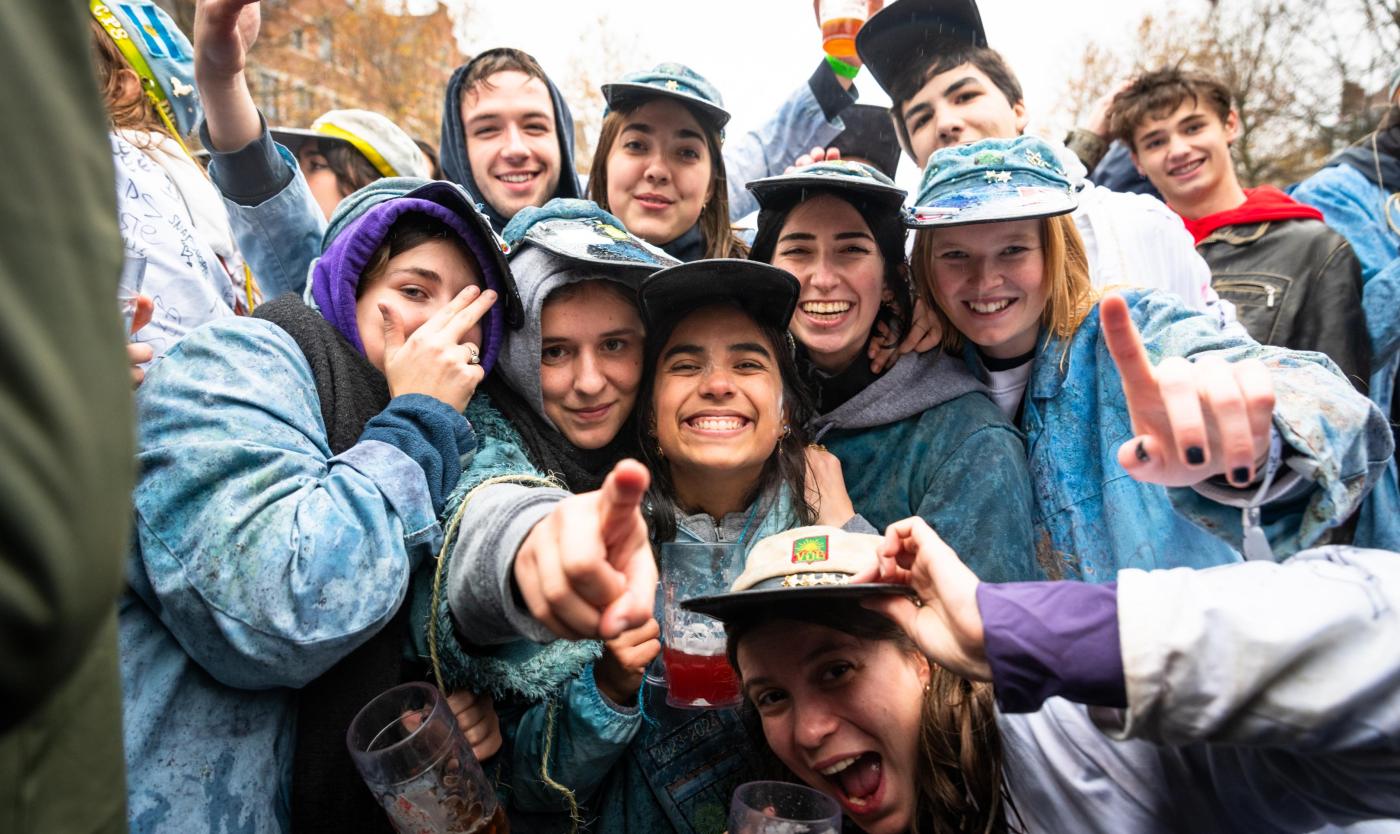
November 20th, better known as St V (Sint-Verhaegen) is the day we commemorate and celebrate Pierre-Théodore Verhaegen, founder of the ULB and, by extension, also of the VUB. What used to be a simple gathering has now grown into a full tradition of action and unity between the VUB and ULB student organisations.
That sense of connectedness is at the heart of it all: with each other, and with our city. It’s also a day to stand up for the values we believe in: equality, freedom, and critical thinking. Each celebration focuses on a current political or social issue. That’s why the procession moves symbolically from the affluent upper city to the poorer lower city — a gesture that carries real meaning.
The day begins with breakfast at VUB, after which students head together to the Zavel for a massive student party organized entirely by BSGgtgv and ACE. There, we celebrate before the procession continues to the Brussels Stock Exchange (Beurs), where the day concludes with ‘Lied van Geen Taal’ and ‘Le Semeur’, the official anthems of the VUB and ULB. This is also the day you’ll hear it echo through the streets of Brussels: “Brussels is ours!”
Vrijzinnig Zangfeest
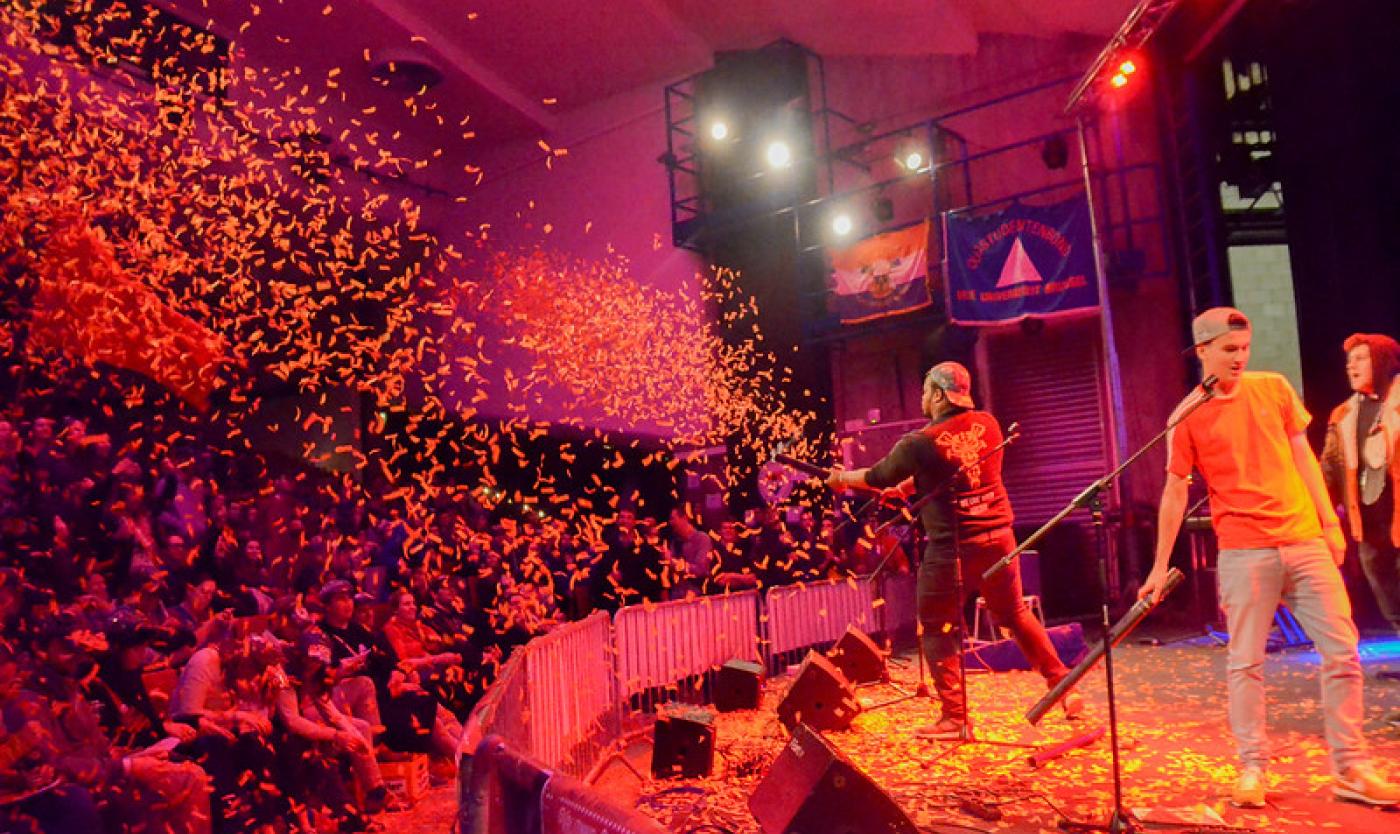
Imagine a song contest with a distinctly VUB character. That is the Vrijzinnig Zangfeest. During this annual song contest, student groups compete with their own original songs and performances. The event combines humour, creativity, social commentary and talent, while remaining firmly rooted in student folklore.
The Vrijzinnig Zangfeest takes place every year on the first Thursday of December and is organised by the ‘Brussels StudentenGenootschap – geen taal, geen vrijheid -’. Each edition revolves around a central theme that inspires all participating acts. It’s also a valued pre-exam tradition: one final evening of singing, humour and folklore before students turn their attention to studying.

“On April 1, Alva lost his glasses” – Den Briel
During the Eighty Years' War, the ‘Watergeuzen’ (Sea Beggars) resisted Spanish rule in the Low Countries, mainly because of the lack of religious freedom. A key turning point in their struggle was the recapture of Den Briel (modern-day Brielle, The Netherlands) on April 1, 1572. This victory is commemorated each year during the ‘Briellevaart’, when the historic liberation is re-enacted and the town is transformed into a lively scene from the 16th century. VUB students also travel to Brielle each year to take part in the event, as a symbolic tribute to the ongoing fight for freedom and resistance.
For VUB students, the Briellevaart is far more than just a historical trip. It’s a symbolic ritual that embodies the values of freedom, resistance, and solidarity. By taking part in this commemoration, students literally and figuratively walk in the footsteps of the Geuzen. It’s a moment of reflection, but also of celebration and community.
The ideals of the Geuzen closely align with the core values of the Vrije Universiteit Brussel: freedom of expression, critical thinking, and independence. That’s why VUB student organisations have integrated this historic event into their student folklore. During cantuses, resistance songs from that era are still sung, and symbols from the Geuzen tradition are used to this day — such as the begging bag with the bound hands of the ‘Eedverbond der Edelen’ or the orange-blue colors, which can be found in the shield of the umbrella organisation, the ‘Brussels Studentengenootschap – Geen taal, geen vrijheid’.
The Briellevaart is thus not only a commemoration of the past but a living tradition that connects students with a broader struggle for freedom — then, now, and in the future.